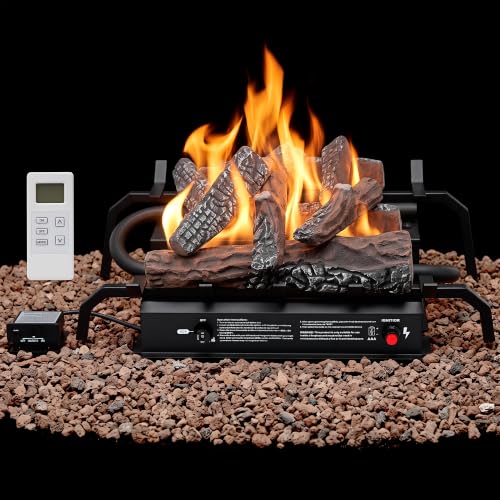
Ventless Propane Gas Fireplace Insert: Complete Guide
Everything you need to know about choosing, sizing, installing, and safely operating a ventless propane gas fireplace insert — even without a chimney or existing vent.
See Recommended ModelsWhy homeowners choose ventless propane inserts: They deliver real flames and meaningful heat without the expense of a chimney or external venting. This guide covers how they work, how to size them correctly, safety considerations, and how to pick the right model for your existing fireplace opening.
What Is a Ventless Propane Gas Fireplace Insert?
A ventless propane gas fireplace insert is a self-contained heating unit designed to fit inside an existing masonry or prefabricated fireplace opening. Unlike traditional wood-burning fireplaces or vented gas inserts, it does not require a chimney flue or external vent. Instead, it burns propane gas and recirculates combustion byproducts back into the room, achieving very high heating efficiency — often in the 92–99% range.
Because they use propane (LP) rather than natural gas, these inserts are ideal for homes without a natural gas line. They are especially popular in rural areas, cabins, and older homes where running a gas line or building a chimney would be impractical or too costly. If you are still exploring fuel types, our guide on types of fireplaces explained can help you compare options.
How a Ventless Propane Insert Works
1. Propane Combustion
A propane burner ignites ceramic logs or rocks, producing a realistic flame. Oxygen is drawn from the room, and combustion gases are recirculated through the unit.
2. Heat Exchange
The insert's metal body and heat exchanger absorb and radiate warmth into the room, often assisted by an optional blower for faster distribution.
3. No Venting Required
Because combustion is nearly complete, no chimney or flue is needed. This makes them ideal for propane insert for existing fireplace retrofits.
4. Safety Systems
Modern units include oxygen depletion sensors (ODS), automatic shut-off, and pilot safety valves to prevent unsafe operation.
Why Choose a Ventless Propane Insert?
Advantages
- No chimney or external venting needed
- Very high heating efficiency (up to 99%)
- Works during power outages (millivolt models)
- Lower installation cost than vented systems
- Realistic flame and radiant heat
- Ideal for rural homes without natural gas
Considerations
- Requires proper room ventilation
- Not allowed in some states or jurisdictions
- Can increase indoor humidity
- Needs periodic cleaning of logs and burner
- Propane tank or line required
For a deeper look at how ventless compares to other options, see our comparison of ventless fireplace logs and gas fireplace without a gas line.
Sizing Your Ventless Propane Insert (BTU Guide)
Choosing the correct BTU output is critical for comfort and safety. A unit that is too small will not heat effectively; one that is too large can produce excessive moisture and potentially unsafe combustion byproducts. The general rule is 20 BTU per square foot of living space, adjusted for climate and insulation.
| Room Size (sq ft) | Recommended BTU Range | Typical Use Case |
|---|---|---|
| Up to 200 | 4,000 – 10,000 BTU | Bedroom, small den |
| 200 – 400 | 10,000 – 20,000 BTU | Living room, cabin |
| 400 – 600 | 20,000 – 30,000 BTU | Open concept, large living area |
| 600 – 1,000 | 30,000 – 40,000 BTU | Great room, basement |
For a more detailed calculation, visit our heating capacity BTU guide or use our fireplace sizing worksheet. Remember that ventless propane inserts are often used as zone heaters rather than whole-home systems.
Efficiency and Running Costs
Ventless propane inserts are among the most efficient gas heating appliances available, typically rated between 92% and 99% AFUE. That means nearly all the fuel consumed becomes usable heat. However, running costs depend on propane prices in your area and how often you use the unit. Compared to electric heaters, propane can be more economical in regions with low propane costs, but it fluctuates seasonally.
If you're comparing fuel types, our articles on electric vs gas running costs and most energy-efficient fireplace types provide useful context.
Installation Requirements & Considerations
Installing a ventless propane insert is generally less invasive than a vented system, but it still requires careful planning:
- Existing Fireplace Opening: The insert must fit the dimensions of your current firebox. Measure width, height, and depth precisely.
- Propane Supply: You will need a propane tank (above or below ground) or connection to a home propane system. A licensed technician should run the gas line.
- Clearances: Maintain required distances from combustible materials (mantel, flooring, furniture). Refer to the manufacturer's manual.
- Ventilation: Although ventless, the room must have adequate air exchange. Follow local codes — some areas require a window crack or dedicated air intake.
- Professional Installation: Gas line connection and final hookup should be done by a licensed professional. Learn more in our gas fireplace installation requirements.
If you are converting from wood, our guide on converting from wood to gas fireplace may be helpful. For DIY-minded homeowners, read DIY vs professional installation before deciding.
Safety and Maintenance
Ventless appliances are safe when installed and maintained correctly. Key safety features include an Oxygen Depletion Sensor (ODS) that shuts off the unit if oxygen levels drop, and a pilot safety valve that stops gas flow if the flame goes out. Always follow the manufacturer's guidelines regarding room size and ventilation.
Regular maintenance includes:
- Cleaning ceramic logs and burner ports annually
- Checking the pilot assembly and thermocouple
- Inspecting the gas line for leaks (professionally)
- Dusting the blower (if equipped) and vents
See our gas fireplace maintenance guide for a full checklist, and if you notice issues like a weak flame or gas smells, address them immediately.
Understanding Product Tiers
Ventless propane inserts are available in several quality tiers. Rather than focusing on price, consider these universal descriptors to match your needs:
- Entry-level: Basic manual controls, standard log set, limited BTU range. Suitable for occasional use.
- Mid-range: Includes remote control, variable flame height, and often a blower for better heat distribution.
- Premium: Features realistic log detail, thermostat control, programmable settings, and higher efficiency.
- Luxury: Top-tier models with advanced remote, smart home compatibility, premium materials, and maximum heating capacity.
For most homeowners, a mid-range unit offers the best balance of features and reliability. Premium and luxury tiers are ideal for primary heating or high-end renovations.
Top Ventless Propane Gas Fireplace Inserts
Below are some of the most recommended ventless propane inserts available today, selected for performance, safety, and customer satisfaction.