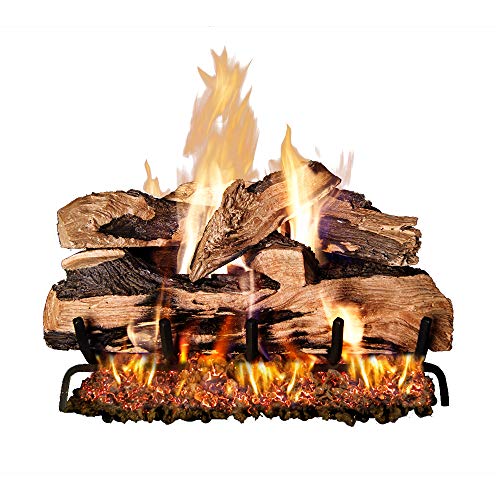
Vented Gas Fireplace Logs: Complete Guide to Selection & Care
Everything you need to know about vented gas logs — how they work, why venting matters, and how to choose the right set for a realistic, efficient fire experience.
Explore Buying FactorsWhy vented gas logs? Unlike ventless sets, vented gas logs require a chimney or flue to exhaust combustion byproducts. This allows for a taller, more realistic flame and a wider variety of log designs. If you already have a wood-burning fireplace with a functional chimney, vented logs are often the most natural upgrade. This guide walks you through every decision — from BTU output and log materials to safety and maintenance.
What Are Vented Gas Fireplace Logs?
Vented gas logs are a type of gas log set designed to be used in a fireplace that has a working chimney or vent. They burn natural gas or propane, and the exhaust gases — including carbon monoxide and water vapor — are safely routed outdoors through the chimney. Because they don't need to burn as cleanly as ventless sets, they can produce a larger, more yellow flame that closely mimics a real wood fire. They are typically installed in an existing masonry or prefabricated fireplace and are connected to a gas line.
If you are still exploring the broader category of gas fireplaces, our vented gas fireplace guide provides a solid foundation. For a direct comparison between vented and ventless options, see ventless vs vented gas fireplace.
How Vented Gas Logs Work
A vented log set consists of a burner pan, a grate, and ceramic or refractory logs. Gas enters the burner, where it is mixed with air and ignited. The flames rise through and around the logs, creating the appearance of a wood fire. The key difference from ventless sets is that the burner is designed to operate with an open damper — the chimney must remain open during operation to allow exhaust to escape. Most vented sets include a safety pilot and may be controlled by a wall switch, remote, or thermostat.
Key Components
- Burner pan & grate: distributes gas and supports logs.
- Logs: ceramic, refractory, or concrete — designed to withstand high heat.
- Pilot & ignition: standing pilot or electronic ignition.
- Controls: manual valve, remote, wall switch, or thermostat.
Venting Essentials
- Requires a functional chimney or flue.
- Damper must be fully open during operation.
- Proper draft is critical — a blocked flue can cause smoke and CO buildup.
- Annual chimney inspection is strongly recommended.
Vented vs Ventless Gas Logs: Which Is Right for You?
Choosing between vented and ventless logs depends on your fireplace setup, heating goals, and aesthetic preferences. Vented logs offer a more realistic flame but are less efficient as heaters because much of the heat escapes up the chimney. Ventless logs are more efficient but have a smaller, bluer flame and require a clean-burning fireplace. For a deeper dive, read our full ventless gas fireplace logs article.
| Feature | Vented Gas Logs | Ventless Gas Logs |
|---|---|---|
| Flame Realism | High — tall, yellow, dancing flames | Moderate — shorter, more uniform flame |
| Heating Efficiency | Lower — heat lost through chimney | Higher — most heat stays in room |
| Venting Requirement | Must have a chimney/flue | No chimney required |
| Indoor Air Quality | Exhaust routed outdoors | Emissions released into room |
| Best For | Existing chimneys, ambiance-focused | No chimney, supplemental heat |
Types of Vented Gas Log Sets
Vented log sets come in several configurations to match different fireplaces and gas types. Understanding these options helps you narrow down the best fit.
Natural Gas vs Propane
Natural gas is convenient if your home already has a gas line. Propane (LP) is common in rural areas without natural gas service. Burners are fuel-specific and cannot be interchanged without a conversion kit. See our natural gas vs propane fireplace comparison for details.
Log Material Options
- Ceramic fiber: lightweight, realistic detail, entry-level to mid-range.
- Refractory cement: durable, heavy, mid-range to premium.
- Concrete: extremely durable, high-end, often custom.
For a broader look at log options, see logs for gas fireplace.
Sizing & BTU Considerations
Vented gas logs are primarily an aesthetic feature, but they still produce heat. The BTU output of a vented set typically ranges from 40,000 to 90,000 BTU, depending on the burner size and gas type. For a typical living room, a mid-range BTU output is usually sufficient for ambiance and some warmth. If you intend to use the fireplace as a primary heat source, consider a vented gas insert instead — they are more efficient. Our heating capacity BTU guide explains how to calculate the right size. Also see how to size a fireplace for room-specific advice.
Quick Sizing Rule of Thumb
- Small room (under 300 sq ft): 30,000–40,000 BTU
- Medium room (300–500 sq ft): 40,000–60,000 BTU
- Large room (over 500 sq ft): 60,000+ BTU (or consider a vented insert)
Note: Vented logs lose much heat up the chimney, so they are not ideal as sole heat sources in cold climates.
Installation & Venting Requirements
Proper installation is critical for safety and performance. Vented logs must be installed in a fireplace with a working chimney or flue. The damper must be permanently locked open or removed to prevent accidental closure. A gas line must be routed to the fireplace, and a shut-off valve installed within reach. Local codes vary, so always check with your municipality. For a comprehensive overview, see our venting requirements for gas logs and gas fireplace installation requirements. If you are considering a professional vs DIY approach, read DIY vs professional installation.
Before You Install
- Inspect chimney for cracks, blockages, and creosote.
- Ensure adequate draft — a chimney cap may be needed.
- Confirm gas type and pressure match the log set.
- Install a CO detector in the same room.
Common Venting Mistakes
- Closing the damper while logs are burning.
- Using vented logs in a ventless fireplace.
- Neglecting annual chimney cleaning.
- Oversizing the log set for the firebox.
Maintenance & Safety for Vented Gas Logs
Vented gas logs require regular maintenance to burn safely and efficiently. Annual inspections by a certified chimney sweep or gas technician are recommended. Keep the logs clean and free of dust, and check the burner ports for blockages. If you notice soot, unusual odors, or a weak flame, turn off the gas and call a professional. Our gas fireplace maintenance guide covers step-by-step care, and gas fireplace inspection explains what a technician checks. For troubleshooting, see gas fireplace won't light and fireplace smells like gas.
Safety Checklist
- ✅ Install a carbon monoxide detector nearby.
- ✅ Keep children and pets away from the firebox.
- ✅ Never leave a fire unattended.
- ✅ Ensure the damper is fully open before lighting.
- ✅ Schedule annual chimney inspections.
Buying Guide: How to Choose Vented Gas Logs
When shopping for vented gas logs, focus on these key factors: log material, burner construction, control type, and compatibility with your fireplace and gas supply. Quality tiers range from entry-level to premium, but price should not be the only consideration — durability and realism matter. Look for sets that include a safety pilot and adjustable flame height. If you want the most realistic look, consider a set with a glowing ember bed and detailed log carving.
What to Prioritize
- Material: ceramic fiber (entry-level), refractory (mid-range), concrete (premium).
- Burner: stainless steel burners last longer.
- Controls: remote or thermostat adds convenience.
- Warranty: longer warranties indicate better build quality.
Compatibility Check
- Measure your firebox dimensions (width, depth, height).
- Confirm gas type (natural or propane).
- Check chimney condition — vented logs need a clear flue.
- Ensure the log set fits with clearance for safety.
For more on venting options, see venting gas fireplace options and venting options for gas logs. If you are replacing an existing set, read replacing fake logs in a gas fireplace.
Ready to explore vented gas log sets? Our recommended products below are selected for quality, realism, and durability. Compare features and find the perfect set for your fireplace.
View Recommended Log SetsFrequently Asked Questions
For more answers, visit our fireplace FAQ hub.
Related Guides & Ideas
Explore more topics to complete your fireplace project: