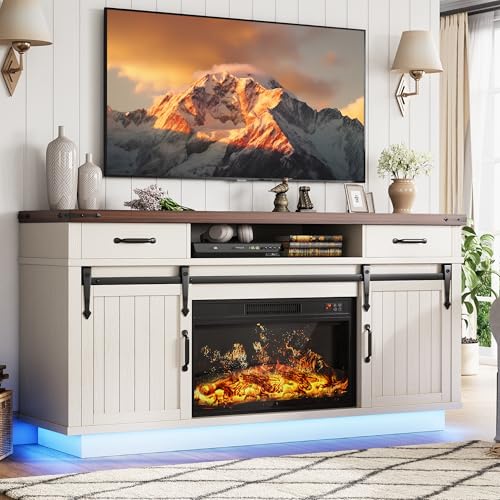
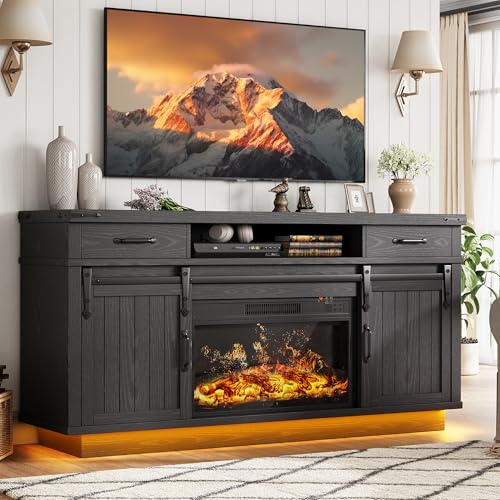
TV Stand for 65 Inch with Fireplace: The Complete Buying Guide
Everything you need to know before choosing a 65-inch TV stand with a built-in fireplace — sizing, heating output, style options, safety, and long-term value.
See Recommended ModelsWhy a 65-Inch TV Stand with Fireplace Makes Sense
A 65-inch television is currently one of the most common screen sizes in living rooms across the United States. It offers an immersive viewing experience without overwhelming a standard room. Pairing that screen with a fireplace TV stand solves two problems at once: it provides a stable, properly sized platform for the TV while adding warmth and ambiance to the space.
Unlike a traditional wall-mounted setup, a fireplace TV stand keeps all components at a comfortable viewing height and consolidates cable management, media players, and soundbars into one piece of furniture. For homeowners who want the look of a built-in entertainment wall with fireplace without the renovation cost, this category is the practical middle ground.
Electric fireplace TV stands are by far the most common configuration because they plug into a standard outlet, produce no emissions, and require no chimney or venting. That makes them suitable for apartments, condos, and rental properties where structural modifications are not allowed. If you are comparing fuel types more broadly, our electric vs gas vs wood fireplace comparison covers the trade-offs in detail.
Sizing: What Actually Fits a 65-Inch TV
The single most common mistake buyers make is choosing a stand that is too narrow. A 65-inch television measures approximately 57 inches across the screen bezel, and the VESA mounting pattern and stand feet usually require a surface at least 58 to 60 inches wide for stable placement.
When shopping, look for a stand with a top surface width of at least 60 inches. Many manufacturers list the compatible TV size range directly — a stand labeled for 60 to 70 inch TVs will comfortably accommodate your 65-inch model. If you plan to upgrade to a larger screen later, consider a model rated for up to 75 inches so you do not need to replace the furniture.
| Stand Width | Compatible TV Size | Best For |
|---|---|---|
| 50–55 inches | Up to 55 inch | Bedrooms, apartments |
| 58–62 inches | 60–65 inch | Standard living rooms |
| 63–70 inches | 65–75 inch | Large living rooms, future upgrades |
| 70+ inches | 75–85 inch | Home theaters, open concept spaces |
If your room is tight, a fireplace TV stand for small spaces may be a better fit than a full-width console. Conversely, if you have a generous wall, an extra large TV stand with fireplace gives you more storage and visual balance.
Heating Output: What to Realistically Expect
Most electric fireplace TV stands produce between 4,600 and 5,200 BTU, which translates to roughly 400 to 1,000 square feet of supplemental heating depending on insulation, ceiling height, and climate. This is zone heating — it warms the immediate area around the unit, not the entire house.
If your goal is to reduce reliance on a central HVAC system in a single room, a fireplace TV stand can be genuinely useful. If you expect it to replace your furnace, it cannot. Our guide on whether a fireplace can heat an entire house explains the physics behind this limitation.
For a more precise estimate of how much heating capacity you actually need, use our fireplace heating capacity BTU guide. It walks through the square footage formula step by step.
Key Features to Evaluate Before Buying
Not all fireplace TV stands are built to the same standard. The differences show up in flame realism, storage layout, build material, and control options. Below are the features that matter most.
Flame Realism
Entry-level models use simple LED flame effects. Mid-range and premium units often add crackling sound, adjustable flame color, and reflective ember beds. If realism matters to you, look for a most realistic electric fireplace with mantel style unit.
Storage Configuration
Open shelves, closed cabinets, and adjustable glass shelves each serve different needs. A TV stand with fireplace and storage is ideal if you have media players, game consoles, and cables to hide.
Build Material
Engineered wood with laminate veneer is the most common and offers good value. Solid wood and metal-frame construction sit at the premium end. The material affects weight capacity, lifespan, and how the piece handles heat over time.
Control Options
Remote control is now standard on most mid-range and premium units. Some models support app control or voice assistants. A fireplace TV stand with remote control is more convenient if the unit sits low or in a corner.
Cable Management
Look for rear cutouts or channels. Without them, cables hang visibly and collect dust. This is a small detail that significantly affects how clean the final setup looks.
Weight Capacity
A 65-inch TV typically weighs between 40 and 60 pounds without the stand. Add a soundbar, media players, and decor, and you need a top surface rated for at least 100 pounds to be safe.
Electric vs Other Fireplace Types in a TV Stand
Almost every TV stand with a built-in fireplace uses electric heating. Gas and wood options exist in freestanding form, but they are rarely integrated into media furniture because of venting requirements, clearance rules, and installation complexity.
Advantages of Electric
- No venting or chimney required
- Plug-and-play installation
- Safe for apartments and rentals
- Flame can run without heat
- Low maintenance compared to gas or wood
Limitations to Know
- Supplemental heat only, not whole-home
- Requires a nearby outlet
- Higher wattage models may need a dedicated circuit
- Flame realism varies by tier
If you are considering a gas alternative elsewhere in the home, our breakdown of electric vs gas running costs is a useful reference. For most buyers shopping for a 65-inch TV stand specifically, electric remains the only realistic option.
Style and Placement Considerations
The style of the stand should complement the room, not compete with it. A few common directions:
- Modern and minimalist: clean lines, matte finishes, low profile. A modern electric fireplace entertainment center suits open-concept living rooms.
- Farmhouse and rustic: distressed wood, white or grey finishes, visible hardware. See our white farmhouse entertainment center with fireplace reference for typical layouts.
- Traditional: warmer wood tones, decorative molding, more visual weight. A wood fireplace entertainment center anchors a classic living room.
- Corner placement: if your room layout pushes the TV into a corner, a corner TV stand for 65 inch TV with fireplace is specifically designed for that geometry.
Placement also affects safety. Keep at least 12 inches of clearance around the unit for airflow, and avoid pushing it flush against a wall if the manufacturer specifies a rear gap. Our furniture distance from fireplace guide covers the general rules.
Installation, Power, and Safety
Assembly typically takes 45 to 90 minutes and requires two people for the larger units. Most models ship flat-packed with cam-lock hardware and include a wall anchor strap for tip-over protection — use it, especially in homes with children or pets.
On the electrical side, most electric fireplace TV stands draw between 1,400 and 1,500 watts on the highest heat setting. That is close to the limit of a standard 15-amp household circuit. If the breaker trips when the fireplace and TV run simultaneously, you may need to move the unit to a circuit with spare capacity or consult an electrician. Our article on an electric fireplace tripping the breaker explains the diagnosis process.
For a broader overview of what installation actually involves, see the electric fireplace plug-and-play installation guide.
Maintenance and Long-Term Ownership
Electric fireplace TV stands are low maintenance compared to gas or wood alternatives. The routine is simple: dust the flame effect window periodically, vacuum the air intake vents every few months, and check the power cord for wear once a year.
If the flame effect stops working but the heater still runs, the issue is usually the LED assembly or control board rather than the heating element. Our electric fireplace flame not working troubleshooting guide covers the common causes.
For a full seasonal routine, see the electric fireplace maintenance guide and the seasonal fireplace checklist. If you want to understand the long-term cost picture beyond the purchase itself, our hidden costs of owning a fireplace article breaks it down.