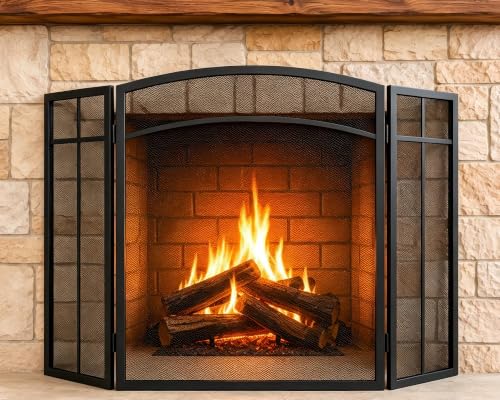
Fireplace Screen for Arched Fireplace: The Complete Guide
Discover how to choose the perfect screen for your arched fireplace. Learn about styles, materials, sizing, and safety to protect your home while enhancing your fireplace's unique design.
An arched fireplace adds a distinctive architectural element to any room, but its curved opening presents unique challenges when it comes to finding the right screen. Unlike standard rectangular fireplaces, arched fireplaces require screens that can accommodate the curve without leaving gaps or looking out of place. Whether you're looking for a decorative accent or a functional safety barrier, choosing the right fireplace screen for arched fireplace is essential for both aesthetics and protection.
This guide will walk you through everything you need to know about selecting a screen for your arched fireplace, from understanding the different types available to measuring your opening correctly. You'll learn about the materials that work best, the safety features to prioritize, and how to maintain your screen for years of reliable service.
Why Arched Fireplaces Need Specialized Screens
Arched fireplaces are prized for their elegant, curved openings that evoke old-world charm and architectural sophistication. However, that beautiful curve creates a practical problem: standard rectangular screens simply don't fit properly. A flat screen placed in front of an arched opening will leave triangular gaps at the top corners, allowing sparks, embers, and debris to escape into your living space.
Specialized arched fireplace screens are designed to follow the contour of your fireplace opening, providing complete coverage without compromising the visual appeal of the arch. These screens are available in several configurations, each with its own advantages and considerations.
Types of Screens for Arched Fireplaces
When shopping for a screen for your arched fireplace, you'll encounter several main categories. Understanding the differences will help you make an informed decision based on your fireplace's design, your heating habits, and your personal style preferences.
1. Arched Fireplace Screens with Custom Curves
These screens are manufactured with a curved top edge that mirrors the arch of your fireplace. They typically consist of a mesh panel framed in metal, with the frame bent to match the opening's contour. Custom curved screens offer the best fit and most seamless appearance, but they often require precise measurements and may be available primarily through specialty retailers or custom fabricators.
2. Multi-Panel Folding Screens
Folding screens consist of three or more hinged panels that can be arranged to approximate the curve of an arched opening. While they don't follow the arch perfectly, they can be positioned to provide adequate coverage. These screens are versatile and can often be adjusted to fit a range of fireplace sizes. Many homeowners find that a three-panel screen works well for smaller arched fireplaces, while larger openings may require a four or five-panel configuration.
3. Arched Fireplace Doors with Mesh
If you're looking for a more permanent solution, arched fireplace doors with integrated mesh screens offer both safety and style. These doors are custom-made to fit your fireplace opening and can include glass panels that open for access. When closed, the mesh screen provides spark protection while allowing heat to radiate into the room. For those considering a more comprehensive upgrade, exploring fireplace doors for masonry fireplace can provide additional inspiration for integrating doors with your existing masonry structure.
It's worth noting that arched fireplace doors are often designed to work in conjunction with existing fireplace doors or can serve as a standalone solution. If your fireplace currently lacks doors, investing in a quality set can dramatically improve both safety and energy efficiency.
4. Freestanding Curved Screens
Freestanding curved screens are single-piece units that bow outward to create a convex shape. While they don't follow the exact contour of an arch, they can be placed in front of the opening to provide a barrier. These screens are easy to move and store, making them a good choice for homeowners who only use their fireplace occasionally.
Key Factors When Choosing a Screen for Your Arched Fireplace
Selecting the right screen involves more than just finding something that fits. You'll want to consider materials, construction quality, safety features, and how the screen will interact with your fireplace's overall design. Here are the most important factors to evaluate.
Material and Construction
The material of your screen affects its durability, appearance, and heat resistance. Common options include:
- Steel and wrought iron: These materials are highly durable and can withstand high temperatures. They are often finished with powder coating or paint to prevent rust. Entry-level steel screens may have simpler construction, while mid-range and premium options often feature hand-forged details and more robust frames.
- Aluminum: Lightweight and rust-resistant, aluminum screens are easy to move but may not feel as substantial as iron. They are a good choice for indoor use and are often found in budget-friendly and mid-tier products.
- Brass and bronze: These materials offer a classic, elegant look and develop a patina over time. They are typically found in high-end and luxury screens and are often used in traditional or formal settings.
- Stainless steel: Highly resistant to heat and corrosion, stainless steel is a top-tier choice for both indoor and outdoor applications. It has a modern, clean appearance.
The mesh itself is usually made of steel or aluminum and should be tightly woven to prevent small embers from passing through. A finer mesh offers better protection but may restrict airflow slightly.
Sizing and Fit
Proper sizing is critical for safety and appearance. You'll need to measure the width and height of your fireplace opening, as well as the height of the arch. For a custom curved screen, you'll need to provide the radius of the arch or a template. If you're considering a folding screen, measure the widest point of the opening and choose a screen that can extend slightly beyond the edges.
For a more detailed look at how to integrate a screen with your fireplace's overall design, you may find inspiration in our guide to fireplace mantels for stone fireplaces, which discusses how different elements work together.
Safety Features
The primary purpose of a fireplace screen is safety. Look for screens with sturdy frames that won't tip over easily. If you have young children or pets, consider a screen with a weighted base or one that can be secured to the fireplace. Spark guards, which are slightly taller and have a tighter mesh, offer enhanced protection.
If your fireplace is a wood-burning unit, you should also be aware of fireplace ember safety practices, including keeping the screen closed at all times during a fire and disposing of ashes properly. For those who use their fireplace frequently, a screen with a built-in fireplace grate can improve airflow and log positioning.
Style and Aesthetics
Your screen should complement the style of your fireplace and the room's decor. An ornate, vintage-inspired screen might suit a traditional home, while a sleek, minimalist screen might be better for a modern space. Consider the finish—black, bronze, brass, and nickel are common options—and how it will coordinate with your fireplace's surround and mantel.
If you're looking to enhance the overall look of your fireplace, you might also explore options like a vintage stained glass fireplace screen, which can add a touch of artistry and color. For a more contemporary aesthetic, a contemporary marble fireplace surround can create a striking backdrop that your screen will complement.
Maintaining Your Arched Fireplace Screen
Like any fireplace accessory, your screen requires regular maintenance to stay in good condition. Dust and ash can accumulate on the mesh, and metal frames can tarnish or rust over time. Here are some tips to keep your screen looking its best:
- Dust the screen regularly with a soft cloth or vacuum brush attachment.
- For deeper cleaning, wash the mesh with warm soapy water and a soft brush. Dry thoroughly to prevent rust.
- Inspect the frame for signs of wear or damage, and touch up paint or finish as needed.
- If your screen is made of iron or steel, apply a light coat of wax or oil to protect against rust, especially in humid climates.
For comprehensive care instructions that cover all aspects of fireplace upkeep, refer to our fireplace maintenance guide. If you notice any issues with your screen's functionality or appearance, addressing them promptly can extend its lifespan.
Frequently Asked Questions
Can I use a standard screen on an arched fireplace?
While a standard rectangular screen can be placed in front of an arched opening, it won't provide complete coverage. The gaps at the top corners can allow embers to escape. It's generally safer to choose a screen designed specifically for arched fireplaces or a multi-panel screen that can be adjusted to fit.
How do I measure my arched fireplace for a screen?
Measure the width at the widest point of the opening, the height at the center (from the hearth to the top of the arch), and the height at the sides. For a custom curved screen, you may need to provide the radius of the arch. Some manufacturers offer templates or measuring guides.
Are arched fireplace screens safe for wood-burning fireplaces?
Yes, as long as they are made from heat-resistant materials and fit properly. A well-fitted screen will contain sparks and embers, reducing the risk of house fires. Always keep the screen closed when the fireplace is in use.
Can I install a screen myself?
Most freestanding and folding screens require no installation—just place them in front of the fireplace. Custom curved screens and doors may require professional installation, especially if they are attached to the fireplace structure. If you're handy, you might be able to install a door assembly yourself, but it's important to follow the manufacturer's instructions carefully.
What is the best material for an arched fireplace screen?
The best material depends on your needs. Wrought iron and steel are durable and heat-resistant, making them ideal for wood-burning fireplaces. Aluminum is lightweight and rust-resistant, suitable for indoor use. Brass and bronze offer a classic look but may require more maintenance. For outdoor or high-humidity environments, stainless steel is a top choice.
How often should I replace my fireplace screen?
With proper care, a quality fireplace screen can last for many years. Inspect it annually for signs of wear, such as rust, loose hinges, or damaged mesh. If the screen no longer provides adequate protection or becomes difficult to use, it may be time to replace it.
Do I need a screen if I have glass doors?
Glass doors provide a barrier, but they can become hot and may not offer the same spark protection as a mesh screen. Many glass door assemblies include a mesh screen that can be used when the doors are open. If you have glass doors without a mesh screen, you may still want a separate screen for added safety.
Final Thoughts
Choosing the right fireplace screen for arched fireplace is a decision that balances safety, functionality, and style. By understanding the unique challenges of an arched opening and considering factors like material, fit, and maintenance, you can find a screen that protects your home and enhances the beauty of your fireplace.
Whether you opt for a custom curved screen, a versatile folding screen, or a set of arched doors with mesh, investing in a quality product will pay off in peace of mind and years of enjoyment. For more guidance on fireplace accessories and safety, explore our fireplace accessories section and our fireplace FAQ.