Fireplace Doors for Brick Fireplace: The Complete Guide
Transform your brick fireplace with the right doors. Learn how to choose, size, and install fireplace doors that boost efficiency, safety, and style.
Why Fireplace Doors Matter: A brick fireplace is a beautiful architectural feature, but an open fire wastes energy and poses safety risks. Adding doors can dramatically improve efficiency and protect your home. This guide covers everything you need to know before buying.
Why Add Doors to Your Brick Fireplace?
An open brick fireplace loses up to 90% of its heat through the chimney when not in use. Fireplace doors solve this problem while enhancing both safety and aesthetics. Here are the primary benefits:
🔥 Improved Heating Efficiency
Glass doors keep heated air in the room instead of letting it escape up the chimney. They also reduce draft when the fireplace is not in use, helping your home retain warmth during colder months.
🛡️ Enhanced Safety
Doors act as a barrier against sparks and embers, protecting children, pets, and furniture. For homes with wood-burning fireplaces, this is especially important. Learn more about ember safety to keep your family protected.
✨ Aesthetic Upgrade
Modern glass doors transform an outdated brick fireplace into a stylish focal point. Whether your style is modern farmhouse or contemporary, doors can complement your decor.
🧹 Cleaner Burning
Doors improve combustion by controlling airflow, which reduces smoke and creosote buildup. This means less maintenance and a cleaner chimney over time. See our chimney cleaning guide for maintenance tips.
Types of Fireplace Doors for Brick Fireplaces
Not all fireplace doors are created equal. The right choice depends on your fireplace's construction, your heating needs, and your design preferences. Here are the most common types:
| Door Type | Best For | Key Features | Considerations |
|---|---|---|---|
| Tempered Glass Doors | Wood-burning brick fireplaces | Heat-resistant, clear view of fire, durable | Must be kept slightly open during use to prevent cracking |
| Ceramic Glass Doors | High-efficiency wood fireplaces | Withstands higher temperatures, better insulation | Higher tier investment, but superior performance |
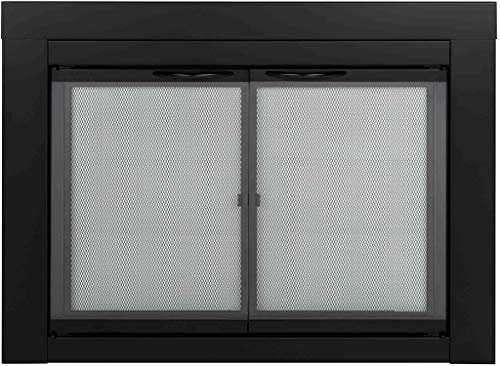
| Mesh Screen Doors | Traditional or rustic fireplaces | Allows airflow, spark protection, classic look | Less heat retention than glass; best for ambiance |
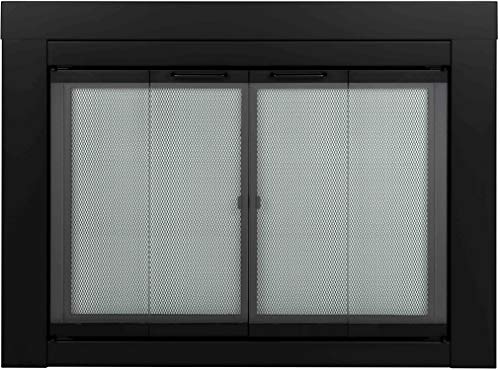
| Bi-Fold Doors | Wide fireplace openings | Space-saving, easy access, full opening | May require custom sizing for brick surrounds |
| Cabinet-Style Doors | Large brick fireplaces | Full glass panels, elegant look, maximum view | Heavier; requires sturdy mounting |
Choosing the Right Material for Your Brick Fireplace
The material of your fireplace doors affects durability, appearance, and performance. Brick fireplaces pair well with several frame materials:
Frame Materials
- Steel: Durable and affordable, often powder-coated in black or bronze. Best for standard fireplace doors and high-traffic areas.
- Cast Iron: Classic look, excellent heat retention, ideal for traditional brick fireplaces. Heavier and may require reinforced mounting.
- Brass: Elegant and timeless, but requires polishing to maintain shine. Best for formal living spaces.
- Aluminum: Lightweight and rust-resistant, good for outdoor or humid environments. Less sturdy than steel.
Glass Options
- Tempered Glass: Standard choice, heat-resistant up to 500°F. Entry-level to mid-range option.
- Ceramic Glass: Withstands up to 1,200°F, ideal for high-efficiency fireplaces. Premium tier.
- Pyroceram: Top-tier transparent ceramic, used in luxury fireplace doors. Maximum clarity and heat resistance.
How to Measure Your Brick Fireplace for Doors
Accurate measurements are critical. Fireplace doors are often custom-made, and incorrect sizing can lead to gaps, inefficiency, and safety issues. Follow these steps:
- Measure the opening width at the widest point (usually at the top or bottom of the firebox).
- Measure the opening height at the tallest point, from the hearth to the top of the opening.
- Measure the depth of the firebox to ensure doors won't obstruct logs or grates.
- Check for irregularities — brick openings are often not perfectly square. Measure at multiple points.
- Account for the surround — if you have a fireplace mantel or surround, ensure doors fit within the available space.
Installation: DIY vs Professional
Installing fireplace doors on a brick fireplace can be a DIY project for handy homeowners, but there are important considerations:
🔧 DIY Installation
Most fireplace doors come with mounting brackets and instructions. You'll need a drill with masonry bits, a level, and patience. Best for standard-sized openings and homeowners comfortable with basic tools. See our DIY fireplace frame guide for tips.
👷 Professional Installation
Recommended for custom-sized doors, irregular brick openings, or if you're unsure about masonry work. A professional ensures a proper seal and safe installation. Learn more in our DIY vs Professional guide.
Installation Checklist
- Gather necessary tools: drill, masonry bits, level, screwdriver, measuring tape.
- Ensure the fireplace is completely cool before starting.
- Mark mounting holes accurately using a level.
- Pre-drill holes into brick to prevent cracking.
- Attach mounting brackets securely.
- Hang doors and test operation.
- Seal any gaps with high-temperature sealant if needed.
Maintaining Your Fireplace Doors
Proper maintenance ensures your doors last for years and continue to perform efficiently. Here's a simple routine:
| Task | Frequency | Tips |
|---|---|---|
| Clean glass | After every few fires | Use a fireplace glass cleaner or a paste of ash and water. |
| Inspect gaskets | Monthly during heating season | Replace if worn to maintain a proper seal. |
| Lubricate hinges | Seasonally | Use a high-temperature lubricant to prevent squeaking. |
| Check mounting | Annually | Ensure brackets and screws are tight. See our annual inspection guide. |
| Deep clean frame | Yearly | Remove doors and clean frame with appropriate cleaner for the material. |
Common Mistakes to Avoid
Buying fireplace doors for a brick fireplace can go wrong if you overlook these details:
- Not measuring correctly: Always measure at multiple points and account for irregularities in brick.
- Choosing the wrong glass type: Tempered glass is fine for most, but ceramic glass is better for high-heat applications.
- Ignoring clearance requirements: Ensure doors don't interfere with ventilation or combustible materials.
- Buying before checking local codes: Some areas have regulations about fireplace modifications. Check permit requirements.
- Forgetting about maintenance: Doors need regular cleaning and inspection to function safely.
Ready to Upgrade Your Brick Fireplace?
Now that you understand the options, it's time to find the perfect doors for your home. Browse our recommended products below and make an informed purchase.
View Recommended DoorsFrequently Asked Questions
Can I install fireplace doors on any brick fireplace?
Most brick fireplaces can accommodate doors, but you need to ensure the opening is relatively square and the brick is in good condition. Masonry fireplaces are ideal for mounting doors, while prefabricated fireplaces may require specific door types. Check our guide for prefabricated fireplaces if applicable.
Do fireplace doors really improve efficiency?
Yes. When closed, doors prevent heated room air from escaping up the chimney and stop cold air from drafting down when the fireplace is not in use. This can significantly reduce energy loss. Learn more about energy-efficient fireplace types.
Should I leave the doors open or closed during a fire?
For wood-burning fireplaces, doors should be slightly open during operation to allow proper airflow and prevent glass from cracking. Once the fire is burning steadily, you can close them partially. Always follow the manufacturer's instructions.
How do I clean glass fireplace doors?
Use a commercial fireplace glass cleaner or a paste made from ash and water. Avoid abrasive cleaners that can scratch the glass. For detailed steps, see our fireplace glass cleaning guide.
Can fireplace doors be painted or refinished?
Yes, most metal frames can be painted with high-temperature paint. Clean the surface thoroughly and use a paint rated for high temperatures. This is a great way to update the look of your fireplace without replacing the doors. See our DIY fireplace makeover guide for inspiration.
What is the lifespan of fireplace doors?
With proper maintenance, quality fireplace doors can last 10-20 years or more. The lifespan depends on the material, frequency of use, and how well they are cared for. Check our fireplace lifespan guide for more details.