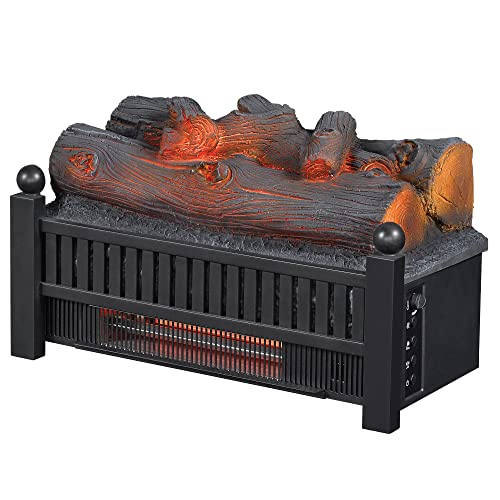
Ethanol Fireplace Insert with Logs
The perfect blend of real flame ambiance and modern convenience. Discover why a ventless ethanol insert with decorative logs is a game-changer for your home.
For homeowners who crave the authentic look and feel of a real fire without the hassle of a chimney, an ethanol fireplace insert with logs presents an elegant solution. This innovative heating and décor option allows you to transform an existing traditional fireplace opening into a clean-burning, ventless focal point. Unlike gas or wood, ethanol fireplaces require no ventilation, making them incredibly versatile for modern homes, apartments, and renovations where a chimney is unavailable or unused.
This guide will walk you through everything you need to know about these unique inserts, from how they work and their benefits to installation and what to look for when buying. If you're considering replacing an old wood-burning setup, this is an excellent way to modernize without major construction. For a broader look at your options, see our guide on types of fireplaces.
What Is an Ethanol Fireplace Insert with Logs?
An ethanol fireplace insert is a self-contained unit designed to fit into an existing fireplace opening. Instead of wood or gas, it burns bio-ethanol, a renewable, clean-burning fuel derived from plants. The "with logs" aspect refers to decorative ceramic or steel elements shaped like logs that are placed within the burner area. These logs are not fuel; they are heated by the ethanol flame to create a glowing, ember-like effect, significantly enhancing the realism of the fire.
Key Concept: The burner is the engine, and the logs are the aesthetic. The logs in an ethanol insert do not burn; they are visual accessories that make the flame look like a traditional wood fire.
These inserts are a type of ventless fireplace, meaning they produce no smoke, ash, or soot. The only byproducts of combustion are small amounts of water vapor and carbon dioxide, similar to human breath, which are safe for indoor air quality in a well-ventilated room. This makes them an ideal choice for those who want a real flame without the expense and complexity of a chimney or gas line.
How Does a Ventless Ethanol Insert Work?
Operating an ethanol insert is straightforward. The unit features a stainless steel burner box that you fill with liquid bio-ethanol. Using a long lighter or a safety match, you ignite the fuel. The flame is controlled by a sliding damper that regulates the amount of oxygen reaching the fuel. When you want to extinguish the fire, you simply close the damper, which starves the flame of oxygen.
The decorative logs are positioned around the burner. As the flame burns, it heats the logs, causing them to glow and radiate a warm, orange light that mimics a real wood fire. Because there is no need for a flue, all the heat generated stays in the room, making them nearly 100% efficient. This is a significant advantage over traditional fireplaces, which can lose up to 90% of their heat through the chimney. You can learn more about maximizing this efficiency in our article on energy-efficient fireplace types.
Pros and Cons of Ethanol Inserts with Logs
Like any heating solution, ethanol inserts have distinct advantages and disadvantages. Understanding these will help you decide if this is the right choice for your home.
Advantages
- No Venting Required: The biggest advantage. You can install it in any room without a chimney.
- Real Flame: Offers the authentic ambiance of a live fire, unlike electric models.
- Eco-Friendly: Bio-ethanol is a renewable fuel, and combustion is clean.
- Easy Installation: Most inserts simply slide into an existing fireplace opening. No gas lines or complex wiring.
- High Efficiency: Almost all heat is radiated into the room.
- Low Maintenance: No ash to clean, no chimney to sweep. Just wipe down the surfaces.
Disadvantages
- Fuel Cost: Bio-ethanol can be more expensive per BTU than wood, gas, or electricity.
- Lower Heat Output: While efficient, the total heat output is generally lower than a gas or wood insert.
- Ventilation Needs: While ventless, they still require a room with some air circulation. They are not recommended for small, sealed rooms.
- Manual Operation: You must manually fill and light the burner. There is no thermostat or remote control.
- Fuel Storage: You need to safely store a supply of bio-ethanol fuel.
If your primary goal is heating a large space, you might compare this to a gas fireplace insert with logs and blower, which offers higher BTU output and automated controls. However, for ambiance and design flexibility, ethanol is hard to beat.
Installation: A Simple DIY Project
One of the most appealing aspects of an ethanol insert is its ease of installation. If you have an existing fireplace, the process is often as simple as sliding the unit into the opening. For those with a pre-existing fireplace, this is a common and straightforward upgrade. The main considerations are:
- Sizing: Measure your fireplace opening carefully. The insert should fit snugly but leave a small gap for air circulation if the unit is not fully sealed.
- Clearances: Always follow the manufacturer's instructions for clearance to combustible materials. While the unit itself is safe, the mantle and surrounding walls should be at a safe distance.
- Leveling: Ensure the insert is level so the fuel burns evenly.
If you are converting a wood-burning fireplace, you may need to have the chimney capped to prevent drafts and debris from falling in. You can read our guide on DIY vs professional fireplace installation to decide the best approach for your skill level. For those interested in a more involved project, you could also explore concepts like a DIY faux fireplace to build a surround for a freestanding unit.
What to Look for in an Ethanol Fireplace Insert with Logs
When shopping for an ethanol insert, consider the following features to ensure you get a quality product that meets your needs:
- Burner Quality: Look for a stainless steel burner. It should be durable and designed to prevent fuel spills. A double-walled burner can improve efficiency and flame stability.
- Log Set Realism: The logs should look natural. Ceramic logs with detailed textures and glowing ember effects offer the best realism. The way the logs are arranged around the burner significantly affects the look of the fire.
- Fuel Capacity and Burn Time: A larger fuel capacity means a longer burn time, but also a larger unit. Consider how long you typically want the fire to burn. Entry-level models may have a smaller capacity, while premium models offer extended burn times.
- Safety Features: Look for features like a fuel spill tray, a safety lock on the fuel filler, and a tool for adjusting the flame without getting close to the fire. Our article on electric fireplace safety shares principles that often apply to ethanol units as well, such as keeping flammable materials away.
- Build Materials: The body of the insert should be made from steel or other heat-resistant materials. Avoid units with a lot of plastic components near the burner.
Maintenance & Safety Tips
Ethanol fireplaces are low-maintenance, but a few simple practices will keep them running safely and efficiently. For a comprehensive overview, see our guide on ethanol fireplace maintenance.
- Never Add Fuel to a Hot Burner: This is the most critical safety rule. Wait until the burner has completely cooled before refilling.
- Use Only Bio-Ethanol Fuel: Never use gasoline, kerosene, or other fuels. They are dangerous and will damage the unit.
- Ventilate the Room: While safe, it's good practice to have a window slightly open or ensure the room has some air exchange when burning for long periods.
- Clean the Burner: Periodically clean the burner with a soft cloth and warm soapy water to remove any residue.
- Store Fuel Safely: Keep bio-ethanol in its original container, away from heat sources and out of reach of children and pets.
Frequently Asked Questions
Do ethanol fireplace inserts produce carbon monoxide?
They produce a very small amount of carbon monoxide (CO), similar to a candle or a gas stove. In a well-ventilated room, this is not a health concern. However, you should never use an ethanol fireplace in a completely sealed, unventilated space. A CO detector is always a recommended safety measure for any home. You can learn more about this in our article on carbon monoxide signs.
Can an ethanol insert heat a whole room?
An ethanol insert is primarily a supplemental heat source and a decorative focal point. It can take the chill out of a room, but it is not designed to heat an entire home or even a large, open-concept space in cold weather. For primary heating, you would need a high-BTU fireplace for actual heating, like a gas or wood insert.
What is the difference between an ethanol insert and a built-in?
An insert is designed to be placed into an existing, often masonry, fireplace opening. A built-in ethanol fireplace is a unit that is framed into a wall during construction or renovation, creating a clean, modern look without a traditional fireplace surround. Our article on built-in vs freestanding fireplace explores these differences in more detail.
Is it safe to leave an ethanol fireplace unattended?
You should never leave any open flame unattended. Just like a candle or a wood fire, an ethanol fireplace should be extinguished before you leave the room or go to sleep. The rule of thumb is the same as for any fireplace: if you can't see it, put it out. For more safety guidelines, see our FAQ on leaving a fireplace on overnight.
Final Thoughts
An ethanol fireplace insert with logs is a fantastic choice for homeowners who value design flexibility, clean-burning operation, and the undeniable charm of a real flame. It offers a perfect middle ground between the convenience of electric and the authenticity of gas or wood. By understanding the pros, cons, and maintenance requirements, you can decide if this modern marvel is the right way to bring warmth and elegance to your living space.
Before you make a final decision, consider the overall design of your room. Will this insert be a focal point, or part of a larger media wall? For inspiration, you might look at ideas for an electric fireplace and TV wall, many of which can be adapted for ethanol units. The key is to choose a solution that fits your lifestyle and aesthetic goals.