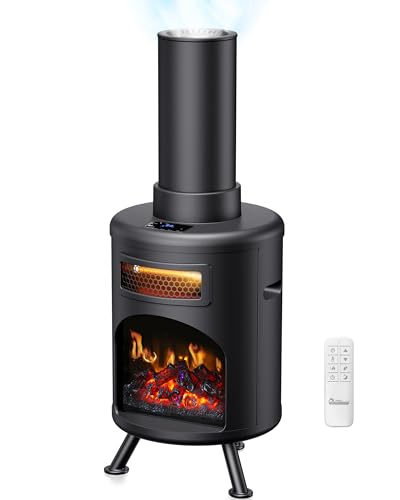
Electric Fireplace vs Space Heater: Which Is Right for You?
When the chill sets in, you need a reliable way to warm your space. Both electric fireplaces and space heaters promise comfort, but they deliver it in very different ways. This comprehensive guide breaks down the heating power, efficiency, safety, and ambiance of each option to help you make an informed decision.
START COMPARINGQuick Answer: If you want a dedicated heating appliance for a specific area, a space heater is often more practical and efficient for pure warmth. However, if you want to combine heating with a beautiful focal point and year-round ambiance, an electric fireplace is the superior choice. The right answer depends on your primary goal: heating or atmosphere.
The Core Difference: Purpose and Design
At their heart, both devices use electricity to generate heat, but their design philosophies are entirely different. A space heater is a purely utilitarian appliance. Its sole purpose is to convert electrical energy into heat as efficiently as possible, often with features like oscillation, thermostats, and timers. Its design is secondary to its function, which is why many are boxy and utilitarian.
An electric fireplace, on the other hand, is a dual-purpose device. It is designed first and foremost to be a decorative focal point, simulating the look of a real fire. The heating function is an added benefit, but it is often secondary to the aesthetic. This fundamental difference dictates everything from its heat output to its safety features and overall cost of ownership.
Electric Fireplace vs. Space Heater: Head-to-Head Comparison
To make the choice clearer, let's compare them across the most important categories for a homeowner.
| Feature | Electric Fireplace | Space Heater |
|---|---|---|
| Primary Purpose | Ambiance & Supplemental Heat | Focused Heating |
| Heating Method | Fan-forced, Infrared, or both | Infrared, Fan-forced, Oil-filled, Ceramic |
| Typical Heat Output | 1,500 to 5,000 BTU (up to ~1,000 sq ft) | 1,500 to 5,100 BTU (up to ~1,000 sq ft) |
| Efficiency | ~100% efficient (all electricity becomes heat) | ~100% efficient (all electricity becomes heat) |
| Ambiance | High (flame effects, crackling sounds, mantel) | Low to None (purely functional) |
| Footprint | Can be large, often a permanent fixture | Small, portable, easy to store |
| Safety Features | Cool-to-touch glass, overheat protection, often safer for pets/kids | Tip-over switch, overheat protection, cool-touch exterior |
| Installation | Plug-in, built-in, or wall-mounted | Plug-and-play |
| Year-Round Use | Yes (flames can be used without heat) | No |
Heating Performance and Efficiency
When it comes to raw heating power, both electric fireplaces and space heaters are limited by the standard household electrical outlet. Most units operate at a maximum of 1,500 watts, which translates to approximately 5,100 BTUs of heat. This is enough to effectively warm a room up to about 400 square feet, or to provide supplemental heat to a larger room.
While both are considered nearly 100% efficient at converting electricity to heat, the *perceived* efficiency can differ. A space heater is designed to direct that heat where it's needed most. Many models feature oscillation to distribute warmth, and some use infrared technology to heat objects and people directly, rather than the air. This can feel more immediate and effective in a small, focused area. You can learn more about how an electric fireplace's heating capacity is calculated to get a better idea of its room-filling potential.
An electric fireplace, however, often has its heating vents positioned low to the ground. This allows the heat to rise naturally and create a convective loop, which can be surprisingly effective at warming an entire room if it's in a central location. However, if you place furniture in front of it, the heat distribution can be blocked. For maximum heating efficiency, a dedicated space heater often wins in a direct comparison, but a well-placed fireplace can be a close second.
Ambiance and Aesthetics: The Fireplace's Winning Category
This is where the electric fireplace shines. A space heater is a tool; an electric fireplace is a piece of furniture. It transforms a room, providing a warm, inviting focal point. Modern electric fireplace ideas include incredibly realistic flame effects, glowing ember beds, and even crackling sound effects that mimic a real wood fire.
The aesthetic benefits extend beyond just the flames. Many models are designed with beautiful mantels, surrounds, and integrated bookshelves, turning the unit into a functional and stylish part of your home's decor. You can use the flame effect year-round, even in the summer, to create a cozy atmosphere without adding unwanted heat. A space heater is stored away in the off-season; an electric fireplace remains a permanent, beautiful addition to your home.
Safety and Usage Considerations
Both types of devices have robust safety features. Most space heaters come with a tip-over switch, which shuts the unit off if it's knocked over, and an overheat protection sensor. They can get very hot to the touch, however, so they must be kept away from curtains, bedding, and children or pets.
Electric fireplaces are generally considered safer for households with children and pets. The heating element is enclosed behind glass, which is often designed to be "cool-to-touch." The heat is typically vented from the top, away from the immediate front panel. Furthermore, many fireplaces are wall-mounted or built-in, so they can't be knocked over. Before using any electric heater, it's wise to review general electric fireplace safety tips to ensure proper usage.
Making the Right Choice for Your Home
Your decision should be based on your primary need:
- Choose a Space Heater if: Your main goal is to quickly and efficiently heat a small, specific area like a home office, a drafty bedroom, or a chilly basement. You value portability, simple storage, and a low initial investment (entry-level to mid-range tier).
- Choose an Electric Fireplace if: You want to combine supplemental heat with a beautiful design element. It's ideal for a living room, bedroom, or dining area where you want to create a cozy atmosphere. It serves as a permanent, stylish focal point that can be used for ambiance all year long. The investment ranges from mid-range to luxury tier, depending on the style and features like an integrated TV stand or a decorative mantel.
While a space heater wins for pure, focused utility, an electric fireplace offers a unique blend of function and form that can enhance the comfort and value of your home. For many homeowners, the aesthetic and year-round ambiance of a fireplace make it the more satisfying long-term choice.
Frequently Asked Questions (FAQ)
1. Is an electric fireplace cheaper to run than a space heater?
Both appliances consume electricity at a similar rate to produce the same amount of heat. The running cost depends almost entirely on their wattage (most are around 1,500 watts) and how long you use them. An electric fireplace might be slightly more expensive to run if you use the flame effect without heat, as this consumes a small amount of electricity for lighting and the motor. For heating purposes, their costs are comparable. You can find more details on whether electric fireplaces are expensive to run.
2. Can an electric fireplace heat a whole house?
No. Like a space heater, a standard 1,500-watt electric fireplace is designed for zone heating. It can comfortably heat a room up to about 400 square feet. It is not powerful enough to replace a central heating system for an entire home. Attempting to heat a whole house with a single unit would be inefficient and impractical. Learn more about if a fireplace can heat an entire house.
3. Do electric fireplaces use a lot of electricity?
An electric fireplace uses the same amount of electricity as a standard space heater when on its highest heat setting (around 1,500 watts). That's similar to running a powerful hairdryer or a microwave. It's considered a moderate energy user. To manage costs, you can often run just the flame effect without the heater, which uses a minimal amount of electricity. For a deeper dive, see our guide on fireplace electricity usage.
4. Are electric fireplaces safer than space heaters?
Generally, electric fireplaces are considered slightly safer, especially in homes with pets and children. Their heating elements are enclosed behind a glass panel that remains relatively cool to the touch, and they are often fixed in place (wall-mounted or built-in), eliminating the risk of being tipped over. However, both types of heaters are very safe when used correctly and according to the manufacturer's instructions.