
Electric Fireplace That Actually Heats: A Buyer's Guide
Move beyond ambiance. Learn how to identify electric fireplaces with genuine heating power to warm your space effectively and efficiently.
The Heating Reality: Not all electric fireplaces are created equal. While many provide beautiful flames, only some are engineered to deliver meaningful supplemental heat. This guide will show you exactly what to look for.
The Truth About Electric Fireplace Heating
The allure of an electric fireplace is undeniable: instant ambiance, no venting, and simple installation. However, a common misconception is that all electric fireplaces are effective heaters. The reality is that they fall into two distinct categories: ambiance-only and heater-capable. An ambiance-only unit produces flames with negligible heat output, while a heater-capable model is designed to warm a room. Understanding this difference is the first step to making a satisfying purchase. If you're new to fireplaces in general, a good starting point is our beginner's guide to fireplaces.
The key to finding an electric fireplace that actually heats lies in its specifications, not its looks. By focusing on a few critical metrics, you can separate true heaters from decorative units and find a model that delivers both comfort and charm.
Key Metrics: BTU and Wattage Explained
When evaluating an electric fireplace's heating capability, two numbers matter most: wattage and British Thermal Units (BTU). These figures tell you exactly how much heat the unit can produce.
Wattage: The Power Draw
Wattage indicates the electrical power the fireplace consumes. Most residential circuits in the US can handle a 1500-watt appliance, which is the standard for high-output electric fireplaces. A 1500-watt unit will produce approximately 5,100 BTUs of heat. Some smaller or lower-powered units may draw 750 watts (about 2,550 BTUs), which is better suited for small rooms or as a supplemental heat source. For a deeper dive into how wattage translates to real-world performance, see our article on heating capacity and BTU guides.
BTU: The Heat Output
BTU is the standard unit for measuring heat energy. It tells you how much heat the fireplace can add to a room. As a rule of thumb, you need about 20 BTUs for every square foot of space you want to heat, though this can vary based on insulation, ceiling height, and climate. Therefore, a standard 5,100 BTU electric fireplace is generally effective for rooms up to 400 square feet. If you need to heat a larger area, you may need a more powerful unit or a different type of heater altogether. You can learn more about sizing in our guide on how to size a fireplace.
Heating Technologies: Infrared vs. Fan-Forced
Electric fireplaces that heat use one of two primary technologies to distribute warmth. The type of technology affects how the heat feels and how quickly it warms a space.
- Fan-Forced Heat: This is the most common method. A heating element warms the air, and a blower fan pushes that warm air out into the room. It provides a gentle, even heat and is very effective for supplemental heating. Units with this feature often include a thermostat to maintain a consistent temperature. You can find many models that use this technology in our list of electric heating fireplaces and stoves.
- Infrared Heat: This technology uses a quartz or carbon tube to emit infrared radiation, which directly heats objects and people in its path rather than the air. It provides a more immediate, penetrating warmth, similar to the feeling of sunlight. Infrared heaters are often quieter because they don't rely on a loud blower fan. For a more in-depth comparison, see our article on infrared vs. fan-forced heating.
Features That Enhance Heating Performance
Beyond the core heating specs, several features can make an electric fireplace a more effective and convenient heater.
Thermostat and Remote Control
A built-in thermostat is a game-changer. It allows you to set a target temperature, and the fireplace will cycle on and off to maintain it, preventing the room from getting too hot and saving energy. A remote control adds convenience, letting you adjust settings from across the room. Many of the best models combine these features, and you can find them in our selection of electric fireplace inserts with remote control.
Timer and Smart Features
A timer lets you set the fireplace to run for a specific duration, which is useful for warming a room before you wake up or ensuring it turns off after you fall asleep. Some high-end models even offer smart Wi-Fi controls, allowing you to manage your fireplace via a smartphone app or voice assistant. This is a hallmark of many smart Wi-Fi fireplace controllers.
Flame Effect Independence
One of the best features of an electric fireplace is the ability to operate the flames independently of the heater. This means you can enjoy the cozy ambiance of a fire in the summer without adding unwanted heat. When choosing a model, look for this feature as a standard, especially if you plan to use it year-round. Our guide on are electric fireplaces tacky discusses how flame realism plays a role in overall satisfaction.
Installation and Placement for Optimal Heating
How and where you install your electric fireplace affects its heating efficiency. Unlike gas or wood models, there are no venting requirements, which offers tremendous flexibility. The main consideration is access to a standard electrical outlet.
For the best heat distribution, place the fireplace in the room where you spend the most time. If you're considering a wall-mounted unit, ensure it's not placed too high, as heat rises and you want it to circulate at occupant level. For a seamless look, many people choose to convert an existing traditional fireplace. Our articles on converting a wood-burning fireplace to electric and installing an electric fireplace insert into an existing fireplace provide detailed guidance on this popular renovation. For apartments or rentals, a freestanding or wall-mounted unit is an excellent choice, as discussed in our guide on apartment fireplace installation.
Efficiency and Running Costs
Electric fireplaces are known for their high efficiency. Nearly 100% of the electricity they consume is converted into heat, making them more efficient than many other heating sources. However, the cost to run one depends on your local electricity rates and how often you use it.
Using a heater-capable electric fireplace as a supplemental heat source—warming only the room you're in—can be more cost-effective than heating your entire home with a central system. To understand the financial aspects, explore our articles on are electric fireplaces expensive to run and electric vs. gas running costs. A unit with a thermostat is key to managing costs, as it prevents energy waste.
Common Pitfalls: When Your Fireplace Isn't Heating
If you have an electric fireplace that isn't heating as expected, several common issues could be the cause. It might be a setting problem, a tripped safety switch, or a faulty component. Before assuming the worst, check the basics: ensure the heater function is turned on, the thermostat is set higher than the current room temperature, and the unit is receiving power.
If you're experiencing issues, our troubleshooting guides can help. For instance, if your electric fireplace is not heating, we walk through the diagnostic steps. If it's tripping the breaker, that indicates a more serious electrical issue. Regular maintenance, like cleaning the electric fireplace, can prevent many problems and ensure it operates efficiently for years. For a comprehensive list of issues, see our guide on electric fireplace troubleshooting.
Making Your Final Choice
Finding an electric fireplace that actually heats requires a shift in focus from aesthetics to specifications. By prioritizing BTU output, heating technology, and smart features like thermostats, you can find a unit that is both beautiful and functional. Whether you're looking for a freestanding model, a wall-mounted unit, or an insert for an existing fireplace, there is a heater-capable option for your space.
Remember to consider the size of the room you need to heat and choose a model with sufficient power. With the right information, you can enjoy the cozy warmth of a fire without the hassle of traditional fuel sources. For more guidance on selecting the perfect model for your home, explore our fireplace buying guide.
Top-Rated Electric Fireplaces That Actually Heat
⚠️ AFFILIATE DISCLOSURE: This website contains affiliate links. As an Amazon Associate, we earn from qualifying purchases. If you make a purchase through these links, we may receive a small commission at no additional cost to you. Read our full affiliate policy.

duraflame Freestanding Electric Fireplace Stove Heater with 3D Flame Effect for 1,000 Sq. Ft. Room, Black
Check price on Amazon
EXNOS Electric Fireplace Stove Heater with 3D Flame, 1500W &Flame-Only Mode | Space Heater Fireplace, Indoor Use, Freestanding, 12H Timer, Dual Control, Infrared, Thermostat, Tip-over&Overheat Protection
Check price on Amazon
Electric Fireplace Heater Stove with 3D Flame, 1000/1500W & Flame-Only Mode | Freestanding Electric Fireplace Heater with 5100 BTU Output, Thermostat, ETL, Overheat Protection, for Indoor Use, 22.28 in
Check price on Amazon
OLIXIS Freestanding Electric Fireplace, 19" Small Space Heater for Indoor | 3D Flame Effect, 5110 BTU, 750W & 1500W Heat Mode, Easy Control, for Living Room, Bedroom & Office, 19" H, Black
Check price on Amazon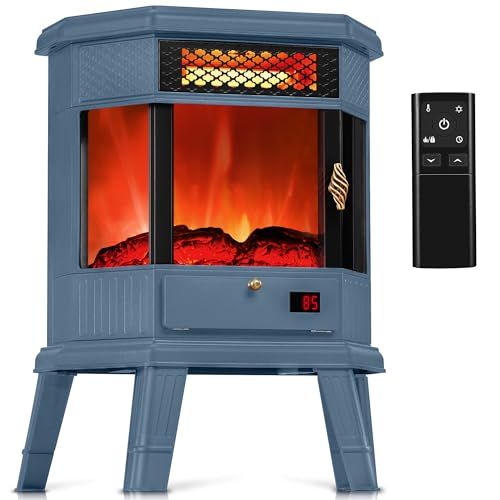
RealSmart Electric Fireplace Heater 22 in Freestanding Fireplace Stove Infrared Fireplace with 3D Flame Effect Remoted Control, Timer, Overheating Protection (Blue)
Check price on Amazon
DUMOS 36" Electric Fireplace Heater Freestanding/Wall Mounted/Recessed | 1500W/750W Fireplace Space Heater, 50-95°F Thermostat, Remote Control, Under 40dB, 12H Timer, Touch Screen, Realistic Flame
Check price on Amazon
1500W Electric Fireplace Heater, Freestanding 3D Flame Space Heater Indoor | PTC heating, Adjustable thermostat, remote, 12H timer, Built-in Safety for Rooms
Check price on Amazon