
Cost to Replace a Wood Burning Fireplace with Gas
Your complete guide to understanding the financial and practical considerations of converting from wood to gas.
Why Consider Converting from Wood to Gas?
Switching from a traditional wood-burning fireplace to a gas model is a popular upgrade for many homeowners. The appeal is clear: the convenience of instant, controlled flames, the elimination of hauling wood and cleaning ashes, and the reliable, efficient heat output. While the initial investment is a significant factor, understanding the complete picture of the cost to replace a wood burning fireplace with gas is the first step in making an informed decision.
This guide will walk you through the key cost components, from the unit itself to the installation labor, helping you evaluate if this upgrade aligns with your home improvement goals. For a broader look at the entire decision-making process, our fireplace buying guide is an excellent resource.
Key Factors Influencing Your Conversion Cost
The final cost is not a single line item but a combination of several factors. Understanding these will help you budget more accurately and ask the right questions when getting quotes from professionals.
Primary Cost Drivers
- Type of Gas Fireplace: A basic gas log set is at the entry-level of the market, while a high-efficiency gas insert or a completely new built-in unit is a premium investment.
- Installation Complexity: The condition of your existing chimney and firebox plays a major role. A straightforward install is less labor-intensive than one requiring a new liner or significant structural modifications.
- Labor and Permits: Professional installation by a licensed technician is essential for safety and code compliance. Permit fees vary by location and add to the total project cost.
- Venting Requirements: Whether you choose a vented or ventless system will impact both the equipment and installation costs. A direct vent insert, for example, requires a specific venting configuration.
Breaking Down the Costs: What to Expect
While exact figures depend on your specific choices and region, we can break down the expenses into clear categories using universal market tiers. This approach helps you gauge the relative investment without being tied to fluctuating prices.
1. The Gas Fireplace Unit (Entry-Level to Luxury)
This is your primary investment. Your choice here sets the foundation for the entire project.
- Budget-Friendly / Entry-Level: This tier typically includes basic gas log sets. These are the most affordable option and provide a realistic flame without significant heating efficiency. They are a good choice if ambiance is your main goal. You can learn more about this option in our article on converting a wood burning fireplace to gas logs.
- Mid-Range: This category is dominated by gas fireplace inserts. These units are designed to fit into your existing firebox and are much more efficient at heating. They often come with features like blowers and remote controls, offering a great balance of performance and value. A gas fireplace insert with a blower and remote control is a classic mid-range choice.
- Premium / High-End: At the top tier, you'll find high-efficiency, direct-vent gas inserts and custom built-in units. These are designed for maximum heat output, superior realism, and often feature advanced controls like smart thermostats. They may also include decorative fronts and designer media. A direct vent gas fireplace insert with a blower represents this top-tier of performance and efficiency.
2. Installation & Labor Costs (The Professional Investment)
Professional installation is non-negotiable for gas appliances. This cost covers the expertise required to safely and legally install your new fireplace. The complexity of the job is the main driver here.
- Basic Swap (Mid-Tier Labor): If your existing fireplace and chimney are in good condition and you're installing a standard insert, the labor cost is moderate. This involves fitting the insert, connecting the gas line, and ensuring proper ventilation. For a deeper look at this process, see our guide on cost to install a gas fireplace in an existing fireplace.
- Complex Installation (High-End Labor): If your chimney is damaged, unlined, or requires a new liner (like a stainless steel chimney liner), the labor and material costs increase significantly. This is often a necessary step for safety and performance.
3. Additional Expenses to Consider
Don't overlook these ancillary costs that can impact your final budget.
- Permits: A permit from your local municipality is almost always required for gas appliance installation.
- Gas Line Extension: If a gas line isn't already nearby, you'll need to pay a plumber to run one. A professional can advise on this during a gas fireplace sales and installation consultation.
- Chimney Modifications: Sometimes, a new chimney cap or other modifications are needed.
- Removal and Disposal: There may be a fee to remove and dispose of your old wood-burning insert or other components.
For a detailed breakdown of installation requirements, our gas fireplace installation requirements guide is a must-read.
The Long-Term Value of Converting to Gas
While the upfront cost is a major consideration, it's also important to weigh the long-term benefits. A gas fireplace offers significant advantages in terms of convenience, efficiency, and even home value. The ability to heat a room with the flip of a switch and the reduced maintenance compared to wood are key selling points.
Furthermore, modern gas inserts are highly efficient, potentially reducing your reliance on other heating sources. For a deeper analysis of the value proposition, you might want to read our article on whether a fireplace adds value to your home. The decision often comes down to prioritizing lifestyle benefits and long-term efficiency over the initial outlay.
If you are handy and considering a DIY approach for part of the project, it's crucial to understand the limits of what you can safely do yourself. Our guide on DIY vs professional fireplace installation can help you draw that line.
Recommended Gas Fireplaces & Inserts for Conversions
⚠️ AFFILIATE DISCLOSURE: This website contains affiliate links. As an Amazon Associate, we earn from qualifying purchases. If you make a purchase through these links, we may receive a small commission at no additional cost to you. Read our full affiliate policy.

Midwest Hearth 17-Inch Gas Log Lighter Burner Tube | Gas Starter Pipe for Wood-Burning Fireplaces, 3/8 NPT Thread, NG & LP, Low Carbon Steel, Tube Only, Air Mixer Not Included
Check price on Amazon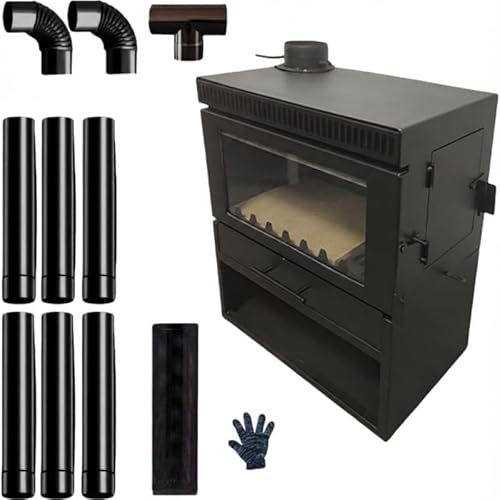
Cast Iron Wood Burning Stove Fireplace, Secondary Combustion Clean Burn System, Large Viewing Glass, Dual Loading Doors, Airwash Technology, Flue Damper & Log Rack
Check price on Amazon
Universal Gas Log Lighter Starter, Gas Fireplace Embers, Gas Fireplace Logs Fireplace Lighter with Burner Pipe, Fuel Mixer, Mixer Plug and Wrench, for Natural Gas Wood Burning Fireplaces.
Check price on Amazon
Gas Fireplace Logs, 4 Small Pieces of Ceramic Simulated Firewood for a Variety of Indoor Gas fireplaces, ventless, Gel, Ethanol, Electric or Outdoor fireplaces and fire pits
Check price on Amazon
Midwest Hearth 24-Inch Gas Log Lighter Burner Tube | Gas Starter Pipe for Wood-Burning Fireplaces, 3/8 NPT Thread, NG & LP, Low Carbon Steel, Tube Only, Air Mixer Not Included
Check price on Amazon
Midwest Hearth Propane Log Lighter Kit, Valve, 3in Key & Floor Plate | For Wood-Burning Fireplaces, CSA Certified 1/2 NPT Valve, 19.5in Pipe Converts Straight or 90 Degree, Chrome Key & Plate
Check price on Amazon
Stanbroil Universal Gas Log Lighter Starter for Wood Burning Fireplace NG
Check price on Amazon
Americangaslogs Gas Log Lighter Starter for Wood Burning Fireplaces (Propane Gas Log Lighter)
Check price on AmazonFrequently Asked Questions
Can I install a gas fireplace myself?
While some aspects might seem straightforward, installing or converting to a gas fireplace is a complex job that involves running gas lines and ensuring proper ventilation. It is a job that should be left to a licensed professional to ensure safety and compliance with building codes. For more information, see our guide on DIY vs professional installation.
Do I need a chimney for a gas fireplace?
Not always. Ventless gas fireplaces do not require a chimney, while vented models (like direct vent) do require a venting system, which can be installed through an existing chimney or directly through an exterior wall. Our article on if you need a chimney or vent explains this in detail.
How long does the conversion take?
A straightforward installation can often be completed in a single day. However, if new gas lines need to be run or chimney modifications are required, the project can take several days. For more insights, check our guide on fireplace installation time.