
Cost of Gas Fireplace and Installation
Understand the real expenses behind owning a gas fireplace — from the unit itself to labor, venting, permits, and long-term operating costs.
Explore the Cost BreakdownWhy this guide matters: A gas fireplace is a significant investment. Knowing what drives the cost — and where you can save — helps you make a confident decision without surprises. This guide breaks down every expense so you can budget accurately.
Why Gas Fireplace Costs Vary So Much
The cost of a gas fireplace and installation is not a single number. It depends on the type of unit you choose, the complexity of the installation, your home's existing infrastructure, and local labor rates. Two homeowners on the same street can pay very different amounts for what looks like the same fireplace.
Understanding the variables helps you compare quotes fairly and avoid hidden expenses. Whether you are replacing an old unit, converting from wood, or adding a fireplace to a new construction, the same cost categories apply. For a broader overview of fireplace pricing across all fuel types, see our fireplace cost breakdown.
Before diving into numbers, it helps to understand the different types of fireplaces available. Gas models come in vented, ventless, direct-vent, and insert configurations — each with distinct installation requirements and cost implications.
The Full Cost Breakdown
A gas fireplace project typically includes four main cost categories: the unit itself, installation labor, venting and materials, and permits or inspections. Some projects also require electrical work, gas line extensions, or hearth modifications.
1. The Gas Fireplace Unit
The unit is often the largest single expense, but it is not the only one. Gas fireplaces range from entry-level ventless models to premium direct-vent units with realistic logs and advanced controls. Here is how the market generally tiers:
Entry-Level
Basic ventless or simple vented models with standard flame presentation and manual controls.
Best for budget-conscious buyers who prioritize function over realism.
Mid-Range
Direct-vent or high-quality ventless units with realistic logs, remote control, and better efficiency.
The sweet spot for most homeowners seeking a balance of realism and value.
Premium / Luxury
High-end linear or see-through models with ceramic logs, smart controls, and custom surrounds.
For those who want a statement piece with the most realistic flame and advanced features.
When comparing units, focus on efficiency ratings, heating capacity, and venting requirements. A mid-range direct-vent model often costs more upfront than an entry-level ventless unit but may deliver better efficiency and resale value. If you are replacing an existing fireplace, an insert replacement may be more cost-effective than a full remodel.
2. Installation Labor
Labor is the second major cost and varies widely by region and complexity. Installing a gas fireplace is not a simple DIY task — it involves connecting to a gas line, ensuring proper venting, and meeting safety codes. Most homeowners hire a licensed professional.
Labor costs depend on:
- Type of installation: A straightforward ventless insert into an existing fireplace is simpler than a new direct-vent installation through an exterior wall.
- Gas line access: If a gas line is already nearby, connection is faster. If the line must be extended from another part of the house, labor increases.
- Venting complexity: Direct-vent units require precise hole cutting and sealed vent pipes. Longer vent runs or second-story installations cost more.
- Electrical work: Many modern gas fireplaces need electricity for blowers, remote receivers, or LED lighting. If no outlet is nearby, an electrician may be needed.
- Hearth and surround modifications: If the existing hearth or surround is incompatible, additional carpentry or masonry work may be required.
For a detailed walkthrough of what installation involves, see our fireplace installation guide overview. If you are weighing DIY against professional installation, our DIY vs professional comparison explains the risks and trade-offs.
3. Venting and Materials
Venting is a critical cost driver that many homeowners overlook. The type of venting your fireplace requires affects both the unit price and the installation labor.
| Venting Type | Typical Cost Impact | Key Considerations |
|---|---|---|
| Ventless (Unvented) | Lowest installation cost | No chimney or exterior vent needed. Requires more frequent cleaning and may produce moisture. Check local codes. |
| Direct-Vent | Moderate to high | Horizontal or vertical vent through wall or roof. Sealed combustion for better efficiency and indoor air quality. |
| Natural Vent (B-Vent) | Moderate to high | Requires a chimney or existing flue. Less efficient than direct-vent but often simpler to retrofit. |
If your home lacks a chimney, a ventless or direct-vent model may be your best option. Our guide on whether you need a chimney or vent explains the requirements in detail. For a comparison of vented vs ventless, see our gas fireplace installation requirements page.
4. Permits and Inspections
Most municipalities require a permit for gas fireplace installation, especially when a new gas line is involved. Permit fees vary by location but are typically a modest portion of the total project cost. Skipping permits can lead to fines, insurance issues, and problems when selling your home.
After installation, an inspection ensures the work meets safety codes. Your installer should handle the permit application and schedule the inspection. If you are unsure about requirements in your area, our fireplace permit requirements guide provides general guidance.
What Drives Your Total Cost Up or Down
Several factors can push your total cost higher or lower. Understanding these helps you prioritize where to invest and where to save.
Factors That Increase Cost
- Complex venting: Long vent runs, second-story installations, or roof penetration add labor and materials.
- No existing gas line: Extending a gas line from another part of the home requires a licensed plumber and adds to the project timeline.
- Electrical work: Adding an outlet or hardwiring a blower increases cost.
- Custom surround or hearth: Stone, marble, or custom carpentry work adds significant expense.
- Premium unit features: Smart controls, realistic ceramic logs, and high-efficiency ratings raise the unit price.
- Structural changes: Removing a wall, modifying framing, or reinforcing a floor may be necessary in some installations.
Factors That Reduce Cost
- Existing gas line nearby: If a gas line already serves another appliance in the same room, connection is simpler.
- Existing fireplace opening: Installing an insert into an existing masonry or prefab fireplace is often less expensive than a new build.
- Ventless model: No venting required, which reduces labor and materials.
- Simple installation: A straightforward replacement with minimal modifications costs less than a custom project.
- Off-season scheduling: Some installers offer better availability (and sometimes better rates) during spring and summer.
If you are replacing a wood-burning fireplace with gas, our guide on replacing a wood fireplace with a gas insert covers the specific cost and installation considerations. For those considering a conversion, see cost of converting a wood-burning fireplace to gas.
Common Installation Scenarios and What They Involve
The cost of installation depends heavily on your starting point. Here are the most common scenarios homeowners encounter:
Scenario 1: Installing a Gas Fireplace Insert into an Existing Fireplace
This is often the most cost-effective option if you already have a wood-burning fireplace or an empty firebox. The insert fits into the existing opening, and venting may use the existing chimney (with a liner) or a direct-vent system. Labor is generally lower because the structure is already in place. See our guide on installing a gas fireplace insert in an existing fireplace for a detailed walkthrough.
Scenario 2: New Direct-Vent Installation in a Wall
If you are adding a fireplace to a room without an existing fireplace, a direct-vent wall installation is common. This requires cutting through an exterior wall, running the vent pipe, and connecting the gas line. Costs are moderate to high depending on wall construction and vent length.
Scenario 3: Converting from Wood to Gas
Converting a wood-burning fireplace to gas involves removing or adapting the existing firebox, running a gas line, and installing a new unit or insert. The cost depends on whether you keep the existing chimney and how much modification is needed. Our turn a wood-burning fireplace into gas guide explains the process.
Scenario 4: Ventless Installation in a Room Without a Chimney
Ventless gas fireplaces are popular for rooms without chimneys because they require no exterior venting. However, they are not legal in all states or municipalities, and they require more frequent cleaning. Installation is generally simpler and less expensive, but always verify local codes first.
For a broader comparison of installation types, see our wall-mounted vs insert vs freestanding fireplace guide.
Ongoing Costs of Owning a Gas Fireplace
The upfront cost is only part of the picture. Gas fireplaces also have ongoing expenses that affect your total cost of ownership.
Fuel Costs
Natural gas and propane prices fluctuate by region and season. A gas fireplace used for ambiance a few hours per week costs less to operate than one used as a primary heat source. If you plan to use your fireplace for significant heating, compare running costs with our electric vs gas fireplace running costs guide. For a broader view of daily usage, see fireplace daily running cost.
Maintenance and Inspection
Annual inspection and cleaning are recommended for all gas fireplaces. This ensures safe operation and catches issues early. Costs vary by provider and location. Our fireplace maintenance cost guide covers what to expect, and our gas fireplace maintenance page explains what the service includes.
Repairs and Replacement Parts
Like any appliance, gas fireplaces may need occasional repairs. Common issues include thermocouple failure, blower fan problems, and remote control malfunctions. Our fireplace troubleshooting section covers many common problems and fixes. For specific gas issues, see gas fireplace won't light and pilot light keeps going out.
Cleaning
Ventless models require more frequent cleaning of the burner and logs. Even vented models benefit from periodic glass cleaning. Our guide on how to clean fireplace glass and cleaning a gas fireplace burner provide step-by-step instructions.
Is a Gas Fireplace Worth the Investment?
For many homeowners, the answer is yes — but it depends on your goals. A gas fireplace offers convenience, consistent heat, and a realistic flame without the mess of wood. It can also add value to your home, though the return on investment varies by market and buyer preferences.
If you are primarily looking for ambiance, a gas fireplace delivers a convincing experience with minimal effort. If you want supplemental heat, a high-efficiency direct-vent model can be a practical choice. If you are comparing fuel types, our electric vs gas vs wood comparison and pros and cons by type guides can help you decide.
For a deeper dive into whether a fireplace adds value, see our fireplace home value guide. If you are weighing a gas fireplace against other heating options, our fireplace vs central heating and fireplace vs space heater comparisons provide useful context.
How to Save on Your Gas Fireplace Project
You do not have to sacrifice quality to manage costs. Here are practical ways to keep your project within budget:
- Get multiple quotes: Labor rates vary significantly. Three quotes give you a realistic range and negotiating power.
- Choose a simpler installation: If your home layout allows, a ventless or direct-vent model with a short vent run costs less to install.
- Use an existing fireplace opening: An insert into an existing firebox avoids the cost of building a new enclosure.
- Schedule in the off-season: Spring and summer are slower for fireplace installers, which can mean better availability and sometimes better pricing.
- Handle finishing work yourself: If you are handy, you may be able to paint, tile, or build a surround yourself while leaving the gas connection and venting to a professional.
- Verify permit requirements early: Knowing what is required before you start avoids costly delays and rework.
- Consider a mid-range unit: Entry-level models may lack realism and efficiency; premium models add features you may not need. Mid-range often offers the best balance.
For more money-saving tips, see our fireplace energy saving tips and hidden costs of owning a fireplace guides.
Frequently Asked Questions
How much does a gas fireplace cost to install?
The total depends on the unit type, venting, labor, and local rates. Entry-level ventless installations cost less, while premium direct-vent projects with complex venting cost more. Always get multiple quotes to understand the range in your area.
Can I install a gas fireplace myself?
Gas fireplace installation involves connecting to a gas line and venting combustion byproducts. This work is typically regulated and requires a licensed professional. DIY installation is not recommended for gas appliances due to safety and permit requirements. See our DIY vs professional comparison for details.
What ongoing costs should I expect?
Ongoing costs include fuel (natural gas or propane), annual maintenance and inspection, and occasional replacement parts. Ventless models may also require more frequent cleaning. These costs vary by usage and local utility rates.
Do I need a permit for a gas fireplace installation?
Most municipalities require a permit, especially when a new gas line is involved. Your installer should handle the permit application and inspection. See our fireplace permit requirements guide for general guidance.
Is a ventless gas fireplace cheaper to install?
Yes, ventless models generally cost less to install because they require no chimney or exterior venting. However, they are not legal in all areas and require more frequent cleaning. Always check local codes before choosing a ventless model.
How long does installation take?
A straightforward insert installation may take a few hours. A new direct-vent installation with gas line extension and venting can take one to two days or more, depending on complexity. See our fireplace installation time guide for details.
Ready to Choose Your Gas Fireplace?
Now that you understand the costs, explore our recommended models and find the right fit for your home and budget.
View Recommended Gas FireplacesRecommended Gas Fireplaces for Your Home
⚠️ AFFILIATE DISCLOSURE: This website contains affiliate links. As an Amazon Associate, we earn from qualifying purchases. If you make a purchase through these links, we may receive a small commission at no additional cost to you. Read our full affiliate policy.

EROMMY 24 Inch Ventless Fireplace Logs Set, Only Used for Natural Gas | Remote Control, 32000 BTU Gas Fireplace Insert, South America Silk Floss Wood, Brown
Check price on Amazon
RealFyre 18 Inch Vented Gas Fireplace Logs Kit, Natural Gas Fire Logs Set with Ceramic Logs and Burner, High Heat Performance (18-Inch Live Oak [Ng] [Includes Gas Connection-Kit])
Check price on Amazon
Comfort Glow Dual Fuel Ashen Grey Vent Free Gas Fireplace, 26K BTU GFD3840T | Natual Gas or Liquid Propane Fireplace, Adjustable Thermostat, Heats up to 900 sq ft Area, Electronic Spark Ignition, ODS
Check price on Amazon
Duluth Forge Natural Gas Ventless Gas Fireplace Insert - 26,000 BTU, T-Stat Control - Model# FNF300T
Check price on Amazon
Duluth Forge Dual Fuel Ventless Gas Fireplace Insert - 32,000 BTU, Remote Control - Model# FDI32R
Check price on Amazon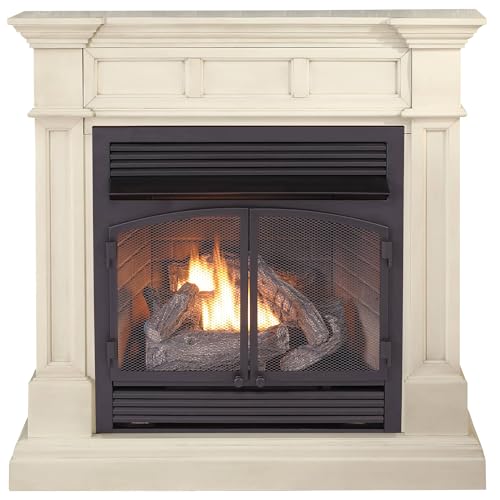
Duluth Forge Dual Fuel Ventless Gas Fireplace with Mantel - 32,000 BTU, Remote Control, Antique White Finish - Model# DFS-400R-2AW
Check price on Amazon
Buck Stove 40K BTU 42" Vent Free Natural Gas Fireplace - Zero Clearance
Check price on Amazon