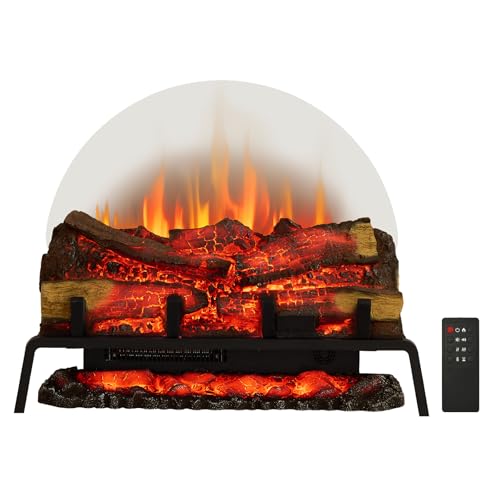
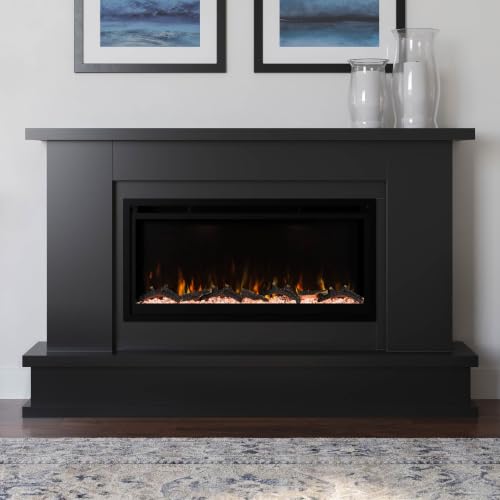
Contemporary Freestanding Electric Fireplace
Discover how modern freestanding electric fireplaces combine sculptural design, flexible placement, and efficient zone heating for today's homes
EXPLORE THE GUIDEWhat Is a Contemporary Freestanding Electric Fireplace?
A contemporary freestanding electric fireplace is a self-contained heating and ambiance unit that does not require wall mounting, built-in framing, or a chimney. Unlike traditional fireplaces that are permanently attached to a wall or masonry structure, a freestanding model stands independently on the floor, allowing you to position it wherever a standard electrical outlet is available.
What makes these units "contemporary" is their design language: clean geometric silhouettes, minimalist lines, and finishes such as matte black, brushed stainless steel, tempered glass, and powder-coated metals. Many modern freestanding electric fireplaces resemble sculptural objects as much as they do heating appliances, which is why they have become a popular choice for lofts, apartments, renovated living rooms, and open-concept spaces.
Because they run on electricity, these fireplaces produce no combustion byproducts, require no venting, and can be placed in rooms where a gas or wood-burning unit would be impractical. If you are still weighing fuel types, our electric vs gas vs wood fireplace comparison provides a broader context before you commit to a category.
Why Homeowners Choose Freestanding Over Built-In
The freestanding format solves a problem that wall-mounted and built-in units cannot: flexibility. You can move a freestanding electric fireplace from the living room to the bedroom, reposition it when you rearrange furniture, or take it with you when you move. This makes it an especially attractive option for renters and for anyone who does not want to alter the structure of their home.
From a heating perspective, freestanding units often have an advantage because they are not recessed into a wall. Heat can radiate from the unit in multiple directions rather than being partially trapped inside a cavity. Many mid-range and premium freestanding models include a fan-forced heater, an adjustable thermostat, and a remote control, making them functional zone heaters rather than simple decorative pieces.
If you are comparing form factors more broadly, our guide on wall-mounted vs insert vs freestanding fireplaces breaks down the trade-offs in installation, footprint, and heating distribution.
Quick Insight: A contemporary freestanding electric fireplace is not simply a space heater with a flame effect. The best models in this category are designed as furniture-grade objects, with realistic flame technology, silent or near-silent operation, and heating capacities that can comfortably warm a single room or an open living area. The key is knowing which features matter for your space.
Key Benefits of a Modern Freestanding Electric Fireplace
No Venting or Chimney Required
Because there is no combustion, a freestanding electric fireplace produces no smoke, carbon monoxide, or creosote. You do not need a flue, chimney, or outside air intake. This makes it suitable for apartments, basements, and rooms without existing fireplace infrastructure. Learn more in our guide on whether fireplaces need a chimney.
Flexible Placement
Place it against a wall, in a corner, beside a sofa, or in the middle of an open-concept room. Freestanding units only need a standard grounded outlet. This flexibility is one reason they are frequently recommended in our guide to the best fireplace for small spaces.
Zone Heating Efficiency
Most contemporary freestanding electric fireplaces include a fan-forced or infrared heater rated between 1,000 and 1,500 watts. This is enough to supplement central heating in a single room, allowing you to lower the thermostat elsewhere. See our breakdown of fireplace heating capacity and BTU for context.
Year-Round Ambiance
You can run the flame effect without the heater, which means the fireplace remains useful in summer. Many models offer multiple flame colors, brightness settings, and crackling sound options. If realism matters to you, our guide to the most realistic electric fireplace flame is a useful companion read.
Low Maintenance
There is no ash to remove, no chimney to sweep, and no gas line to inspect. Routine care is limited to dusting the vents and occasionally cleaning the glass or flame panel. Our electric fireplace maintenance guide covers the full routine.
Design Versatility
Contemporary freestanding models are available in tower, cube, cylindrical, and cabinet styles. Some resemble minimalist sculptures; others resemble modern wood stoves. This range allows them to fit into industrial, Scandinavian, mid-century, and minimalist interiors alike.
Popular Contemporary Freestanding Styles
Tower and Column Models
Tall, narrow units that rise vertically, often with a panoramic flame window running up the front. These work well in corners and narrow spaces where a wide unit would overwhelm the room.
- Small footprint
- Dramatic vertical flame display
- Ideal for apartments and bedrooms
Cube and Compact Models
Low, square or rectangular units that sit close to the floor. They often feature a wide flame window and a minimalist body, making them suitable as a focal point beneath a wall-mounted TV or beside a seating area.
- Wide flame view
- Stable, low-profile base
- Works well under a TV or window
Stove-Style Modern Units
These mimic the silhouette of a wood-burning stove but use electric flame technology. They are a good compromise for homeowners who want a rustic or transitional look without the maintenance of a real stove.
- Familiar stove silhouette
- Often includes a blower
- Blends traditional and modern decor
Cabinet and Mantel Models
Freestanding units that incorporate a mantel, shelving, or cabinet surround. These function as furniture pieces and are popular in living rooms where the fireplace also needs to provide storage or display space.
- Integrated mantel or shelves
- Furniture-grade construction
- Good for living room focal points
Freestanding vs Wall-Mounted vs Built-In Electric Fireplaces
| Feature | Freestanding | Wall-Mounted | Built-In / Insert |
|---|---|---|---|
| Installation | Plug and play | Bracket or flush mount | Requires framing or cavity |
| Placement Flexibility | High — can be moved | Low — fixed to wall | None — permanent |
| Floor Space Required | Moderate to high | None | None (recessed) |
| Heating Distribution | Multi-directional | Forward-facing | Forward-facing |
| Renter-Friendly | Yes | Usually yes | No |
| Best For | Flexible rooms, apartments | Modern minimalist walls | Renovations, existing cavities |
If you are leaning toward a flush installation instead, our comparison of wall-mounted vs insert vs freestanding fireplaces goes deeper into the trade-offs.
Pros and Cons of Contemporary Freestanding Electric Fireplaces
Advantages
- No venting, chimney, or gas line needed
- Can be relocated or taken when you move
- Produces no smoke, ash, or carbon monoxide
- Flame effect can be used without heat
- Generally lower installation complexity than built-in units
- Wide range of contemporary designs and finishes
- Safe for apartments and rentals
Limitations
- Requires a nearby electrical outlet
- Heats one room rather than a whole home
- Occupies floor space
- Flame realism varies by model tier
- Higher-wattage units may require a dedicated circuit
- Not a substitute for a primary heating system
For a broader look at whether electric fireplaces are genuinely effective heaters, see our FAQ on whether electric fireplaces heat a room.
Buyer's Checklist: What to Evaluate Before You Buy
- Heating capacity: Match the wattage and BTU output to the square footage of your room. A 1,500-watt unit typically supplements a medium-sized room; a 1,000-watt unit is better for smaller spaces. Use our fireplace sizing guide for reference.
- Flame realism: Entry-level models use basic LED effects; mid-range and premium models use layered LED, water vapor, or holographic flame technology. See our guide to the most realistic freestanding electric fireplace.
- Thermostat and remote: A remote control and adjustable thermostat make daily use far more convenient. Our guide to the freestanding electric fireplace with remote covers what to look for.
- Blower vs infrared: Fan-forced heaters distribute heat quickly; infrared heaters warm objects and people more directly. Both have trade-offs in noise and comfort.
- Noise level: If the fireplace will be in a bedroom or living room, check whether the heater and flame mechanism operate quietly. Some units produce a faint hum; others are near-silent.
- Safety features: Look for overheat protection, a cool-touch exterior, and automatic shut-off. If you have children or pets, consider a unit with a locking control panel.
- Footprint and height: Measure the space where the unit will stand. Tower models need vertical clearance; cube models need floor width.
- Assembly: Some freestanding units arrive fully assembled; others require attaching legs or a base. Check the assembly requirements before ordering.
- Cord length and placement: Ensure the power cord reaches your outlet without an extension cord, or plan for a safe cord management solution.
- Warranty and support: A longer warranty often indicates a manufacturer's confidence in the heating element and flame mechanism.
Heating Performance and Running Efficiency
Most contemporary freestanding electric fireplaces are rated at either 1,000 watts or 1,500 watts. A 1,500-watt unit produces roughly 5,100 BTU per hour, which is generally enough to take the chill off a medium-sized room or supplement a central heating system in a single zone. A 1,000-watt unit produces roughly 3,400 BTU and is better suited to smaller rooms, bedrooms, or mild climates.
Electric fireplaces are often described as 100% efficient at the point of use, because all of the electricity consumed is converted into heat. However, the cost of that electricity varies widely depending on your local utility rates and your home's energy profile. This is different from gas or wood, where some heat is lost through venting. For a detailed breakdown, see our article on whether electric fireplaces are expensive to run and our comparison of electric vs gas fireplace running costs.
In practice, a freestanding electric fireplace works best as a zone heater: you warm the room you are using and lower the thermostat elsewhere in the house. This approach is often more efficient than heating unused rooms. If you want to estimate how much heat you need, our fireplace heating capacity and BTU guide provides a room-by-room framework.
Placement and Design Ideas
Living Room Focal Point
Place a cube or cabinet-style freestanding electric fireplace at the center of a seating arrangement. Because it can be moved, you can experiment with the layout before committing. Our guide to living room arrangement ideas with a fireplace offers layout suggestions.
Bedroom Warmth
A compact tower or cube unit in the bedroom adds ambiance and provides supplemental heat during colder months. Our guide to the best wall-mounted electric fireplace for bedroom includes placement and safety considerations that also apply to freestanding units.
Open-Concept Spaces
In open-plan homes, a freestanding electric fireplace can act as a visual divider between zones without the permanence of a built-in structure. Pair it with a TV stand with fireplace and matching coffee table for a coordinated media area.
Apartment and Rental Living
Because it requires no structural modification, a freestanding electric fireplace is one of the few fireplace types suitable for renters. Our apartment fireplace installation guide covers the basics of plug-in fireplace use in rentals.
Under a Wall-Mounted TV
A low-profile freestanding unit can sit beneath a wall-mounted television, creating a clean media wall. However, heat rises, so check the manufacturer's clearance requirements and our guide on TV above fireplace safety before combining the two.
Home Office and Reading Nooks
A small freestanding electric fireplace adds warmth and atmosphere to a home office or reading corner. Choose a unit with a quiet heater so it does not interfere with calls or concentration.
Maintenance and Long-Term Care
One of the practical advantages of a contemporary freestanding electric fireplace is its low maintenance burden. There is no ash to remove, no creosote to prevent, and no chimney to inspect. The routine is straightforward: dust the air intake and exhaust vents, wipe the exterior with a soft cloth, and occasionally clean the flame panel or glass with a non-abrasive cleaner.
If the unit includes a blower, listen for changes in sound over time. A grinding or rattling noise may indicate that dust has accumulated on the fan blades or that a bearing is wearing. Many blower issues can be resolved with cleaning, but a failing blower can often be replaced as a service part. Our guide to the fireplace blower fan not working covers troubleshooting steps that apply to electric units as well.
For a full seasonal routine, see our electric fireplace maintenance guide and our broader fireplace maintenance schedule. If the unit ever stops heating or the flame effect fails, our electric fireplace not heating troubleshooting guide and flame not working guide are good starting points.
Frequently Asked Questions
No. A freestanding electric fireplace is a zone heater, not a whole-home heating system. It is designed to warm the room it is in, or to supplement central heating in a specific area. For a broader discussion, see our article on whether a fireplace can heat an entire house.
Most freestanding electric fireplaces run on a standard 120-volt household outlet. However, a 1,500-watt unit draws about 12.5 amps at full heat, which is close to the limit of a standard 15-amp circuit. If the circuit is shared with other high-draw appliances, you may experience tripped breakers. Some larger or higher-output units may recommend a dedicated circuit. Our guide to electric fireplaces tripping the breaker explains how to diagnose and avoid this issue.
Most modern units include overheat protection and automatic shut-off, and many people use them overnight in bedrooms. That said, you should always follow the manufacturer's instructions. If you plan to sleep with the fireplace on, choose a model with a thermostat and low-noise operation. See our articles on leaving a fireplace on overnight and sleeping with a fireplace on for safety context.
Realism varies significantly by tier. Entry-level models often use a simple LED flame effect that can look repetitive. Mid-range models use layered LED arrays and reflective surfaces to create depth. Premium models may use water vapor, holographic projection, or advanced LED systems that mimic random flame movement. For more detail, see our guide to the most realistic freestanding electric fireplace and the electric fireplace with the most realistic flame.
It depends on the unit and the mounting height. Electric fireplaces do not produce the same intense heat as gas or wood units, but warm air still rises. If the fireplace has a heater, check the manufacturer's clearance recommendations and keep the TV far enough above the unit. Our guide to TV above fireplace safety covers the general principles.
No. Electric fireplaces do not burn fuel, so they do not produce carbon monoxide, smoke, or other combustion byproducts. This is one reason they are considered safe for apartments and sealed rooms. For more, see our article on whether electric fireplaces produce carbon monoxide.
Clearance requirements vary by model. As a general rule, keep furniture, curtains, and other combustible materials at a safe distance from the heater outlet. Check the manufacturer's manual for specific clearances. Our article on how close furniture can be to a fireplace provides general guidance.
Yes, provided the unit's wattage is compatible with the available power supply. Small freestanding electric fireplaces are often used in RVs, tiny homes, and cabins. Just be mindful of the electrical load and choose a model with a lower wattage setting if needed.
Ready to Choose Your Contemporary Freestanding Electric Fireplace?
Now that you understand the styles, heating capacity, and placement options, browse our recommended models below. Each selection is chosen for its design quality, heating performance, and value within its tier.
VIEW RECOMMENDED MODELSFinal Thoughts
A contemporary freestanding electric fireplace is one of the most flexible heating and design solutions available today. It requires no venting, can be moved from room to room, and offers the ambiance of a fire without the maintenance of wood or gas. The key is to match the unit's heating capacity to your room, choose a flame technology that meets your realism expectations, and confirm that your electrical setup can handle the wattage.
If you are still exploring categories, our fireplace buying guide and types of fireplaces explained provide a broader foundation. For renters and apartment dwellers, our best fireplace for small spaces guide is particularly relevant.
Whichever model you choose, take the time to measure your space, review the clearance requirements, and consider how the fireplace will interact with your existing furniture and media setup. A well-chosen freestanding electric fireplace can serve as both a practical heater and a year-round design feature.