
Ventless Gas Fireplace with Mantel and Shelves
Discover the perfect blend of warmth, style, and practicality. This comprehensive guide covers everything you need to know about choosing, installing, and maintaining a ventless gas fireplace with a built-in mantel and shelves for your home.
Why Choose a Ventless Gas Fireplace with Mantel and Shelves? This elegant heating solution offers the ambiance of a traditional fireplace without the need for a chimney or complex venting. The integrated mantel and shelves provide a complete focal point for your living space, combining functionality with timeless design. It is an ideal choice for homeowners seeking both aesthetic appeal and practical heating.
What Exactly Is a Ventless Gas Fireplace with Mantel and Shelves?
A ventless gas fireplace with mantel and shelves is a self-contained unit that burns natural gas or propane to produce a real flame, but unlike traditional fireplaces, it does not require a chimney or external vent. Instead, it uses a catalytic converter or a special burner design to burn fuel so efficiently that the byproducts (primarily water vapor and carbon dioxide) are released directly into the room in minimal amounts. The "with mantel and shelves" component means the unit is often designed as a complete package—a fireplace insert or firebox that is surrounded by a decorative mantel and flanked by built-in shelving, creating a furniture-like piece that serves as a major focal point. This design is particularly popular in living rooms and family rooms where a traditional built-in fireplace would be difficult or impossible to install. For those considering this type of unit, understanding the broader categories of types of fireplaces can provide helpful context.
Key Advantages of a Ventless Gas Fireplace with Mantel and Shelves
Choosing a ventless gas fireplace with a mantel and shelves offers several distinct benefits that cater to modern living. The most significant advantage is installation flexibility. Because there is no need for a chimney, you can place this unit in almost any room, including apartments, basements, and even manufactured homes. This is a game-changer for those who have always wanted a fireplace but thought it was impossible due to structural constraints. Another major benefit is high heating efficiency. Traditional wood-burning fireplaces lose a significant amount of heat up the chimney, but ventless models are designed to radiate nearly all their heat into the room. This makes them an excellent supplemental heat source during colder months. The combination with a mantel and shelves further enhances the unit's utility, providing a convenient place to display decor, store books, or keep media equipment, making it a true multi-functional piece of furniture. For a deeper dive into the pros and cons of different fuel types, our guide on fireplace pros and cons by type is a valuable resource.
Pros
- No chimney or venting required
- High heating efficiency (nearly 100%)
- Flexible installation locations
- Provides a complete furniture solution
- Realistic flame appearance
- Often includes a thermostat and remote
Cons
- Releases some moisture and CO2 into the room
- Not approved in all states or municipalities
- Requires regular maintenance and inspection
- May produce a slight smell on first use
- Heating capacity is limited to the room it's in
Installation, Safety, and Ventilation Requirements
While a ventless gas fireplace with mantel and shelves is remarkably easy to install compared to a traditional unit, it is not a simple do-it-yourself project for everyone. Proper installation is critical for safety and performance. You will need a qualified technician to connect the gas line and ensure the unit is properly set up. The most important safety consideration is ventilation. Even though the unit is "ventless," it still consumes oxygen and releases combustion byproducts. Therefore, you must ensure the room has adequate air circulation. Many local building codes require a certain amount of cubic feet of space or a nearby window or door that can be opened to provide fresh air. It is essential to check with your local building department for specific gas fireplace installation requirements before purchasing. Adhering to these rules ensures your fireplace operates safely and efficiently for years to come.
How to Choose the Right Ventless Gas Fireplace with Mantel and Shelves
Selecting the perfect unit involves considering several factors, from size and style to heating capacity and features. Here is what you need to evaluate:
- Heating Capacity: Match the fireplace's BTU output to the size of your room. A unit that is too powerful can be uncomfortable, while one that is too weak won't effectively heat the space. You can use our guide on heating capacity and BTU to help calculate your needs.
- Design and Style: The mantel and shelves should complement your existing decor. Options range from traditional wood finishes to modern, minimalist designs. Consider the finish (e.g., white, black, cherry) and the style of the shelves (open or closed).
- Fuel Type: Decide between natural gas and liquid propane. Natural gas requires a gas line connection, while propane can be supplied from a tank. Each has its own set of running costs and efficiency considerations.
- Features and Controls: Look for features like a remote control, thermostat, variable flame height, and a blower fan to distribute heat more effectively. These features add convenience and can improve the unit's heating performance.
- Quality and Construction: The market offers a range of options from budget-friendly to premium. Entry-level models may have basic features, while mid-range and high-end units often boast more realistic flames, better construction materials, and advanced controls. When comparing, focus on build quality and warranty rather than just the price tag.
- Safety Certifications: Always ensure the unit carries the appropriate safety certifications for your region, such as ANSI Z21.11.2 in the United States.
For a broader overview of what to look for, our fireplace buying guide is an excellent starting point.
Maintenance Tips for Longevity and Safety
To keep your ventless gas fireplace with mantel and shelves running safely and efficiently, regular maintenance is key. This includes keeping the burner and logs clean and free of dust, checking the pilot light and thermocouple, and inspecting the unit for any signs of wear. It is also recommended to have the fireplace professionally inspected annually to ensure it is operating correctly and safely. You should also be mindful of the moisture it releases; if you notice excessive condensation, it may be a sign that the room needs better ventilation. Following a regular fireplace maintenance schedule will help you avoid common issues and extend the life of your unit. For gas-specific care, our gas fireplace maintenance guide provides detailed steps.
Common Issues and Troubleshooting
While ventless gas fireplaces are generally reliable, you may encounter occasional issues. A common complaint is a slight odor when the unit is first turned on, which usually burns off after a few uses. If the pilot light keeps going out, it could indicate a faulty thermocouple or a draft issue. If the flame appears weak or uneven, the burner ports may be clogged. For these and other problems, our fireplace troubleshooting guide offers practical solutions. Knowing how to address minor issues can save you time and the expense of a service call, but for any gas-related concerns, always consult a professional.
Recommended Ventless Gas Fireplaces with Mantel and Shelves
⚠️ AFFILIATE DISCLOSURE: This website contains affiliate links. As an Amazon Associate, we earn from qualifying purchases. If you make a purchase through these links, we may receive a small commission at no additional cost to you. Read our full affiliate policy.

Duluth Forge Dual Fuel Ventless Gas Fireplace with Mantel - 32,000 BTU, Remote Control, Antique White Finish - Model# DFS-400R-2AW
Check price on Amazon
Duluth Forge Ventless Natural Gas Fireplace with Mantel - 26,000 BTU, Remote Control, Auburn Cherry Finish - Model# DFS-300NR-3AC
Check price on Amazon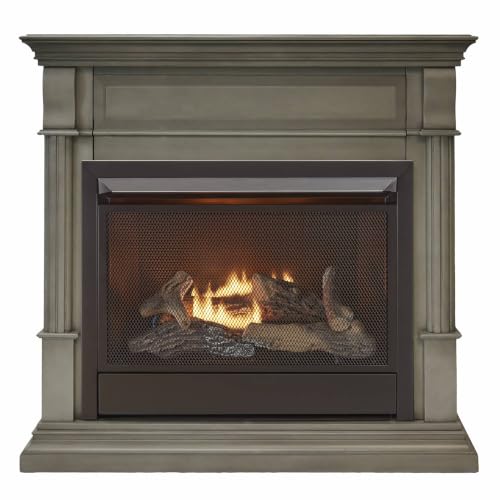
Duluth Forge Ventless Liquid Propane Gas Fireplace with Mantel - 26,000 BTU, Remote Control, Slate Gray Finish - Model# DFS-300LR-3GR
Check price on Amazon
Duluth Forge Ventless Natural Gas Fireplace with Mantel - 26,000 BTU, Remote Control, Apple Spice Finish - Model# DFS-300NR-3AS
Check price on Amazon
Comfort Glow Dual Fuel Walnut Vent Free Gas Fireplace, 26,000 BTU GFD3810T | Natual Gas or Liquid Propane Fireplace, Adjustable Thermostat, Heats up to 900 sq ft Area, Electronic Spark Ignition, ODS
Check price on Amazon
Duluth Forge Ventless Liquid Propane Gas Fireplace with Mantel - 26,000 BTU, Remote Control, Apple Spice Finish - Model# DFS-300LR-3AS
Check price on Amazon
Duluth Forge Ventless Natural Gas Fireplace with Mantel - 26,000 BTU, Remote Control, Slate Gray Finish - Model# DFS-300NR-3GR
Check price on Amazon
ProCom Dual Fuel Ventless Gas Fireplace System - 10,000 BTU, T-Stat Control, Apple Spice Finish - Model# FS100T-3AS
Check price on AmazonFrequently Asked Questions
Is a ventless gas fireplace safe? Yes, when installed and maintained according to the manufacturer's instructions and local building codes. They are designed to burn fuel cleanly, but proper ventilation is still required.
Can I install a ventless gas fireplace in a bedroom? This depends on local codes. Some areas allow it, while others prohibit it due to the small size and potential oxygen depletion. Always check with your local building department. You can find more information in our general fireplace FAQ.
Do ventless fireplaces produce carbon monoxide? They produce very low levels of carbon monoxide, but they are not zero-emission. That's why a working carbon monoxide detector is a must-have in any home with a gas appliance. Learn about the signs of carbon monoxide from a fireplace to stay safe.
How much maintenance does it need? Regular cleaning of the logs and burner, plus an annual professional inspection, is recommended. See our fireplace maintenance cost guide for more details on potential expenses.