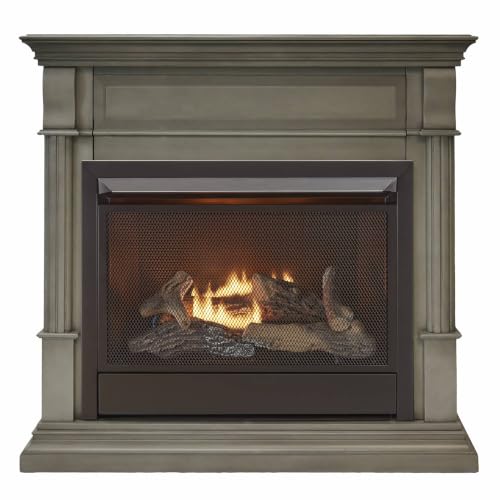
Ventless Gas Fireplace with Mantel: A Complete Guide
Everything you need to know about choosing, installing, and enjoying a ventless gas fireplace with a mantel. Explore the benefits, safety considerations, and design possibilities for a warm and stylish home.
View Recommended ModelsWhat is a Ventless Gas Fireplace with Mantel?
A ventless gas fireplace with mantel is a self-contained heating appliance that burns natural gas or propane without needing a chimney or external vent. The mantel adds a traditional, furniture-like aesthetic, turning the unit into a focal point that can be decorated and used to display items. These fireplaces are known for their high heating efficiency, often reaching 99%, because no heat is lost through a chimney. They are an excellent choice for homeowners who want the ambiance of a real flame without the complexity and cost of a vented system. For those exploring alternatives, understanding the broader category of types of fireplaces can help clarify where ventless gas models fit in.
Unlike traditional wood-burning or vented gas fireplaces, a ventless model can be installed in almost any room, including basements, apartments, and rooms without a chimney. The inclusion of a mantel not only enhances the visual appeal but also provides a functional surface for decor, making it a versatile addition to your living space. This guide will walk you through the key aspects of ventless gas fireplaces with mantels, from how they work to what to consider before purchasing.
How Does a Ventless Gas Fireplace Work?
A ventless gas fireplace operates by burning gas (natural gas or propane) in a sealed combustion chamber. The unit is designed to burn fuel so efficiently that the byproducts are primarily water vapor and carbon dioxide, which are released back into the room in very small amounts. This process is often called "vent-free" or "ventless" because it doesn't require a flue or chimney to expel exhaust gases. Most models come with an Oxygen Depletion Sensor (ODS) that automatically shuts off the unit if oxygen levels in the room drop below a safe threshold.
The mantel is typically constructed from wood, MDF, or stone and surrounds the firebox, giving it the appearance of a built-in fireplace. Some models are freestanding units with a mantel attached, while others are designed to be inserted into an existing fireplace opening. Understanding the heating capacity and BTU guide is essential to ensure you choose a unit that can adequately heat your space.
Pros and Cons of a Ventless Gas Fireplace with Mantel
Advantages
- High Efficiency: Nearly all heat stays in the room, making them highly efficient.
- No Venting Required: Can be installed in virtually any room, even without a chimney.
- Cost-Effective Installation: Lower installation costs compared to vented models.
- Aesthetic Appeal: The mantel adds a classic, furniture-like look that enhances decor.
- Convenience: Easy to operate with a wall switch, remote, or thermostat.
- Zone Heating: Great for heating specific areas without heating the whole house.
Disadvantages
- Indoor Air Quality: Releases small amounts of moisture and CO2; proper ventilation is recommended.
- Safety Concerns: Not allowed in some states or municipalities due to indoor air quality regulations.
- Moisture Production: Can add humidity, which may be a problem in already humid climates.
- Maintenance: Requires regular cleaning and annual inspection.
- Limited BTU Output: Some models are limited to 30,000 BTU for safety reasons.
When considering a ventless gas fireplace, it's important to weigh these pros and cons against your needs. For safety tips, refer to our guide on safety considerations (note: while the link is about electric fireplaces, the safety principles regarding ventilation and carbon monoxide are similar).
Types of Ventless Gas Fireplaces with Mantels
Ventless gas fireplaces come in several styles, each with its own set of features. The most common types include:
- Freestanding Units: These are complete units with a mantel and firebox, often designed to look like a piece of furniture. They can be placed against a wall and are ideal for renters or those who want flexibility. A popular variant is the freestanding fireplace with mantel which offers the same benefits in a portable format.
- Built-in or Insert Models: These are designed to be installed into an existing fireplace opening or a built-in cabinet. They often come with a mantel that can be customized. For a more permanent solution, a wall-mounted fireplace with mantel can be a great choice.
- Corner Units: Specifically designed for corner placement, these space-saving models often include a mantel and are perfect for smaller rooms.
- Log Sets with Mantel: Some ventless gas log sets can be paired with a mantel to create a custom look. If you prefer this route, explore ventless fireplace logs.
When selecting a style, consider the size of your room, the layout, and your existing decor. A low-profile ventless gas fireplace might be a good fit for tighter spaces, while a larger unit can serve as a statement piece.
Ventless vs. Vented Gas Fireplaces: A Quick Comparison
To help you decide if a ventless model is right for you, here is a comparison table highlighting the key differences:
| Feature | Ventless Gas Fireplace | Vented Gas Fireplace |
|---|---|---|
| Efficiency | Up to 99% | 70-85% |
| Installation | No venting required; flexible placement | Requires chimney or direct vent |
| Indoor Air Quality | Releases moisture and CO2; may require ventilation | Exhausts fumes outside |
| Cost | Lower installation cost | Higher installation cost |
| Maintenance | Regular cleaning; annual inspection | Chimney cleaning; annual inspection |
| Best For | Zone heating, apartments, basements | Whole-home heating, traditional homes |
For a deeper dive into the differences, see our guide on vented vs. ventless gas fireplaces.
Installation and Safety Considerations
Installing a ventless gas fireplace with mantel is generally simpler than a vented model, but it still requires careful planning. Here are key points to keep in mind:
Installation Requirements
- Clearances: Maintain minimum clearances from combustible materials as specified by the manufacturer. This includes the mantel, walls, and flooring.
- Gas Line: A licensed professional should install the gas line. If you don't have a gas line, you may need to explore alternatives like gas fireplace without a gas line options.
- Ventilation: Even though ventless, it's wise to have a nearby window or door that can be opened for fresh air. Some jurisdictions require a certain room volume or permanent vent.
- Permits: Check local building codes and permit requirements before installation.
Safety Tips
- Carbon Monoxide Detector: Install a CO detector in the same room as the fireplace.
- Oxygen Depletion Sensor (ODS): Ensure your unit has an ODS, which is a standard safety feature.
- Regular Maintenance: Clean the logs, burner, and glass regularly. Refer to our gas fireplace maintenance guide.
- Never Leave Unattended: Do not leave the fireplace on while sleeping or away from home. Read more about leaving a fireplace on overnight.
- Furniture Distance: Keep furniture at a safe distance; learn about furniture distance from fireplace.
For a comprehensive overview of installation, visit our fireplace installation guide.
Design Ideas and Mantel Decor
The mantel of your ventless gas fireplace is a canvas for your personal style. Here are some ideas to make it a stunning focal point:
- Seasonal Decor: Change decorations with the seasons. For winter, consider a DIY fireplace Christmas theme.
- Mirrors: A large mirror above the mantel can make the room feel larger and reflect the warm glow. See fireplace mirror ideas.
- Artwork: Hang a piece of art that complements your room's color scheme.
- Books and Candles: Stack books and place candles for a cozy, layered look. Consider a farmhouse mantel decorating ideas approach.
- Wall Units: Integrate your fireplace into a larger fireplace wall unit and entertainment center for a cohesive design.
For more inspiration, explore our contemporary fireplace ideas and coastal fireplace ideas.
Frequently Asked Questions (FAQ)
Are ventless gas fireplaces safe?
Yes, when installed and maintained correctly, they are safe. They are equipped with an Oxygen Depletion Sensor (ODS) and produce minimal emissions. However, they are not allowed in all states or rooms, so check local regulations. Always use a CO detector.
Do ventless gas fireplaces produce carbon monoxide?
They produce a very small amount of carbon monoxide, but the ODS shuts the unit off if CO levels rise. It's important to follow the manufacturer's guidelines for room size and ventilation.
Can I install a ventless gas fireplace with mantel in a bedroom?
Many manufacturers allow installation in bedrooms, but some local codes prohibit it. Check with your local building department. Also, ensure the room meets the minimum volume requirements.
How much maintenance does a ventless gas fireplace require?
Regular cleaning of the glass, logs, and burner is recommended. An annual inspection by a professional is advised. See our gas fireplace maintenance guide for details.
What is the lifespan of a ventless gas fireplace?
With proper maintenance, a quality unit can last 15-20 years or more. The lifespan of a fireplace depends on usage and care.
For more questions, visit our fireplace FAQ section.