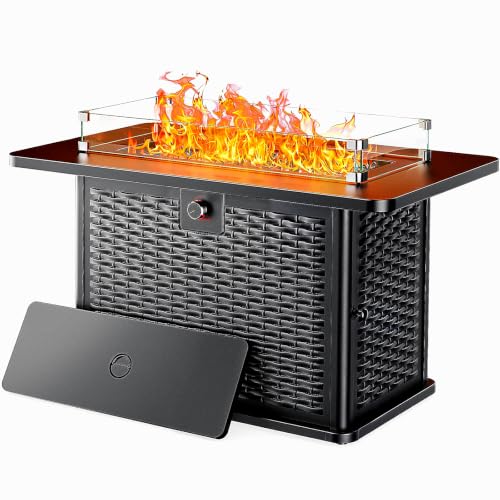
Rectangular Natural Gas Fire Pit Table: The Complete Buyer's Guide
Everything you need to know before choosing a rectangular natural gas fire pit table for your outdoor living space—sizing, materials, BTU output, safety, and key features.
Explore Top PicksA rectangular natural gas fire pit table is more than just an outdoor heating source—it is a design statement that extends your patio's usability well into the cooler months. Unlike round models, the rectangular shape aligns naturally with the geometry of most outdoor furniture arrangements, providing a defined centerpiece that anchors conversation areas and dining sets alike.
For homeowners who already have a natural gas line running to their patio, a hardwired fire pit table eliminates the inconvenience of refilling propane tanks. This guide walks you through every decision point, from matching dimensions to your seating layout to understanding whether a vented or ventless design suits your space. If you are still weighing fuel options, our fireplace buying guide provides a broader framework that applies equally well to outdoor fire features.
Why Choose a Rectangular Natural Gas Fire Pit Table?
The rectangular profile offers distinct advantages that round or square fire pits cannot match. When placed in front of a sofa or between two lounge chairs, a rectangular table creates a clear sightline and serves as a functional surface for drinks, plates, or decorative items when the fire is not in use.
- Space efficiency: Fits neatly against a wall or railing, making it ideal for smaller patios or balconies where a round pit would waste corner space.
- Furniture alignment: The straight edges parallel the lines of sectionals and dining sets, creating a cohesive, intentional layout.
- Dual purpose: Acts as both a fire feature and a usable table surface, reducing the need for separate furniture pieces.
- Natural gas convenience: No propane tanks to refill, store, or swap—just a steady, uninterrupted flame at the turn of a valve.
Design Tip: A rectangular fire pit table works best when its length is roughly two-thirds the length of the sofa or seating group it faces. This proportion keeps the fire centered without overwhelming the conversation area.
Sizing Your Rectangular Fire Pit Table
Getting the size right is the single most important factor in ensuring your fire pit table feels integrated rather than intrusive. A table that is too large will dominate the patio; one that is too small will look lost and provide insufficient heat radius.
Common Dimensions and Best Uses
| Length Range | Best For | Seating Capacity |
|---|---|---|
| 36–42 inches | Balconies, small patios, intimate two-person settings | 2 people |
| 48–56 inches | Standard patios, paired with a loveseat or two chairs | 2–4 people |
| 60–72 inches | Large patios, sectional seating, dining-adjacent placement | 4–6 people |
| 72+ inches | Expansive outdoor rooms, commercial-style hospitality areas | 6+ people |
Height matters too. Most fire pit tables sit between 24 and 30 inches from the ground, which aligns with standard outdoor coffee table height. If you plan to use the table primarily for dining, look for a counter-height model in the 34–36 inch range. For a deeper dive into how proportions affect a room's feel, see our guide on matching fireplace proportions to room shape—the same principles apply outdoors.
Materials and Construction: What to Look For
Outdoor fire features face relentless exposure to sun, rain, and temperature swings. The material quality directly determines how long your investment will last and how good it will look after several seasons.
Tabletop and Base Materials
- Cast aluminum: Lightweight, rust-resistant, and often finished with a powder coat. A popular choice for mid-range and premium models.
- Stainless steel: Highly durable and heat-resistant, but can show fingerprints and water spots. Typically found on high-end and luxury units.
- Slate or stone top: Offers a natural, upscale look. Heavier and may require reinforcement of the patio surface.
- Concrete composite: Mimics stone at a lower weight. Quality varies widely—look for sealed surfaces to prevent staining.
- Wicker or resin: Lightweight and affordable, but best suited for covered patios. Entry-level and budget-friendly options often use these materials.
Burner and Pan Construction
The burner is the heart of the fire pit. Stainless steel burners resist corrosion and distribute gas evenly. Some models use a pan-style burner that sits above the table surface, while others recess the burner for a more flush appearance. For a related discussion on how burner design affects flame quality, see our article on weak flame on gas fireplace—many of the same principles apply.
BTU Output and Heating Capacity
BTU (British Thermal Unit) ratings tell you how much heat the fire pit produces. For outdoor use, most rectangular natural gas fire pit tables fall between 40,000 and 60,000 BTU. A higher BTU output means a larger flame and more radiant heat, but it also consumes more gas.
As a general guideline, a fire pit table with 40,000 BTU can take the chill off a seating area of roughly 100–150 square feet in mild weather. If you live in a region with harsh winters or plan to use the fire pit as a primary heat source, aim for 60,000 BTU or higher. Our heating capacity BTU guide explains the math in greater detail.
Important: Natural gas fire pits require a dedicated gas line. If your patio does not already have one, consult a licensed plumber or gas fitter. For a comparison of installation requirements across fuel types, see our gas fireplace installation requirements.
Safety Features and Ventilation
Outdoor fire pits are generally safer than indoor fireplaces because they operate in open air. However, natural gas still requires respect. Look for these safety features:
- Thermocouple or flame sensor: Automatically shuts off the gas supply if the flame goes out.
- Electronic ignition: Eliminates the need for a match or lighter and provides more reliable starts.
- Safety shut-off valve: Allows you to cut gas flow instantly in an emergency.
- Glass wind guard: Prevents flames from blowing sideways and keeps embers contained.
- CSA or UL certification: Indicates the product has passed independent safety testing.
Never operate a natural gas fire pit table in an enclosed space. Even outdoors, avoid placing it directly under a low roof overhang or near flammable materials. For broader safety guidance that applies to both indoor and outdoor gas appliances, see our carbon monoxide signs resource.
Key Features to Compare Before Buying
| Feature | Why It Matters | Typical Availability |
|---|---|---|
| Electronic ignition | Faster, safer starts without matches | Mid-range and above |
| Adjustable flame height | Control heat and ambiance | Mid-range and above |
| Included cover | Protects table when not in use | Premium and luxury |
| Glass wind guard | Improves flame stability in breeze | Varies by model |
| Lava rock or fire glass media | Enhances flame appearance | Often included or sold separately |
| Natural gas conversion kit | Allows use with propane if needed | Select models |
Maintenance and Care for Long-Term Performance
A natural gas fire pit table requires less maintenance than a wood-burning model, but it is not maintenance-free. Regular care extends the life of the burner, keeps the flame looking clean, and prevents costly repairs.
- Clean the burner ports: Dust and debris can clog the small holes that feed gas to the flame. Use a soft brush or compressed air.
- Inspect the gas line: Check for cracks, kinks, or loose connections at the start of each season.
- Cover when not in use: A fitted cover prevents water from pooling in the burner pan and keeps leaves out.
- Clean the table surface: Use a mild soap and water solution. Avoid abrasive cleaners on powder-coated or painted surfaces.
- Check the ignition system: Battery-operated igniters need fresh batteries; electronic modules may need occasional contact cleaning.
For a seasonal checklist that covers both indoor and outdoor fire features, see our seasonal maintenance checklist and outdoor fireplace maintenance guides.
Complementary Outdoor Products
A rectangular natural gas fire pit table rarely stands alone. Consider these complementary pieces to create a cohesive outdoor living space:
- Outdoor conversation set with fire pit — coordinate seating for a unified look.
- Outdoor dining table with fire feature — for patios that blend dining and lounging.
- Outdoor furniture for around fire pit — comfortable, heat-resistant seating options.
- Outdoor propane fire pit coffee table — a propane alternative if natural gas is unavailable.
- Outdoor gas fire pit with glass rocks — enhances the visual appeal of the flame.
- Natural gas fire pit with electronic ignition — for push-button convenience.
Frequently Asked Questions
Some models are dual-fuel and include a conversion kit. However, not all fire pit tables are convertible. Check the manufacturer's specifications before purchasing if you anticipate needing propane as a backup or alternative fuel source.
Most manufacturers recommend at least 24–36 inches of clearance from combustible materials such as wood railings, fabric cushions, or plastic furniture. Always follow the specific clearance requirements in your model's manual. For related guidance, see our article on furniture distance from fireplace.
No. Natural gas burns cleanly, producing no smoke, ash, or creosote. This is one of the primary advantages over wood-burning fire pits. The flame is also easier to control and does not require hauling or storing fuel.
Most are designed to withstand occasional rain, but prolonged exposure can degrade the finish and clog burner ports. A fitted cover is strongly recommended when the table is not in use. If water pools in the burner pan, allow it to dry completely before lighting.
With proper maintenance and a quality cover, a well-constructed natural gas fire pit table can last 10–15 years or more. Entry-level models with thinner materials may need replacement sooner. Our fireplace lifespan guide offers more detail on factors that affect longevity.
Permit requirements vary by municipality. In many areas, connecting a new gas line—even outdoors—requires a permit and inspection. Always check with your local building department before installation. For general guidance, see our fireplace permit requirements article.
Ready to Choose Your Rectangular Natural Gas Fire Pit Table?
Browse our curated selection of top-rated models, each evaluated for build quality, heating performance, and design.
View Recommended Products