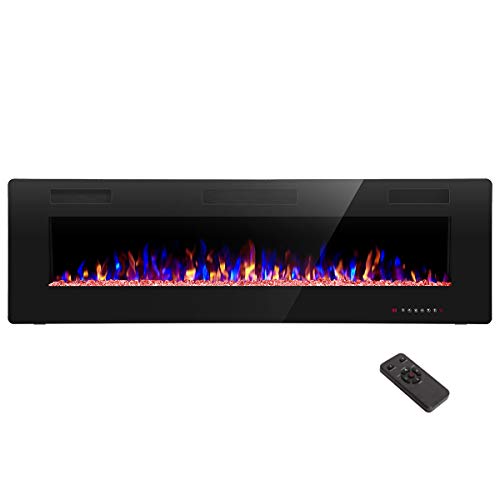
Why Choose a Recessed Electric Fireplace for a 2x4 Wall?
A recessed electric fireplace offers the sleek, built-in look of a traditional fireplace without the costly and complex venting requirements of gas or wood-burning units. When installed into a standard 2x4 stud wall, it becomes a seamless architectural feature that saves floor space and adds ambiance to any room.
Unlike wall-mounted units that protrude into the room, a recessed model sits inside the wall cavity, creating a clean, flush finish. This is particularly advantageous in smaller rooms or hallways where floor space is at a premium. For those exploring different installation options, our guide on wall-mounted vs insert vs freestanding fireplaces provides a helpful comparison.
The key challenge is the limited depth of a 2x4 wall. A 2x4 stud is actually 3.5 inches deep, and with drywall on both sides, the total cavity depth is typically around 4.5 inches. Therefore, the fireplace's chassis must be slim enough to fit within this space while still allowing for proper air circulation and wiring. Many manufacturers now produce "2x4 compatible" or "thin" recessed electric fireplaces specifically for this purpose.
Critical Factors for a 2x4 Wall Installation
1. Framing Depth and Rough-In Dimensions
The most important specification is the fireplace's framing depth. This is the distance the unit extends into the wall cavity. For a 2x4 wall, you need a fireplace with a framing depth of 4 inches or less. Some ultra-thin models are as shallow as 3 inches. Always check the manufacturer's rough-in diagram, which specifies the required opening height, width, and depth.
| Specification | Typical 2x4 Wall Requirement | What to Look For |
|---|---|---|
| Wall Cavity Depth | ~4.5 inches (3.5" stud + 0.5" drywall each side) | Fireplace framing depth ≤ 4 inches |
| Rough-In Opening Width | Depends on fireplace size (e.g., 30", 36", 42") | Add 1/4" to 1/2" clearance for easy installation |
| Rough-In Opening Height | Depends on fireplace size (e.g., 18", 20", 24") | Follow manufacturer's exact specs |
| Power Supply | Dedicated 15-amp or 20-amp circuit | Hardwired or plug-in (check local codes) |
2. Sizing for Your Space
Choosing the right size is crucial for both aesthetics and heating performance. A fireplace that is too large will overwhelm the wall, while one that is too small will look lost. For a 2x4 wall, common recessed electric fireplace widths range from 30 to 60 inches.
Consider the proportions of your room and wall. As a general rule, the fireplace width should be about 1/3 to 1/2 the width of the wall it's on. For heating, check the BTU rating. A unit with a 1,500-watt heater (about 5,100 BTU) can effectively heat a room up to 400 square feet. For larger spaces, you may need a more powerful unit or a supplementary heat source.
If you're uncertain about heating capacity, our detailed BTU guide can help you calculate the right size for your room. You can also explore electric fireplaces that heat up to 1000 square feet for larger areas.
3. Wiring and Power Requirements
Recessed electric fireplaces typically require a dedicated circuit to handle the heater's load. A 1,500-watt heater draws approximately 12.5 amps at 120 volts, so a 15-amp dedicated circuit is usually sufficient. However, some larger or higher-output models may require a 20-amp circuit.
You have two main wiring options:
- Plug-in: The unit comes with a cord that plugs into a nearby outlet. This is simpler but may require a cord cover or a nearby outlet inside the wall cavity.
- Hardwired: The unit is connected directly to your home's electrical system. This provides a cleaner look with no visible cords. This is often best done by a licensed electrician.
Always consult a qualified electrician to ensure your wiring is safe and up to code. For a comprehensive overview, see our electric fireplace installation guide.
4. Ventilation and Clearance
Even though electric fireplaces are ventless, they still require proper airflow to prevent overheating. The unit needs space around it for air intake and exhaust, which is usually built into the design. Ensure that the rough-in opening allows for the specified clearances, and do not block any vents on the fireplace itself.
Maintain clearances from combustible materials as specified in the manual. Typically, this means keeping the fireplace at least a few inches away from insulation and framing lumber. For safety guidelines, refer to our article on do fireplaces need a chimney, which explains ventless operation.
Installation Overview: Step-by-Step
Installing a recessed electric fireplace in a 2x4 wall is a manageable DIY project for those with basic carpentry and electrical skills. However, if you are unsure about any step, hiring a professional is recommended. Here is a simplified overview:
- Plan and Measure: Choose a location on an exterior or interior wall. Ensure there are no obstructions like plumbing or electrical wires inside the wall cavity. Mark the rough-in opening dimensions on the wall.
- Cut the Opening: Using a drywall saw, carefully cut the opening. Remove the drywall and any insulation inside the cavity.
- Frame the Opening: If the existing studs don't align with the fireplace's required framing, you may need to add additional framing (headers, jack studs) to create a secure box. Ensure the framing is level and square.
- Run Electrical Wiring: If hardwiring, run the electrical cable from your power source to the fireplace location. Install a junction box if required. This step should be done by a licensed electrician.
- Install the Fireplace: With help, lift the fireplace into the opening. Secure it to the framing using the provided screws or brackets. Ensure it is flush with the finished wall surface.
- Connect Wiring: Connect the fireplace's wiring to your home's electrical supply, following the manufacturer's instructions and local codes.
- Finish the Wall: Apply drywall, tape, mud, and paint to create a seamless finish around the fireplace. You can also add a mantel or surround for a more traditional look. For inspiration, see our DIY fireplace surround guide.
- Test and Enjoy: Turn on the power and test all functions, including the flame effect, heater, and remote control.
For a more detailed walkthrough, refer to our fireplace installation guide. If you're considering a professional install, our article on DIY vs professional installation can help you decide.
Pros and Cons of a Recessed Electric Fireplace
✅ Pros
- Space-saving flush design
- No venting or chimney required
- Easy to install in a 2x4 wall (with slim models)
- Can be used with or without heat
- Safe for apartments and condos
- Remote control and thermostat options
- Realistic flame effects with adjustable colors
❌ Cons
- Limited heating capacity compared to gas/wood
- Requires a dedicated electrical circuit
- Depth limitations may restrict some models
- Flame effect is simulated, not real fire
- Installation requires cutting into drywall
- May not be suitable for all wall types (e.g., exterior brick without framing)
Choosing the Right Model for Your 2x4 Wall
When shopping for a recessed electric fireplace for a 2x4 wall, look for these key features:
- Framing Depth ≤ 4 inches: This is non-negotiable for a flush fit.
- Adjustable Flame Colors and Brightness: Allows you to customize the ambiance.
- Thermostat and Remote Control: For convenient operation.
- Heater Wattage: 1,500 watts is standard for supplemental heating.
- Timer Function: Useful for auto-shutoff.
- Safety Certifications: Look for UL or ETL listing.
For a deeper dive into features, check out our guide on most energy-efficient electric fireplaces. If you're looking for a unit that mimics a wood-burning stove, see our article on electric fireplaces that look like wood-burning stoves.
You might also be interested in recessed wall-mounted electric fireplaces for a different mounting approach, or ultra-thin electric fireplaces if depth is an even greater concern.
Maintenance and Troubleshooting
Electric fireplaces are relatively low-maintenance. Regularly dust the unit with a soft cloth and clean the glass front with a non-abrasive cleaner. Avoid getting moisture inside the unit. For detailed cleaning instructions, see our guide on cleaning an electric fireplace.
If you encounter issues like the heater not working or the flame effect malfunctioning, our electric fireplace troubleshooting guide can help. Common problems include flame not working or tripping the breaker. For remote issues, see remote control fixes.
Regular maintenance can extend the lifespan of your fireplace. Our electric fireplace maintenance tips provide a seasonal checklist. Also, be sure to follow our electric fireplace inspection guide for safety.
Frequently Asked Questions
Can any electric fireplace be recessed into a 2x4 wall?
No. Only models specifically designed for recessed installation and with a framing depth of 4 inches or less are suitable. Always check the manufacturer's specifications.
Do I need a dedicated circuit for a recessed electric fireplace?
Yes, it is highly recommended. A 1,500-watt heater draws a significant amount of power, and sharing a circuit with other appliances can cause tripped breakers. A dedicated 15-amp or 20-amp circuit is best practice.
Can I install a recessed electric fireplace on an exterior wall?
Yes, but you must ensure the wall cavity is properly insulated and that the fireplace's depth does not compromise the insulation. You may need to add rigid foam insulation behind the unit. Always check local building codes.
How much does it cost to install a recessed electric fireplace?
Installation costs vary widely depending on whether you DIY or hire a professional, and whether electrical work is needed. For a breakdown of potential expenses, see our fireplace cost breakdown.
Is a recessed electric fireplace safe?
Yes, when installed correctly and according to the manufacturer's instructions. Electric fireplaces are considered very safe, producing no carbon monoxide. For safety tips, read our articles on electric fireplaces and carbon monoxide and leaving a fireplace on overnight.
Ready to Find Your Perfect Recessed Electric Fireplace?
Explore our top recommendations for models that fit a standard 2x4 wall perfectly. These units combine style, efficiency, and easy installation.
View Recommended Fireplaces