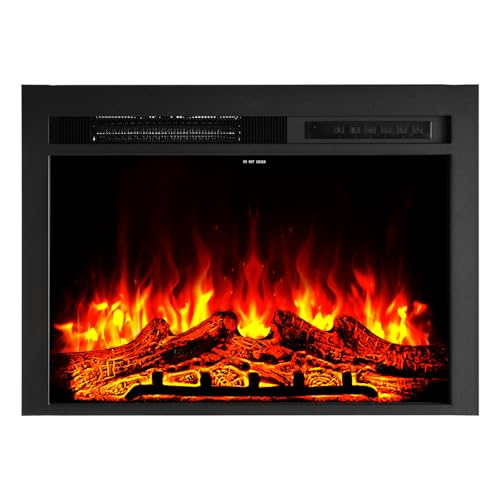
Highest BTU Electric Fireplace Insert: Maximum Heat Guide
Learn how to identify, compare, and choose the most powerful electric fireplace insert for your heating needs. Understand BTU ratings, wattage limits, and real-world performance.
SEE TOP PICKSQuick Answer: The highest BTU electric fireplace insert for standard residential use is typically 5,100 BTU (1,500 watts). This is the maximum power a standard 120-volt household outlet can handle. Units claiming higher BTU outputs either require 240-volt wiring or are measuring "heat coverage" rather than true BTU output.
What Does "Highest BTU" Really Mean for Electric Fireplaces?
BTU, or British Thermal Unit, measures heat energy. In the context of electric fireplace inserts, BTU is directly tied to wattage. The formula is simple: 1 watt = 3.412 BTU per hour. So, a 1,500-watt electric fireplace produces approximately 5,118 BTU. That is the practical ceiling for plug-in electric inserts in North America.
When you search for the "highest BTU electric fireplace insert," you are essentially looking for a unit that runs at the maximum safe wattage for a standard outlet. Understanding this relationship helps you set realistic expectations and avoid misleading marketing claims. For a deeper dive into how BTU requirements are calculated for any room, see our Heating Capacity Explained (BTU Guide).
The 1,500-Watt Ceiling: Why Most Inserts Max Out at 5,100 BTU
Standard household circuits in the United States are rated for 15 amps at 120 volts, which equals 1,800 watts. However, the National Electrical Code recommends that any single appliance should not draw more than 80% of a circuit's capacity. That brings the safe maximum to 1,440 watts, which manufacturers round up to 1,500 watts.
This is why nearly every high-output electric fireplace insert on the market tops out at 5,100 BTU. If you see a unit claiming 10,000 BTU or more, it either requires a 240-volt dedicated circuit (like an electric range or dryer) or the manufacturer is using a different measurement standard. For most homes, a 5,100 BTU insert is the highest practical option.
How Much Heat Do You Actually Need?
Before choosing the highest BTU insert, calculate your room's heating requirement. A simple rule of thumb is 20 BTU per square foot for average insulation and ceiling height. So:
- 100 sq ft room: ~2,000 BTU needed
- 200 sq ft room: ~4,000 BTU needed
- 300 sq ft room: ~6,000 BTU needed
- 400 sq ft room: ~8,000 BTU needed
Notice that a 300-square-foot room technically needs more BTU than a standard electric insert can provide. This is why electric fireplace inserts are best for supplemental zone heating, not whole-room primary heating in larger spaces. For a more precise calculation, use our Fireplace Sizing Worksheet & Checklist.
Features That Maximize Heat Output in an Electric Insert
Not all 1,500-watt inserts perform equally. Several design features determine how effectively that heat reaches your room:
- Blower Fan: A high-quality blower circulates heated air into the room. Without a blower, heat radiates slowly and may stratify near the ceiling. Look for inserts with variable-speed blowers for the best control. Learn more in our Fireplace Blower Fans Guide.
- Infrared vs. Fan-Forced Heating: Infrared quartz elements heat objects directly, while fan-forced systems heat the air. Infrared feels warmer faster but covers less area. Fan-forced provides more even room heating. See our comparison: Infrared vs Fan-Forced Heating.
- Thermostat Control: A built-in thermostat prevents the unit from running continuously, saving energy once the target temperature is reached. Digital thermostats are more precise than manual dials. See our Fireplace Thermostats Guide.
- Flame Effect Independence: Many high-BTU inserts let you run the flame without heat, so you can enjoy the ambiance year-round without wasting electricity. This is a key feature for energy-efficient fireplace types.
Installation and Electrical Considerations for High BTU Inserts
A 1,500-watt electric fireplace insert draws 12.5 amps. If you plug it into a circuit that already powers a space heater, microwave, or hair dryer, you will likely trip the breaker. For this reason, many homeowners choose to install a dedicated circuit for their electric insert.
If you are replacing an old wood-burning fireplace with an electric insert, the existing chimney cavity often provides ample space. Our guide on Electric Fireplace Insert into Existing Fireplace walks through the process. For a broader overview of installation options, see Wall-Mounted vs Insert vs Freestanding Fireplace.
Comparing High BTU Electric Fireplace Inserts: What to Look For
When comparing high-output electric inserts, focus on these criteria:
- True Wattage: Confirm the unit runs at 1,500 watts. Some "high heat" models only run at 1,200 or 1,400 watts.
- Heating Area Rating: Manufacturers typically rate their inserts for a specific square footage. A 5,100 BTU insert usually claims 400 square feet.
- Blower Quality: A metal blower wheel lasts longer and moves more air than plastic alternatives.
- Safety Features: Overheat protection and a cool-touch exterior are essential, especially if you have children or pets. See our Furniture Distance from Fireplace guide for clearance recommendations.
- Remote and Smart Controls: A remote or Wi-Fi controller adds convenience. Our Smart Wi-Fi Fireplace Controllers article covers the latest options.
Common Misconceptions About High BTU Electric Fireplaces
Misconception 1: "More BTU always means a warmer room." If the heat is not distributed well, a high BTU unit may still leave cold spots. Air circulation matters as much as raw power.
Misconception 2: "I can heat my entire house with one high BTU insert." A single 5,100 BTU unit is designed for a single room. For whole-house heating, you would need multiple units or a central HVAC system. See our article: Can a Fireplace Heat an Entire House?
Misconception 3: "Electric fireplaces are expensive to run." At 1,500 watts, running the insert for 8 hours costs roughly the same as running a space heater. Many models include thermostats to reduce consumption. Our guide on Are Electric Fireplaces Expensive to Run? breaks down the numbers.
Maintaining Your High BTU Electric Fireplace Insert
Electric inserts require less maintenance than gas or wood models, but regular care keeps them running efficiently:
- Clean the vents: Dust and debris can block airflow, reducing heating efficiency. Vacuum vents every few months. See our Cleaning Electric Fireplace guide.
- Inspect the cord and plug: A 1,500-watt unit draws significant current. Check for fraying or heat damage periodically. Our Electric Fireplace Inspection Guide covers what to look for.
- Test the thermostat: Ensure the thermostat cycles the heater on and off correctly. If it fails, the unit may run continuously. See Thermostat Not Controlling Fireplace?
- Replace the remote battery: A weak battery can cause erratic behavior. Our Remote Control Not Working? article has troubleshooting steps.
Troubleshooting High BTU Electric Fireplace Inserts
If your high-output electric insert is not heating as expected, check these common issues:
- Tripping the breaker: The insert is drawing more power than the circuit can handle. Try a different outlet or consult an electrician. See Keeps Tripping the Breaker?
- No heat, but flame works: The heating element may have failed. See Electric Fireplace Not Heating?
- Flame not working, but heat works: The flame effect motor or LED may need replacement. See Flame Not Working (But Heat Is On).
- Buzzing noise: Often caused by a failing blower fan. See Making Buzzing Noise?
Frequently Asked Questions
What is the highest BTU electric fireplace insert available?
Most residential electric fireplace inserts max out at 5,100 BTU, which equals 1,500 watts. This is the maximum a standard 120-volt household outlet can safely handle. Higher BTU units exist but require dedicated 240-volt circuits.
Can a high BTU electric fireplace insert heat a whole house?
No. A single high BTU electric insert is designed to heat a single room or zone, typically up to 400 square feet. For whole-house heating, you would need a central system or multiple units. See our guide: Can a Fireplace Heat an Entire House?
Is a higher BTU electric fireplace always better?
Not necessarily. A higher BTU unit consumes more electricity. If your room is small or well-insulated, a lower BTU model may be more efficient. The goal is to match the BTU output to your room size. See How to Size a Fireplace.
Do high BTU electric fireplace inserts require special wiring?
Most high BTU electric inserts run on standard 120-volt outlets. However, if the unit exceeds 1,500 watts, or if you are using it on a circuit with other high-draw appliances, a dedicated circuit may be required. See Electric Fireplace Installation Guide.
How many square feet will a 5,100 BTU electric insert heat?
Generally, a 5,100 BTU insert is rated for approximately 400 square feet. This assumes average ceiling height and insulation. For larger spaces, you may need multiple units or a different heating solution. See our Best Electric Fireplace for 1000 Square Feet guide.