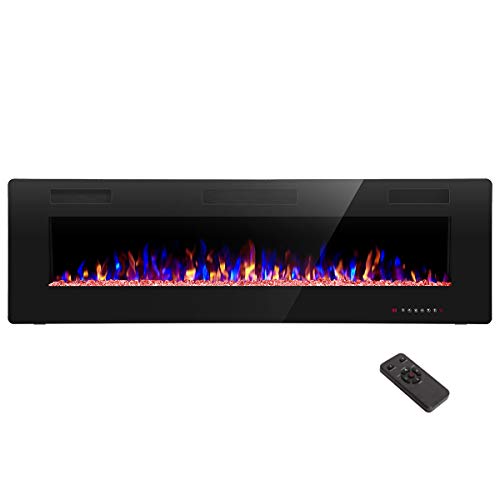
Your Fireplace Journey Starts Here
Feeling overwhelmed by fireplace options? Don't worry — we've mapped out a clear, simple path to help you go from confused to confident in five straightforward steps.
Choosing a fireplace is a big decision, and the sheer number of options can make the process feel daunting. Electric, gas, wood, ethanol — not to mention sizing, venting, installation, and costs. Where do you even begin?
That's exactly why we created this getting started guide. Instead of jumping randomly between articles, follow these five steps in order. Each step builds on the previous one, so by the time you reach the end, you'll know exactly which fireplace is right for your home — and you'll be ready to buy with confidence.
Understand the Different Fireplace Types
Before you can choose the right fireplace, you need to understand what's available. There are four main fuel types, each with distinct advantages, limitations, and ideal use cases. This is the foundation of your entire decision — so take a few minutes to get familiar with each one.

Electric
Plug-and-play convenience. No venting, no gas lines, no chimney. Ideal for apartments and supplemental heating.
Learn about electric →
Gas
Real flames with instant convenience. Connects to natural gas or propane. Excellent for primary heating.
Learn about gas →
Wood-Burning
Traditional ambiance with crackling sounds and aromatic warmth. Highest heat output but requires the most maintenance.
Learn about wood →
Ethanol
Eco-friendly real flames with zero venting. Perfect for modern designs and ambiance-focused spaces.
Learn about ethanol →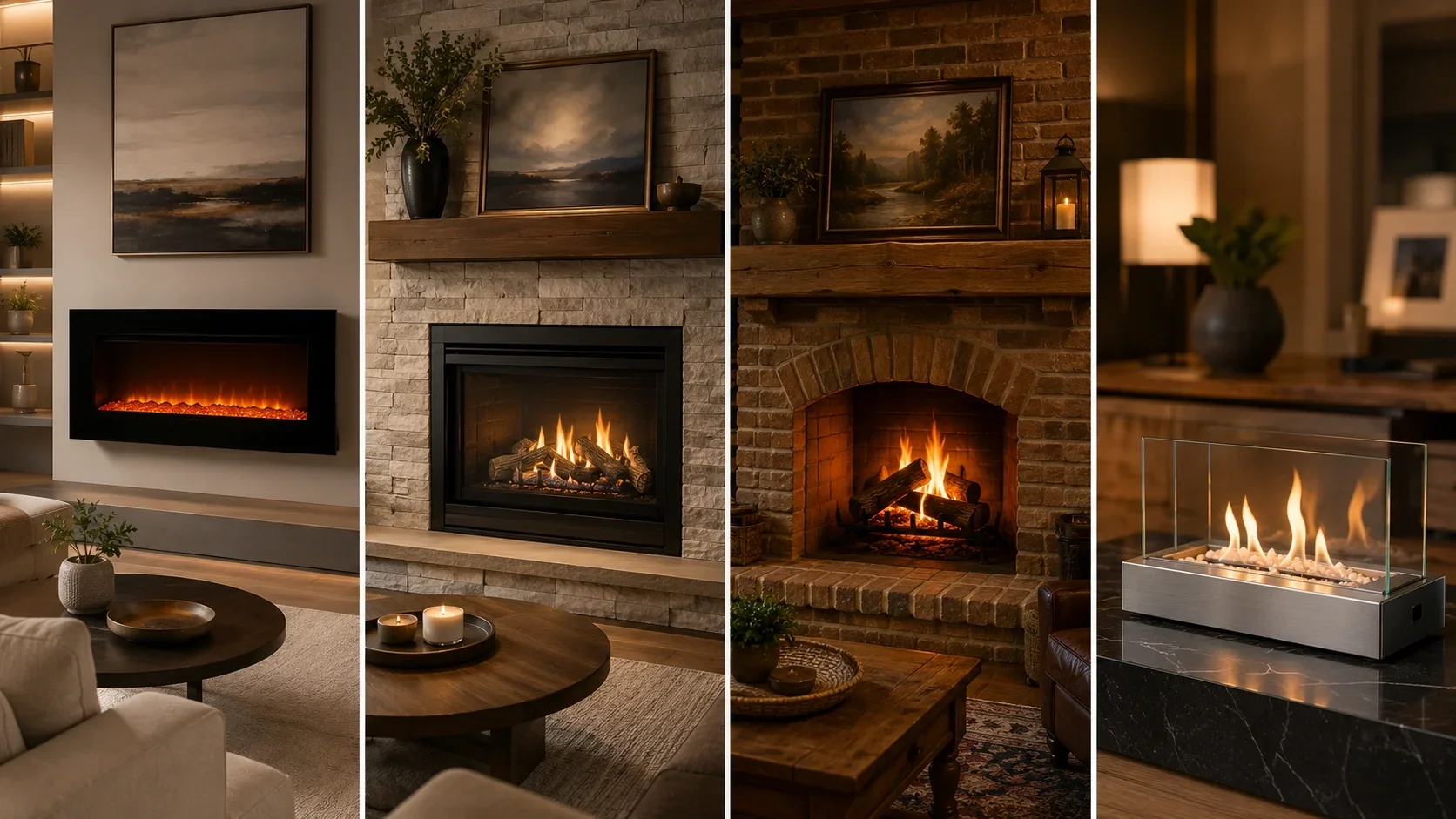
Beginner Tip: If you're completely new to fireplaces, start with our beginner's guide to fireplaces. It explains everything from the ground up — what a fireplace actually is, how different types work, and what to expect from the ownership experience.
Compare Your Top Options
Now that you know the basic types, it's time to narrow down your choices. The best way to do this is through direct comparisons. Instead of reading about each type in isolation, comparison articles show you the tradeoffs side by side — which is exactly how you'll be making your decision in real life.
Most people find that their choice comes down to two or three options. Here are the most helpful comparisons based on common decision points:
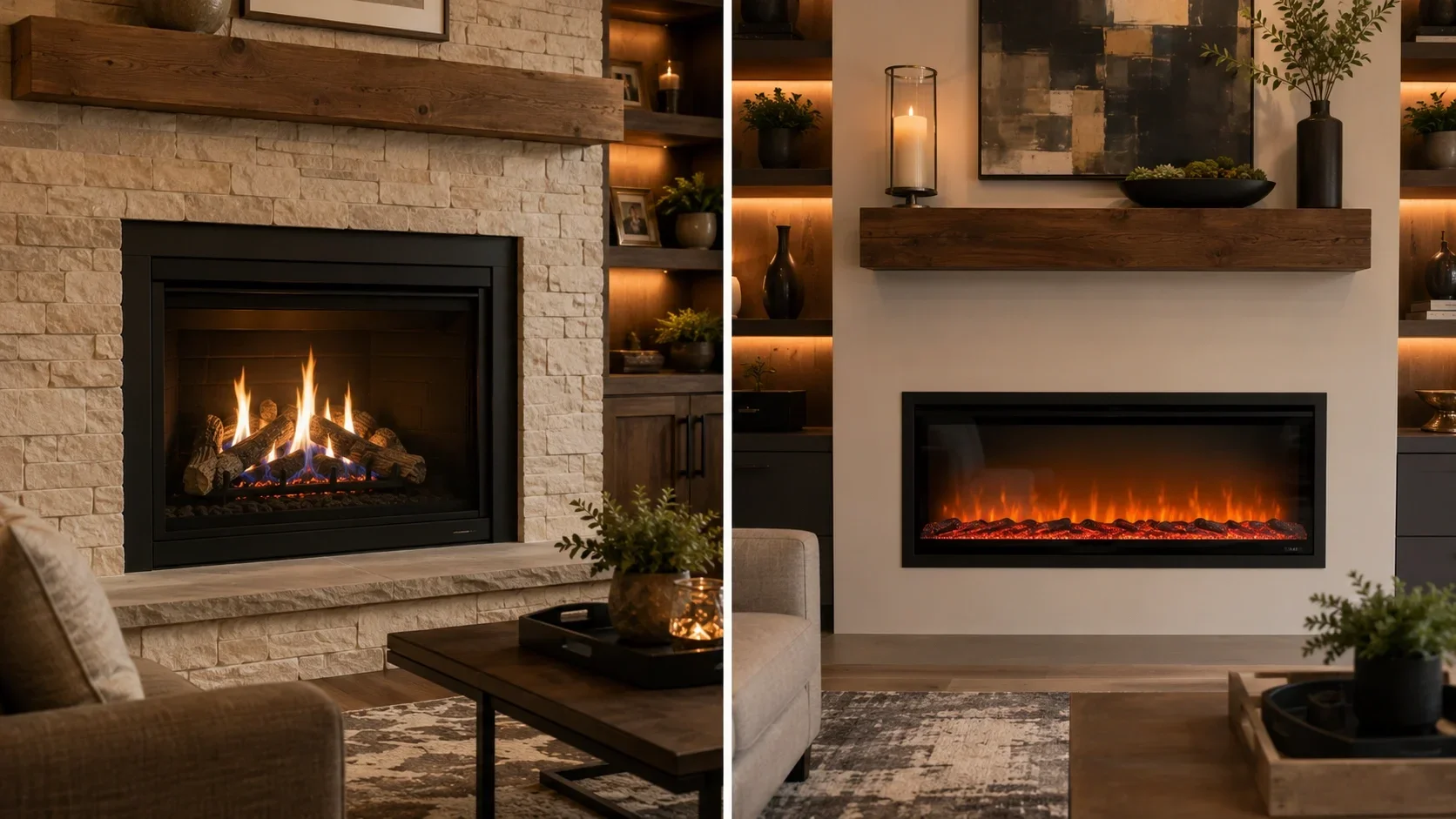
Gas vs Electric Fireplace
The most common comparison. Understand the real differences in heating, cost, installation, and day-to-day experience.
Most Popular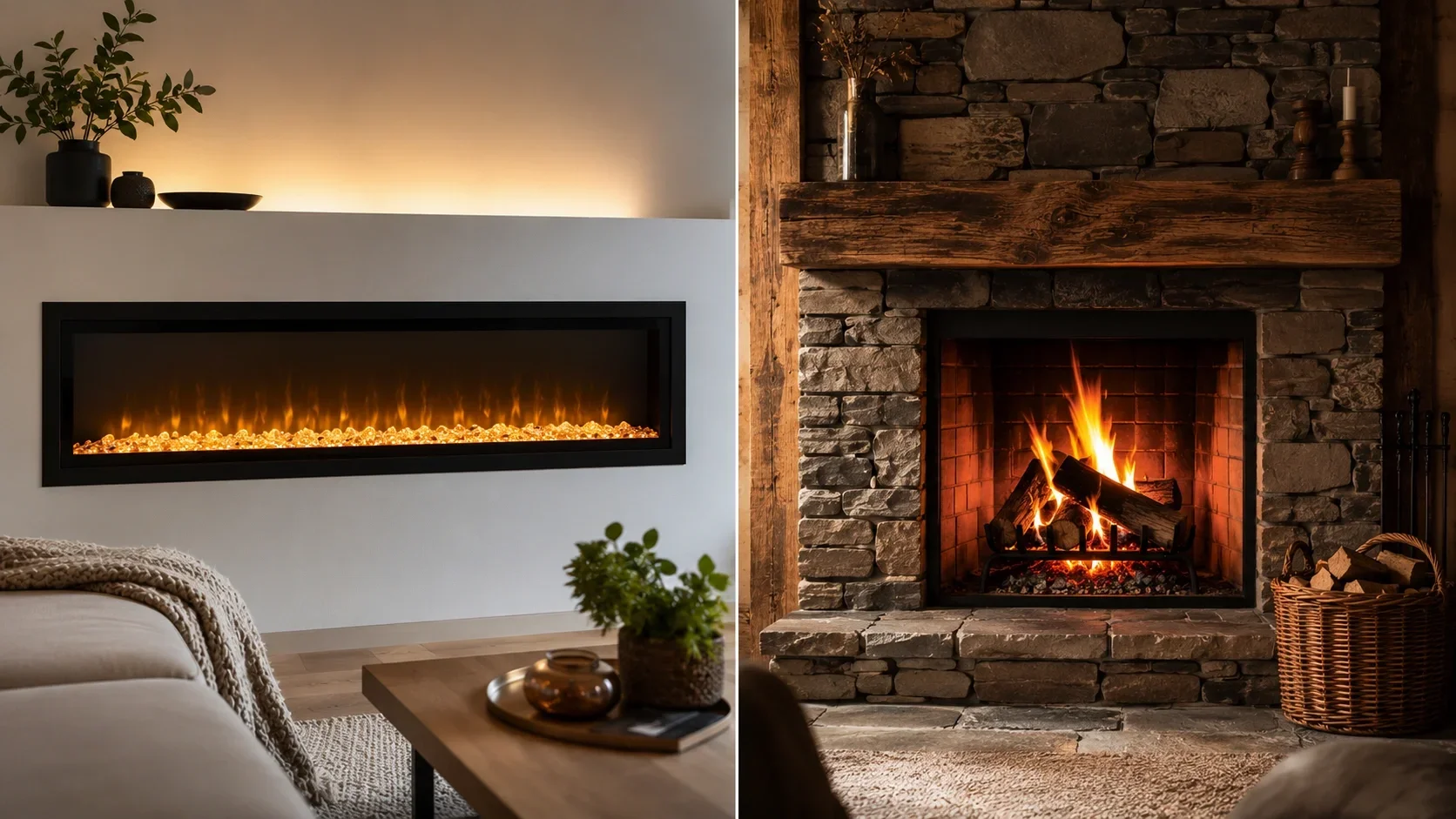
Electric vs Wood Fireplace
Convenience and zero maintenance versus traditional charm and powerful heating. Which tradeoffs matter most to you?
Lifestyle Choice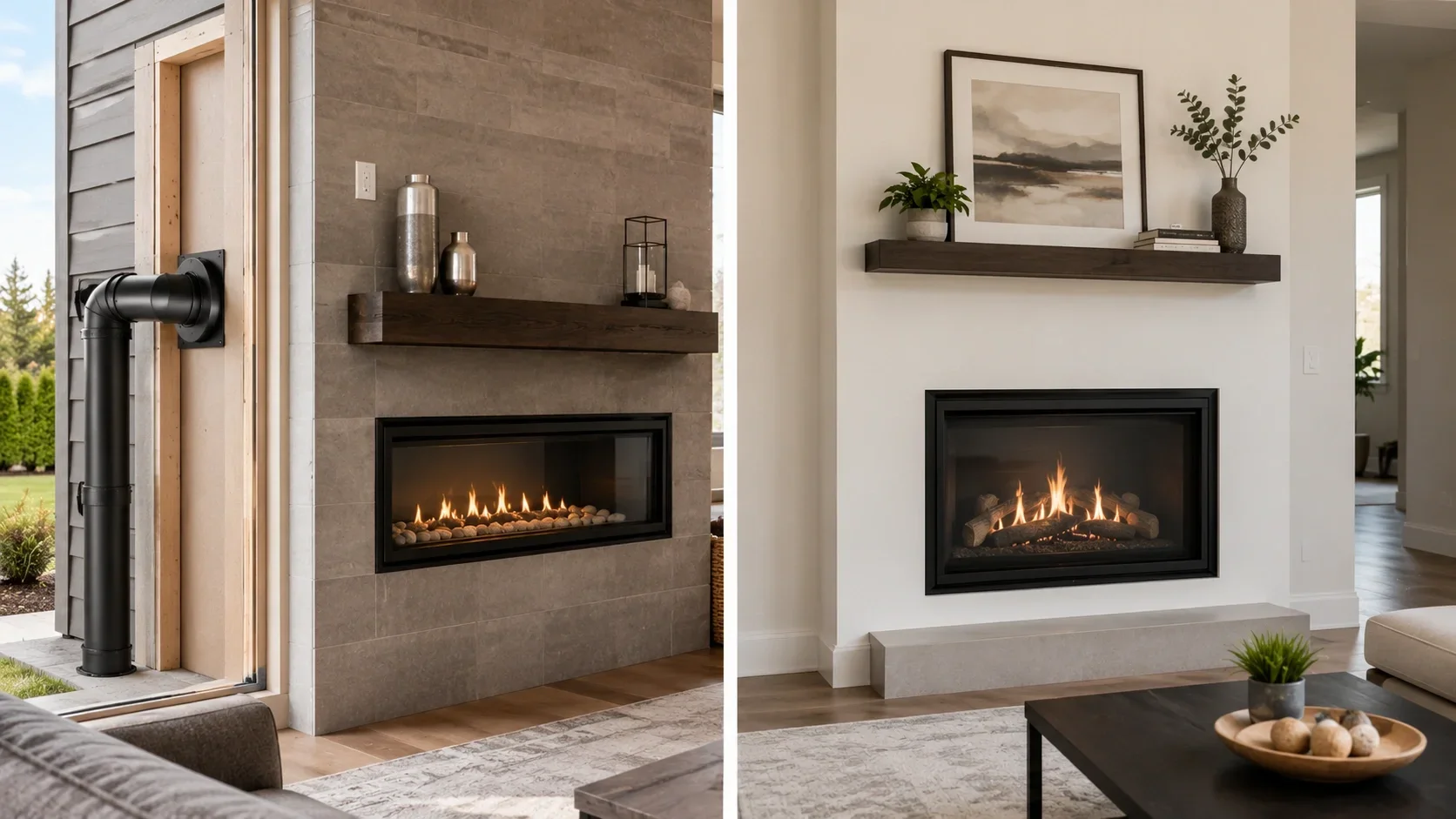
Vented vs Ventless Gas
Already leaning toward gas? This comparison helps you decide between direct vent, B-vent, and ventless configurations.
Installation Factor
Heating vs Ambiance
Be honest about your primary goal. This comparison helps you align your expectations with the right fireplace category.
Goal Clarifier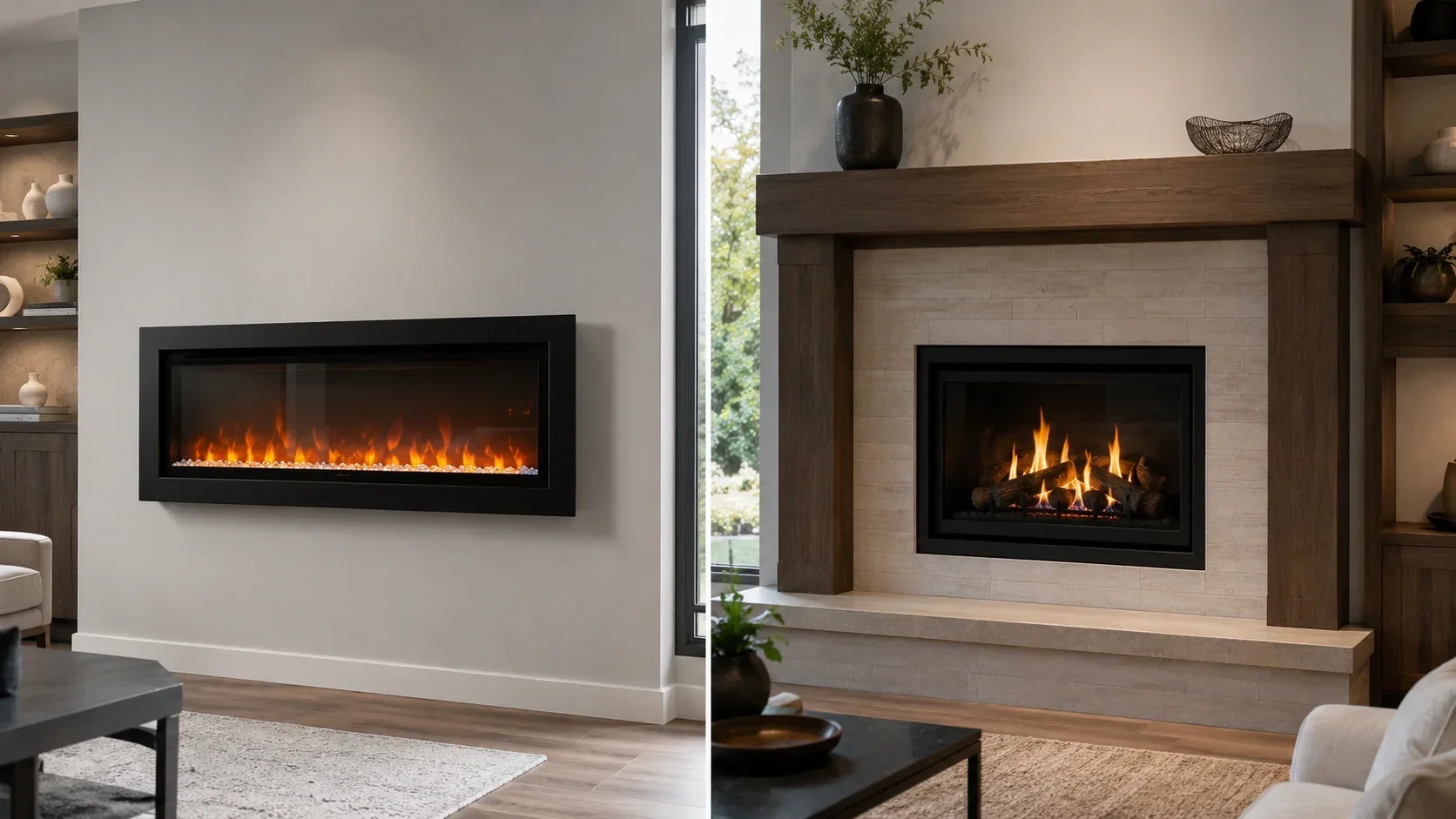
Wall-Mounted vs Built-In
Deciding how your fireplace fits into your room's architecture. Consider space, permanence, and visual impact.
Design Decision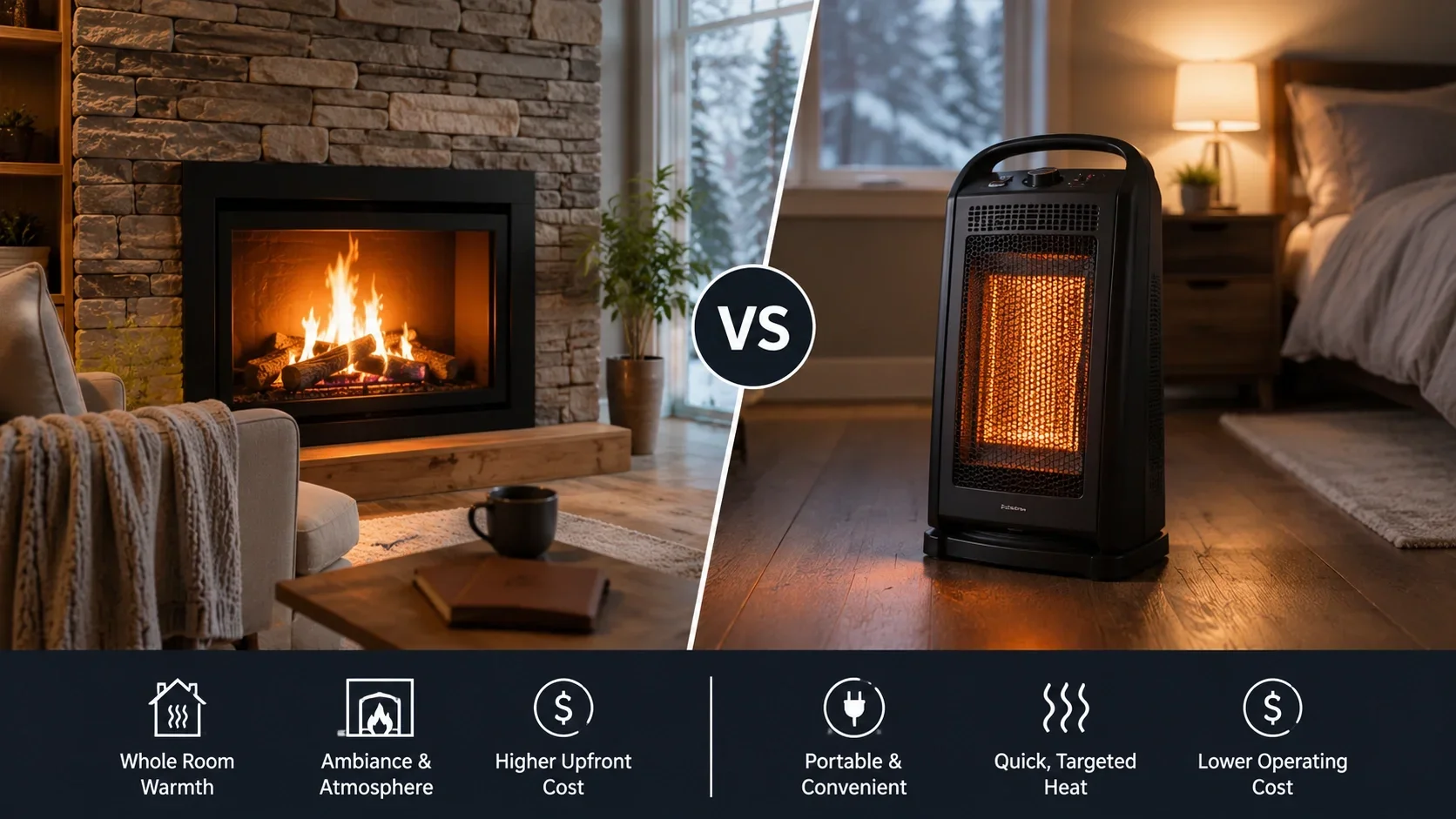
Fireplace vs Space Heater
Wondering if a fireplace is worth it compared to a simple space heater? This comparison reveals the real differences.
Value CheckStrategy Tip: Don't try to read every comparison. Pick the two or three that match your situation. If you live in an apartment, start with the heating vs ambiance comparison. If you're building a new home, focus on gas vs electric and vented vs ventless. The goal is to narrow your choice to one clear winner, not to become an encyclopedia of fireplaces.
Size and Fit Your Fireplace to Your Space
One of the most common — and most expensive — mistakes homeowners make is choosing the wrong size fireplace. Too small, and it won't heat your space effectively. Too large, and you'll waste money and deal with uncomfortable temperature swings. Getting the sizing right is critical.
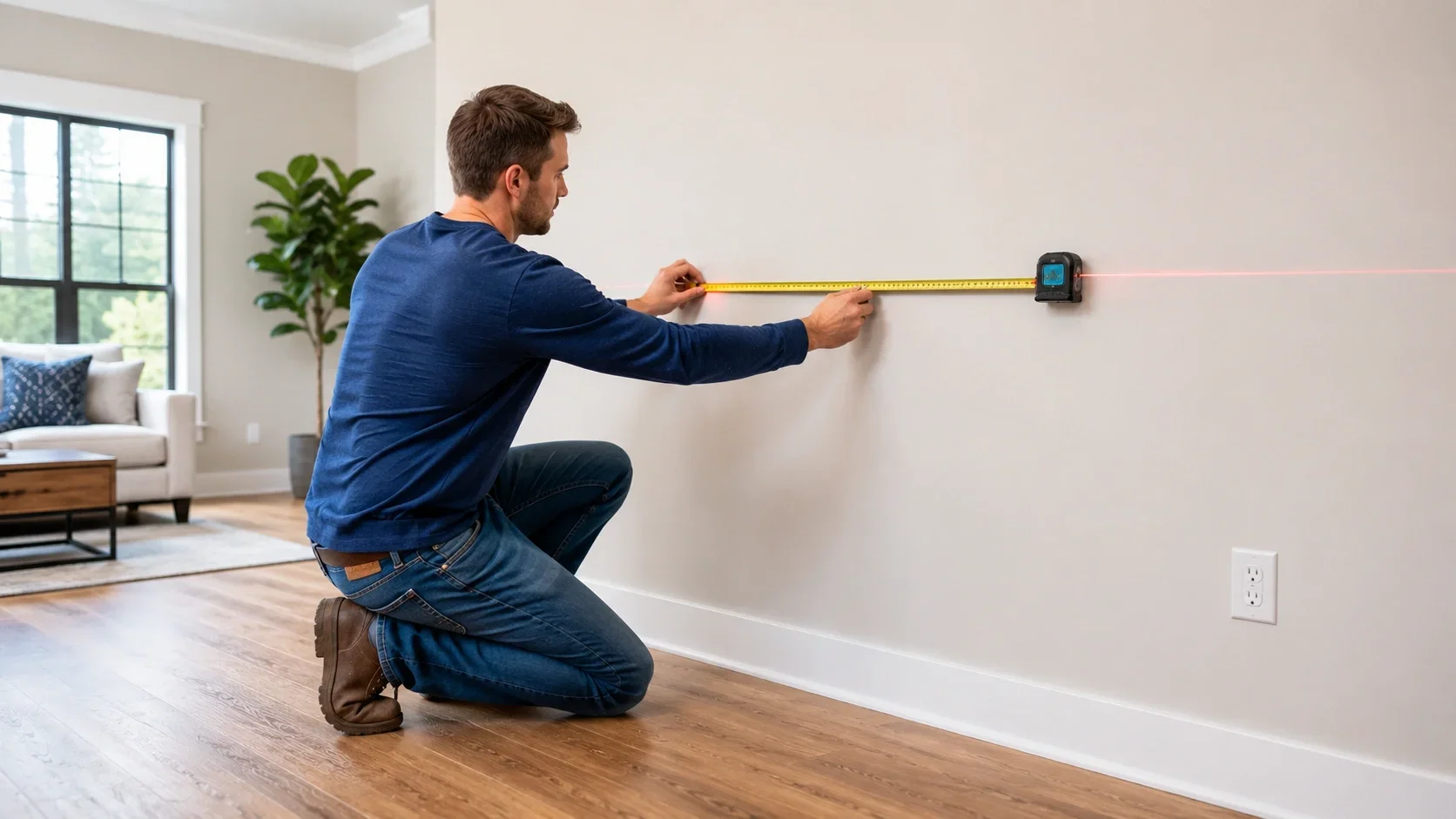
What You Need to Calculate
- Room square footage: Multiply length × width. For L-shaped or irregular rooms, break them into rectangles and add the areas together
- Ceiling height: Standard 8-foot ceilings need no adjustment, but taller ceilings increase your BTU requirement by 10-15% per additional foot
- Insulation quality: Well-insulated homes need less heating capacity; older or poorly insulated homes need more
- Climate zone: Colder regions require significantly more BTUs than mild climates
- Room openness: Open floor plans require more power because heat dissipates into adjacent spaces
Quick Formula: Room square footage × 20 BTU = your base heating requirement. For example, a 400 sq ft room needs roughly 8,000 BTU. Then adjust up or down based on ceiling height, insulation, and climate. For the full worksheet with adjustment factors, see our BTU guide.
Beyond Heating: Physical Dimensions
Sizing isn't just about heat output — it's also about how the fireplace physically fits in your room. A massive fireplace crammed into a small bedroom will look disproportionate, while a tiny unit on a large living room wall will seem lost.
- The fireplace should occupy roughly one-third to one-half of the wall width for balanced visual proportions
- Consider corner installations if wall space is limited
- For rooms with high ceilings, taller fireplace designs create better visual balance
- Account for required clearances from furniture and combustible materials
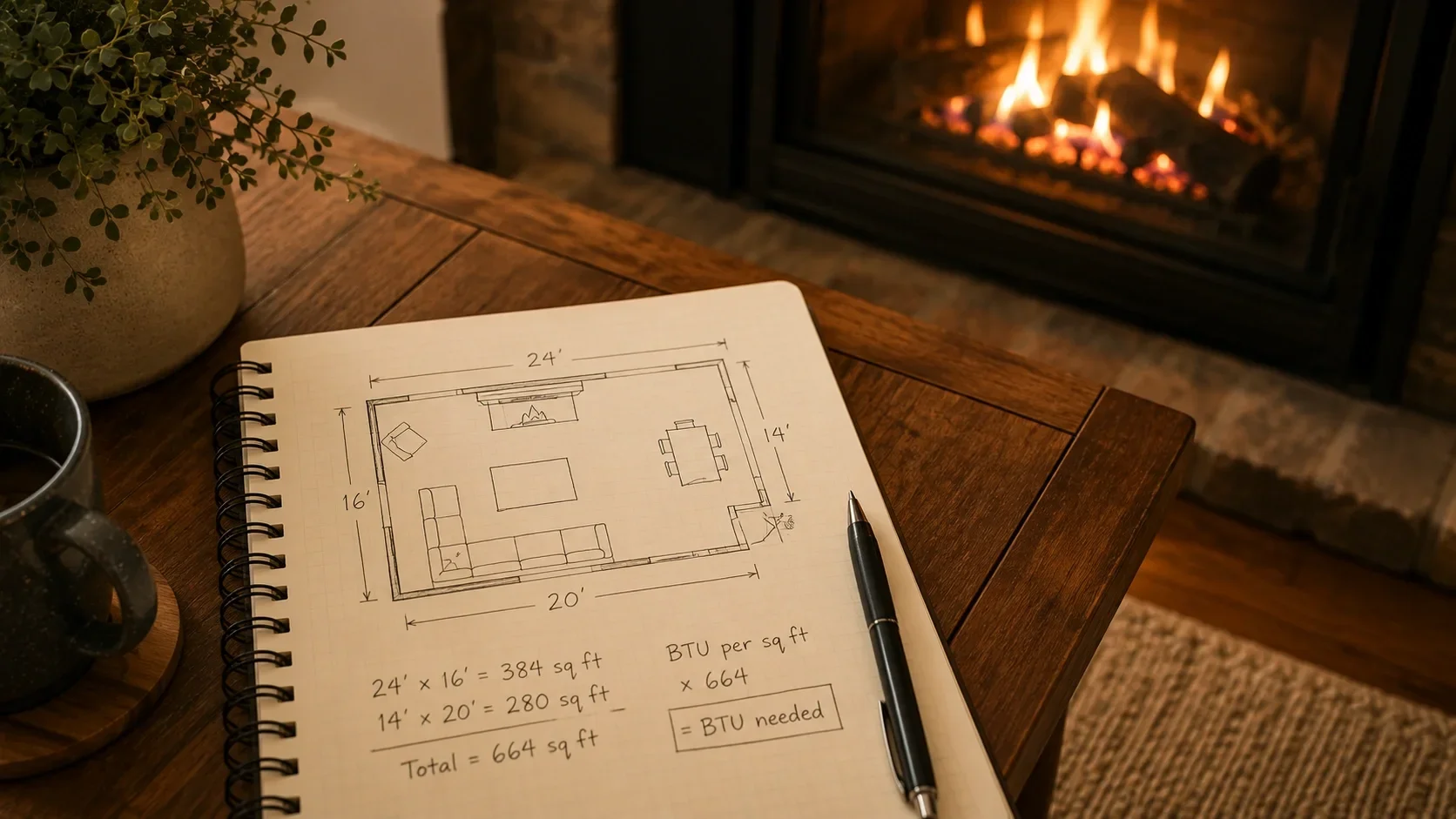
How to Size a Fireplace
The complete guide with formulas, adjustment factors, and a printable worksheet for your specific room.
Essential Reading
Fireplace Proportions by Room Shape
How room layout — square, rectangular, open concept, narrow — affects which fireplace size and style works best.
Design Guide
Best Fireplaces for Small Spaces
Dedicated recommendations for apartments, condos, and small rooms where every inch counts.
Small Space GuideUnderstand Installation Requirements and Costs
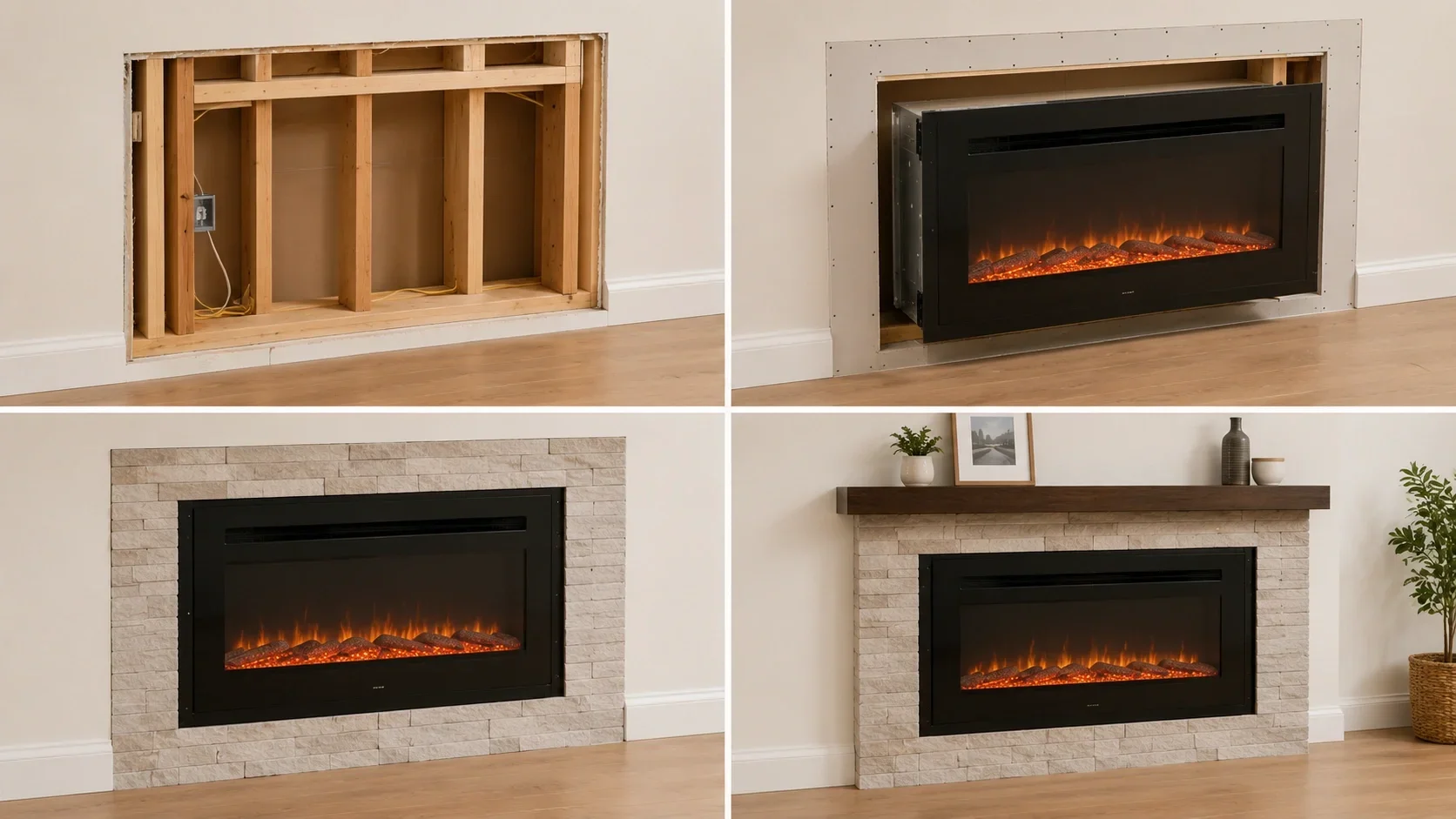
You've identified your ideal fireplace type and determined the right size. Now comes the practical reality check: what will it actually take — and cost — to get this fireplace installed in your home? This step prevents expensive surprises down the road.
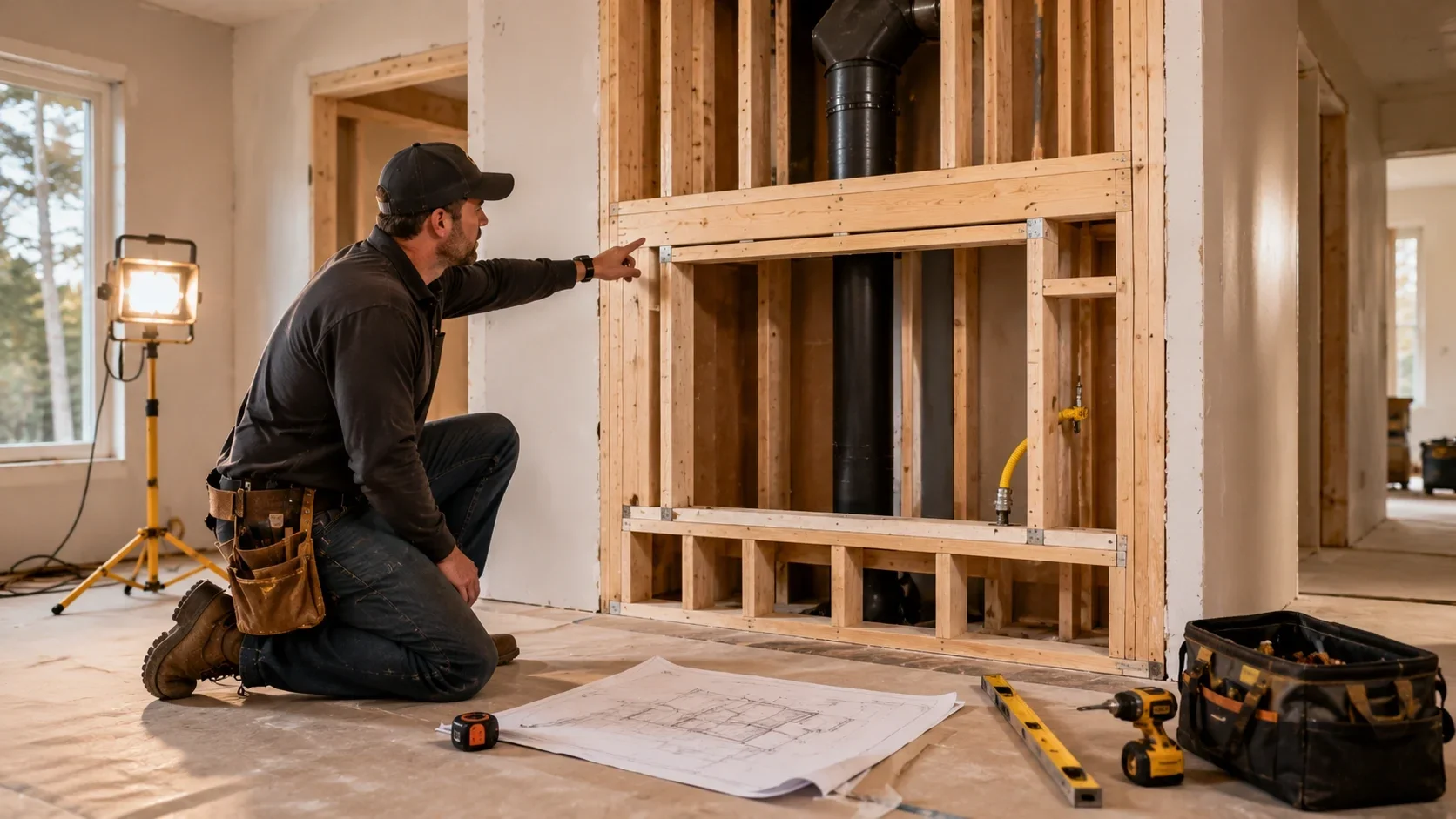
Your Pre-Installation Checklist
Before you commit to a purchase, run through this checklist to make sure the fireplace you want is actually feasible for your home:
- Venting availability: Does your home have an existing chimney, or will you need to install venting? Some types like ventless fireplaces and electric models avoid this entirely — learn when a chimney is needed
- Gas line access: For gas fireplaces, is there a natural gas line near your desired location? If not, options exist but they add cost and complexity
- Electrical access: Electric fireplaces need a nearby outlet. Hardwired models require an electrical circuit — check your panel capacity
- Structural modifications: Will installation require cutting into walls, modifying framing, or altering your roofline?
- Permit requirements: Most jurisdictions require permits for gas lines, structural changes, and new venting systems
- HOA or rental restrictions: Check if your homeowners association or lease agreement places limits on fireplace installations
- Professional vs. DIY: Be honest about whether this is a project you can handle or if you need a licensed contractor
Understanding the Full Cost Picture
The sticker price of the fireplace unit is only part of the story. Here's what you need to budget for:
- Unit tier: The fireplace itself — ranges from entry-level for basic electric models to premium for gas or wood-burning units
- Installation labor: DIY-friendly for plug-in electric units to mid-range to premium for complex gas or wood installations
- Venting system: Entry-level to mid-range for direct vent systems; mid-range to premium for new chimney installations
- Permits and inspections: Typically entry-level, depending on your locality
- Hidden costs: Don't forget about ongoing expenses like maintenance, fuel, and potential annual service costs
Budget Tip: For a complete breakdown of every cost category, including operating costs by fuel type and long-term value analysis, read our fireplace cost breakdown. It includes real-world value tiers so you can build an accurate budget before you start shopping.
Find Your Perfect Fireplace and Buy with Confidence
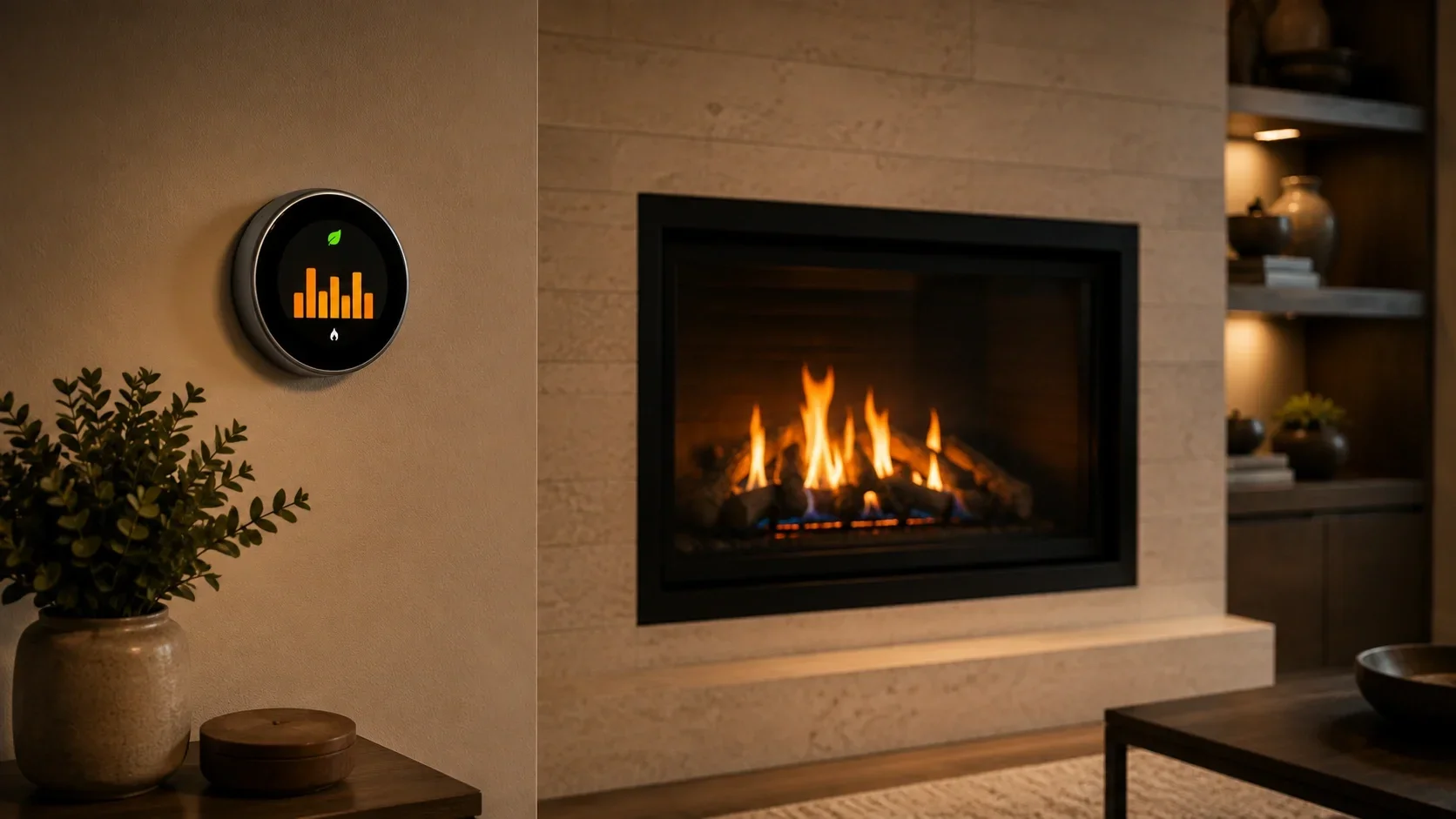
You've done the research. You know your type, your size, your budget, and your installation requirements. Now it's time to find the specific model that checks all your boxes — and make your purchase with the confidence that comes from being well-informed.

Before You Click "Buy"
Even with all your research, there are a few final things to verify before making your purchase:
- Verify current specs: Double-check the product's dimensions, BTU output, and features on the retailer's page — specifications can change
- Read recent reviews: Look at the most recent customer reviews on the retailer's site for up-to-date feedback on quality and performance
- Confirm compatibility: Make sure the fireplace's venting type, fuel requirements, and electrical needs match what your home can support
- Check the warranty: Understand what's covered, for how long, and what voids the warranty — especially regarding professional vs. DIY installation
- Review the return policy: Know the retailer's return window and restocking fees in case the unit doesn't meet your expectations
- Plan your maintenance: Familiarize yourself with the maintenance requirements for your chosen type so you're prepared from day one
Final Tip: If you've followed all five steps, you're already better informed than the vast majority of fireplace buyers. Trust your research, make your decision, and enjoy the warmth and beauty that a well-chosen fireplace brings to your home. And remember — if you run into any issues after installation, our troubleshooting guides and FAQ section are always here to help.
Ready to See Top-Rated Fireplaces?
We've curated a selection of the highest-rated fireplaces across all types and value tiers. Each one has been evaluated for quality, value, and real-world performance. Browse our recommendations and find the one that's right for you.
VIEW RECOMMENDED FIREPLACES