Fireplace Electricity Usage: A Complete Guide
Understand how much electricity your fireplace uses, what factors affect consumption, and how to make smarter energy decisions for your home.
EXPLORE ELECTRICITY USAGEWhy electricity usage matters: If you are considering an electric fireplace or already own one, understanding its power consumption helps you budget for energy costs and choose the right model for your space. This guide breaks down wattage, heating modes, and real-world usage patterns so you can make an informed decision.
How Electric Fireplaces Consume Electricity
Electric fireplaces are powered by standard household electricity and typically plug into a 120-volt outlet. They use electricity for two main functions: generating the flame effect and producing heat. The flame effect alone draws very little power — often just a few watts — while the heating element is responsible for the majority of consumption.
Most electric fireplaces operate in two modes: flame-only mode and heated mode. In flame-only mode, you are essentially running a low-power LED or bulb system, which costs very little to operate. When you switch on the heater, the unit draws significantly more power, especially at higher heat settings. Understanding this distinction is the first step toward managing your energy use.
For a broader look at how electric fireplaces compare to other fuel types in terms of running costs, see our guide on electric vs gas fireplace running costs.
Typical Wattage and Power Consumption
Electric fireplaces come in a range of wattages, and the one you choose directly affects how much electricity it uses. Most residential models fall between 750 watts and 1,500 watts, with some larger or more powerful units reaching higher. The table below shows typical consumption patterns by usage mode.
| Usage Mode | Typical Wattage | What It Powers | Relative Consumption |
|---|---|---|---|
| Flame Only | Low (often under 100W) | LED lights, flame effect, remote receiver | Very low |
| Low Heat | Around 750W | Flame effect plus half-power heating element | Moderate |
| High Heat | Around 1,500W | Flame effect plus full-power heating element | High |
| Premium High-Output | Above 1,500W | Larger heating elements for bigger rooms | Very high |
The wattage rating tells you the maximum power the unit can draw. In practice, a fireplace with a thermostat will cycle the heating element on and off to maintain the set temperature, so actual consumption is often lower than the maximum. If you want to understand how wattage translates into heating capacity, our fireplace heating capacity BTU guide explains the relationship between watts, BTUs, and room size.
Key Factors That Affect Fireplace Electricity Usage
Not all electric fireplaces consume the same amount of power, and even the same unit can use different amounts depending on how it is operated. The following factors have the biggest impact on real-world consumption.
- Heating Mode Running the heater at full power draws far more electricity than flame-only mode. Using the thermostat to maintain a comfortable temperature rather than constantly running at maximum can reduce consumption.
- Unit Size and Output Larger fireplaces designed for bigger rooms typically have higher wattage heating elements. A compact unit for a small space will generally use less power than a large, high-output model.
- Insulation and Room Size A well-insulated room retains heat longer, so the fireplace cycles on less often. Poorly insulated spaces or rooms with high ceilings may require more runtime to maintain temperature.
- Usage Duration The longer the fireplace runs, the more electricity it consumes. Using it as a supplemental heat source for a few hours is very different from running it all day as primary heat.
- Thermostat and Timer Features Models with programmable thermostats and timers can automatically reduce runtime, preventing unnecessary consumption when the room reaches the desired temperature.
- Flame Effect Technology LED-based flame effects use significantly less power than older incandescent or halogen systems. Modern units are generally more efficient in this regard.
Electricity Usage Across Different Fireplace Types
Not all fireplaces rely on electricity in the same way. Understanding how different types use power helps you set realistic expectations and choose the right option for your home.
Electric Fireplaces
These are the only fireplaces that run entirely on electricity. Their consumption depends on heating mode and wattage, as covered above.
- Flame-only mode: very low consumption
- Heated mode: moderate to high, depending on wattage
- No gas line, no venting, no fuel storage
- Running costs depend on local electricity rates
Gas, Wood, and Ethanol Fireplaces
These fireplaces do not use electricity for heat, but many modern models rely on electricity for ignition, blowers, or controls.
- Gas fireplaces: may use a small amount for ignition or blower
- Wood fireplaces: typically no electricity required for basic operation
- Ethanol fireplaces: no electricity needed at all
- Electricity use is minimal compared to electric fireplaces
If you are comparing fuel types and want to understand how electricity fits into the overall picture, our article on electric vs gas vs wood fireplace comparison provides a side-by-side breakdown. You can also explore most energy-efficient fireplace types to see where electric models rank in efficiency.
How to Estimate Your Fireplace's Electricity Usage
Estimating your fireplace's electricity usage is straightforward once you know its wattage and how long you run it. The basic formula is: watts multiplied by hours of use, divided by 1,000, gives you kilowatt-hours (kWh). Your electricity bill is based on kWh, so this calculation tells you how much energy the fireplace contributes to your monthly usage.
-
Find the Wattage Rating
Check the label on your fireplace or the product manual. The wattage is usually listed near the power cord or in the specifications section. If you cannot find it, the maximum is often 1,500W for standard residential models.
-
Determine Your Usage Pattern
Estimate how many hours per day you run the fireplace and whether you typically use flame-only mode, low heat, or high heat. A rough average is sufficient for planning purposes.
-
Apply the Formula
Multiply the wattage by the number of hours used, then divide by 1,000. For example, a 1,500W fireplace running for three hours uses 4.5 kWh. If it runs at 750W for the same time, it uses 2.25 kWh.
-
Compare to Your Electricity Rate
Your utility provider charges a rate per kWh. Multiplying your fireplace's kWh by that rate gives you an estimate of its contribution to your bill. Because rates vary by region and plan, this is best used as a relative comparison rather than an exact figure.
-
Track Over Time
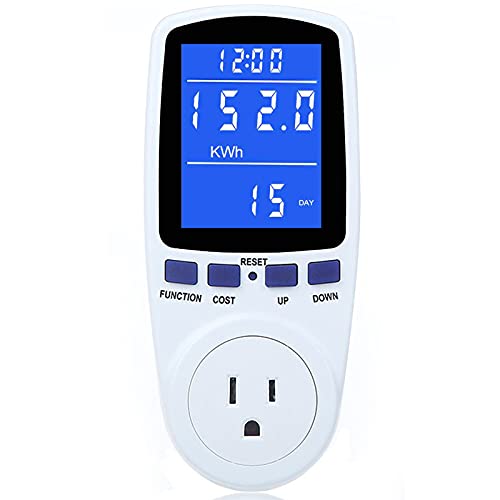
For a more accurate picture, use a plug-in electricity monitor. These devices measure actual consumption and can show you exactly how much your fireplace uses in real-world conditions.
Is an Electric Fireplace Expensive to Run?
Whether an electric fireplace is expensive to run depends on how you use it and what you compare it to. In flame-only mode, an electric fireplace is extremely cheap to operate — often costing just a few cents per hour in most regions. When used as a heater, it draws more power, but it is still a localized heat source, meaning you are only heating the room you are in rather than the entire house.
Compared to central heating, using an electric fireplace to heat a single occupied room can sometimes be more efficient than warming the whole home. However, if you rely on it as a primary heat source for a large area over many hours, the consumption adds up. The key is to use it strategically as a supplemental or zone-heating solution rather than a whole-home replacement.
For a detailed breakdown of whether electric fireplaces are expensive to run in different scenarios, see our article on are electric fireplaces expensive to run. If you are weighing long-term costs across fuel types, our guide on which fireplace saves money long-term offers a useful framework.
Practical Ways to Reduce Fireplace Electricity Consumption
Small changes in how you operate your fireplace can lead to noticeable reductions in electricity usage over time. Here are the most effective strategies:
- Use flame-only mode when heat is not needed. If you simply want the ambiance, skip the heater entirely.
- Set the thermostat lower. A few degrees can make a meaningful difference in runtime.
- Use timers and programmable settings. Avoid running the fireplace when no one is in the room.
- Improve room insulation. Sealing drafts and adding curtains helps the room retain heat, reducing runtime.
- Choose an energy-efficient model. Look for units with LED flame effects and thermostat controls.
- Combine with ceiling fans. Running a ceiling fan on low in reverse can circulate warm air more effectively.
If you are still in the market for a fireplace and want to prioritize efficiency, our article on most energy-efficient fireplace types can help you narrow down your options. And if you are considering how a fireplace fits into your overall home energy picture, hidden costs of owning a fireplace covers expenses beyond just fuel.
Frequently Asked Questions
How many watts does a typical electric fireplace use?
Most residential electric fireplaces draw between 750 watts and 1,500 watts when the heater is running. In flame-only mode, consumption is much lower, often under 100 watts. Larger or high-output models may exceed 1,500 watts.
Does an electric fireplace use a lot of electricity?
It depends on usage. In flame-only mode, it uses very little. In heated mode, it draws more power, but because it heats only one room, it can be a more efficient way to warm a single space than running central heating for the whole house. The overall impact on your bill depends on how often and how long you run it.
Can I leave my electric fireplace on all night?
Many electric fireplaces are designed for extended use, but leaving any heating appliance on overnight carries some risk. If you want to sleep with it on, use a low heat setting and ensure the unit has an automatic shut-off or timer. For safety guidance, see is it safe to sleep with a fireplace on.
Do electric fireplaces use electricity when turned off?
If the fireplace is plugged in but turned off, it may still draw a small amount of standby power for features like remote control receivers or digital clocks. This is usually minimal, but unplugging the unit when not in use eliminates standby consumption entirely.
How can I tell how much electricity my fireplace is actually using?
The most accurate method is a plug-in electricity monitor, which measures real-time consumption. You can also estimate using the wattage rating and your usage hours, as described in the calculation section above.
Is it cheaper to run an electric fireplace or central heating?
For heating a single occupied room, an electric fireplace can be cheaper than running central heating for the entire house. For whole-home heating, central systems are usually more cost-effective. The best approach is to use the fireplace as a supplemental heat source for the spaces you actually use.
Looking for an Energy-Efficient Fireplace?
Browse our curated selection of electric fireplaces, inserts, and accessories to find a model that balances efficiency with style.
View Recommended Products