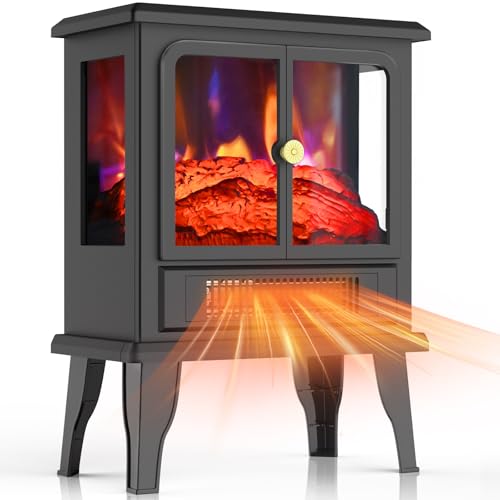
Electric Fireplace Heater for Large Room
Discover how to choose a powerful electric fireplace that can effectively heat your large living space while adding style and ambiance
START YOUR RESEARCHWhy Choosing the Right Electric Fireplace Heater Matters for Large Rooms
Heating a large room presents unique challenges that standard electric fireplaces simply cannot overcome. Most entry-level electric fireplace heaters are designed for small spaces—a bedroom, a home office, or a cozy den—and their heating capacity maxes out well before they can make a meaningful difference in a spacious living area. If you have ever purchased a compact electric fireplace only to discover it barely takes the chill off your open-concept living room, you already understand the frustration.
The good news is that the market now offers high-output electric fireplace heaters specifically engineered for large rooms. These models feature higher wattage, improved blower systems, and smarter heat distribution. But not all large-room electric fireplaces are created equal, and choosing the wrong one means wasted energy, disappointing performance, and a piece of furniture that becomes decorative rather than functional.
This comprehensive guide will walk you through everything you need to know: how to calculate the right heating capacity for your space, which features actually matter for large-room performance, how to compare different product tiers, and what to expect from maintenance and safety. By the end, you will be equipped to make a confident purchasing decision that delivers real warmth—not just ambiance.
📋 What You Will Learn in This Guide
- Understanding Heating Capacity: BTU and Wattage Explained
- How to Size an Electric Fireplace for Your Large Room
- Key Features That Make a Difference in Large Rooms
- Comparing Product Tiers: Entry-Level to Premium
- Installation Options for Large Spaces
- Energy Efficiency and Running Considerations
- Maintenance and Safety Tips
- Step-by-Step Buying Decision Framework
- Frequently Asked Questions
Understanding Heating Capacity: BTU and Wattage Explained
When shopping for an electric fireplace heater for a large room, the first specification you need to understand is heating capacity. Unlike gas or wood fireplaces, electric fireplaces do not produce heat through combustion. Instead, they use electric resistance heating elements paired with a fan or blower to distribute warm air. This means their output is measured in British Thermal Units (BTUs) or watts—and these numbers directly determine whether the unit can handle your space.
The BTU Formula for Electric Heaters
A single watt of electric heating produces approximately 3.412 BTUs per hour. Most residential electric fireplaces operate on standard 120-volt household circuits, which limits them to about 1,500 watts—equivalent to roughly 5,100 BTUs. Some larger models can be hardwired to 240-volt circuits, doubling their output to 3,000 watts or approximately 10,200 BTUs. Understanding this ceiling is critical because it defines the physical limit of what any plug-in electric fireplace can achieve.
For a large room, you need to know two things: the square footage of the space and the climate you live in. A common rule of thumb for electric heaters is that you need approximately 10 watts of heating power per square foot of living space in a moderately insulated home. This means a 400-square-foot room requires about 4,000 watts—far beyond what a standard plug-in electric fireplace can deliver. This is why large-room electric fireplaces are best understood as supplemental zone heaters rather than whole-room primary heat sources in extremely cold climates.
However, in milder climates or well-insulated homes, a high-output electric fireplace can absolutely take the edge off a large room. The key is setting realistic expectations and choosing a model that maximizes the available wattage while distributing heat efficiently.
💡 Important Insight: A 1,500-watt electric fireplace produces about 5,100 BTUs. To heat a 300-square-foot room from 60°F to 70°F, you typically need around 3,000 BTUs—so a standard unit can work if the room is well-insulated and the temperature differential is moderate. For larger spaces or colder conditions, you will need to combine the fireplace with your central heating system.
Why Wattage Matters More Than Flame Appearance
Many buyers focus on how realistic the flame looks—and while aesthetics matter, heating performance should be your first priority when the goal is warming a large room. A stunningly realistic flame that produces minimal heat is essentially a decorative piece. Look for models that explicitly state their wattage and BTU output, and prioritize units that offer multiple heat settings so you can balance warmth and energy use.
If you are unsure whether your room qualifies as "large" for fireplace purposes, a good benchmark is anything over 250 square feet. Rooms between 250 and 400 square feet are considered large for electric fireplace purposes, while spaces exceeding 400 square feet may require a hardwired 240-volt unit or a combination of supplemental heating strategies. To learn more about matching heating capacity to your specific room dimensions, see our detailed guide on fireplace heating capacity and BTU requirements.
How to Size an Electric Fireplace for Your Large Room
Sizing an electric fireplace involves more than just picking the largest model available. You need to consider the physical dimensions of the unit, the heating capacity relative to your room's volume, and how the fireplace will integrate with your existing furniture layout. A fireplace that is too small will look out of place and underperform; one that is too large may overwhelm the space and exceed your electrical circuit capacity.
Physical Dimensions and Viewing Area
For large rooms, you generally want a fireplace with a wider viewing area to maintain proper visual proportion. A 36-inch to 60-inch wide electric fireplace is typical for living rooms and great rooms. The flame display should be substantial enough to serve as a focal point without dominating the wall. Models with a black or dark frame tend to blend better in large spaces, while stainless steel or white finishes can create a more contemporary statement.
Depth is another consideration. Most wall-mounted and recessed electric fireplaces are only 4 to 8 inches deep, making them excellent space-savers. Freestanding models and those built into entertainment centers may be deeper. For large rooms, a linear or landscape-oriented fireplace often looks more proportional than a traditional square or portrait orientation. If you are still deciding between installation types, our comparison of wall-mounted vs insert vs freestanding fireplaces can help clarify the trade-offs.
Heating Capacity Relative to Room Size
Use the following table as a general guideline for matching electric fireplace heating output to room size. Keep in mind that insulation quality, ceiling height, window area, and climate all affect actual performance.
| Room Size (sq ft) | Recommended Wattage | Approximate BTU Output | Typical Use Case |
|---|---|---|---|
| Up to 150 sq ft | 750–1,000W | 2,500–3,400 BTU | Bedroom, small office |
| 150–250 sq ft | 1,000–1,200W | 3,400–4,100 BTU | Medium bedroom, den |
| 250–350 sq ft | 1,200–1,500W | 4,100–5,100 BTU | Small living room |
| 350–450 sq ft | 1,500W (max plug-in) | 5,100 BTU | Large living room, master suite |
| 450–600+ sq ft | 2,000–3,000W (240V) | 6,800–10,200 BTU | Open concept, great room |
Notice that for rooms larger than 450 square feet, a standard 120-volt plug-in electric fireplace reaches its practical limit. If your room falls into this category, consider a hardwired 240-volt model or plan to use the fireplace as a supplemental heat source in the area where you spend the most time. Our guide on whether a fireplace can heat an entire house explores this topic further.
If your large room is part of an open-concept layout, the effective heating area may be even larger than the room's nominal square footage because warm air escapes into adjacent spaces. In these situations, a fireplace with a strong blower and directional louvers becomes especially valuable. For more on this, see our article on fireplace sizing for open concept rooms.
Key Features That Make a Difference in Large Rooms
Not all electric fireplaces are designed with large-room performance in mind. Several features directly impact how effectively a unit can distribute heat across a spacious area. When comparing models, pay close attention to these characteristics.
🔥 High-Wattage Heating Element
Look for a fireplace that offers at least 1,500 watts of heating power. Premium large-room models may support 240-volt hardwiring for 2,000–3,000 watts. The heating element should be paired with a robust blower to push warm air outward.
💨 Powerful Blower Fan
A blower is essential for large rooms. Without one, heat rises and stays near the ceiling. A good blower moves 100–200 CFM (cubic feet per minute) of air, distributing warmth across the room rather than just in front of the unit.
🌡️ Thermostat and Remote Control
A built-in thermostat lets you set a target temperature and maintain it automatically. Remote controls and smart Wi-Fi connectivity add convenience, allowing you to adjust settings without leaving your seat. See our guide on fireplace thermostats for more details.
🎚️ Multiple Heat and Flame Settings
Independent flame and heat controls let you enjoy the ambiance year-round without heating. Multiple heat levels (low/high/auto) help you match output to conditions, which is especially useful in large rooms that warm up gradually.
🔇 Quiet Operation
A noisy blower can be distracting in a living room. Look for models rated below 45 decibels. Premium units often use brushless motors and vibration-dampening mounts for quieter performance.
🛡️ Safety Features
Overheat protection and cool-touch glass are non-negotiable. For large rooms with children or pets, consider a model with an automatic shut-off timer. Our furniture distance guide covers clearance recommendations.
Another feature worth considering is flame realism technology. While this does not affect heating, a more realistic flame enhances the overall experience. LED flame effects with adjustable brightness and color are common in mid-range and premium models. Some high-end units even offer crackling sound effects for added ambiance. If realism is important to you, explore our article on the most realistic electric fireplace inserts.
Comparing Product Tiers: Entry-Level to Premium
Electric fireplace heaters for large rooms span a wide range of quality and capability. Understanding the tier structure helps you set expectations and choose a model that aligns with your needs and long-term goals. Below is a breakdown of what you can generally expect at each tier.
Entry-Level Models
Entry-level large-room electric fireplaces typically offer 1,500 watts of heating, a basic blower, and simple controls. Flame effects are usually LED-based with limited adjustability. These models work well as supplemental heaters in moderately sized rooms (250–350 sq ft) and for ambiance. They may lack advanced thermostats or smart features, and build quality is functional rather than refined. For budget-conscious buyers who primarily want ambiance with some supplemental heat, entry-level units can be a reasonable starting point.
Mid-Range Models
Mid-range electric fireplaces step up in several meaningful ways. You will find improved blower systems that move more air, better thermostat accuracy, and more realistic flame effects with adjustable brightness and color. Remote controls are standard, and some models offer basic smart home compatibility. Build quality improves with better materials and tighter tolerances. For most large-room applications, mid-range models offer the best balance of performance, features, and longevity. The electric fireplace with heater and remote category is where many of these models reside.
Premium and Luxury Models
Premium electric fireplaces are designed for discerning buyers who want maximum performance and aesthetics. These models often support 240-volt hardwiring for higher heat output, feature near-silent blowers, and offer advanced flame realism with multiple color options and crackling sound. Smart home integration (Wi-Fi, app control, voice assistants) is common. Materials may include real glass, metal accents, and high-quality finishes. If your large room is a primary living space and you want a fireplace that performs as good as it looks, premium models are worth considering. You can explore high-end options in our most energy-efficient electric fireplaces guide.
💡 Tier Comparison Tip: When comparing tiers, focus on the features that matter most for your situation. A mid-range model with a strong blower and accurate thermostat may outperform an entry-level model with a larger flame display. Prioritize heating performance and build quality over cosmetic extras if warmth is your primary goal.
Installation Options for Large Spaces
How you install your electric fireplace affects both its performance and its visual integration into your large room. There are several common installation methods, each with distinct advantages.
Wall-Mounted
Wall-mounted electric fireplaces are extremely popular for large rooms because they save floor space and can be positioned at eye level for optimal viewing. They are relatively easy to install, often requiring only a few screws and a standard electrical outlet. However, for the best look, you may want to recess the unit into the wall, which requires more planning and possibly professional help. Our guide on recessed wall-mounted electric fireplaces covers this option in detail.
Built-In and Recessed
Built-in installation creates a seamless, custom look that is ideal for large rooms with a designated fireplace wall. This method requires framing and finishing work, so it is best planned during a renovation or new construction. Recessed models sit flush with the wall, providing a clean, modern appearance. If you are considering this route, our article on built-in electric fireplace and TV design offers layout inspiration.
Freestanding and Entertainment Centers
Freestanding electric fireplaces and those integrated into TV stands or entertainment centers offer flexibility. They can be moved if you rearrange your room, and many come with built-in storage or shelving. For large rooms, a freestanding unit or a wide TV stand with fireplace can anchor a seating area effectively. Explore options like a freestanding electric fireplace TV stand or a large entertainment center with fireplace for inspiration.
Regardless of installation method, ensure the fireplace is placed on a level surface and away from flammable materials. If you are unsure about local codes or electrical requirements, consult a licensed electrician. Our electric fireplace installation guide provides a step-by-step overview.
Energy Efficiency and Running Considerations
Electric fireplaces are often marketed as "energy-efficient," but what does that mean in practice, especially for large rooms? Understanding the economics of electric heating helps you use your fireplace wisely.
How Electric Fireplaces Compare to Other Heat Sources
Electric resistance heating is 100% efficient at the point of use—every watt of electricity consumed is converted to heat. However, the cost of that electricity varies widely depending on your location and utility rates. In many regions, natural gas and propane are cheaper per BTU than electricity. This means that while an electric fireplace is efficient, it may not always be the most economical way to heat a large space if you have access to cheaper fuel sources. For a detailed comparison, see our article on electric vs gas fireplace running costs.
That said, electric fireplaces offer unique advantages: they require no venting, produce no combustion byproducts, and can be used in spaces where gas or wood appliances are impractical. They also allow for precise zone heating—warming only the room you are using rather than the entire house. This zone-heating capability can lead to overall energy savings if it allows you to lower your central thermostat.
Tips for Maximizing Efficiency in Large Rooms
- Use the thermostat: Set a comfortable temperature and let the fireplace maintain it rather than running constantly on high.
- Utilize low heat settings: Once the room reaches your desired temperature, switch to a lower heat setting to maintain it.
- Seal drafts: Large rooms often have more windows and doors. Sealing drafts and using heavy curtains can significantly improve heating efficiency.
- Run the flame without heat: During milder months, enjoy the ambiance without the heating element to save energy.
- Consider a ceiling fan: Running a ceiling fan on low in reverse can help distribute warm air more evenly throughout a large room.
If you are concerned about electricity usage, our article on fireplace electricity usage breaks down the numbers. You can also explore most energy-efficient electric fireplaces for models designed to minimize consumption.
Maintenance and Safety Tips
Electric fireplaces are among the lowest-maintenance heating appliances available, but they still benefit from regular care—especially in large rooms where they may run for extended periods.
Routine Maintenance
Dust and debris can accumulate on the heating element and blower, reducing efficiency and potentially causing odors. Vacuum the intake and exhaust vents every few months, and wipe down the exterior with a soft, dry cloth. The flame effect glass should be cleaned occasionally with a non-abrasive glass cleaner to maintain clarity. For detailed instructions, see our guide on cleaning an electric fireplace.
Annual Inspection
Once a year, inspect the power cord for damage, check that the plug and outlet are not warm to the touch, and listen for unusual noises from the blower. If you notice any issues, discontinue use and consult a qualified technician. Our electric fireplace inspection guide provides a printable checklist.
Safety Best Practices
- Never plug the fireplace into an extension cord or power strip; use a dedicated outlet.
- Keep flammable materials at least three feet away from the front and sides of the unit.
- Do not block air intake or exhaust vents.
- Supervise children and pets around the fireplace, especially when the heater is on.
- Turn off and unplug the unit when not in use for extended periods.
For additional safety guidance, including carbon monoxide considerations (electric fireplaces do not produce CO, but it is a common concern), see our article on electric fireplaces and carbon monoxide.
Step-by-Step Buying Decision Framework
By now, you have a thorough understanding of what to look for in an electric fireplace heater for a large room. Here is a step-by-step framework to guide your final decision.
Step 1: Measure Your Room
Calculate the square footage by multiplying length by width. Note ceiling height—if it exceeds the standard 8 feet, you may need additional heating capacity. Identify how many windows and exterior doors the room has, as these affect heat loss.
Step 2: Determine Your Heating Goal
Are you looking for primary supplemental heat—meaning the fireplace will noticeably warm the room on its own—or just a decorative piece with a bit of warmth? This determines whether a standard 1,500-watt plug-in model is sufficient or whether you need to explore 240-volt options.
Step 3: Choose Your Installation Type
Wall-mounted, built-in, freestanding, or TV stand? Consider your room layout, available wall space, and whether you want the flexibility to move the unit later.
Step 4: Prioritize Features
Make a list of must-have features: blower strength, thermostat type, remote control, flame realism, noise level, and safety certifications. Use this list to filter models.
Step 5: Compare Product Tiers
Determine your target tier—entry-level, mid-range, or premium—based on your budget and performance expectations. Remember that for large rooms, a mid-range model with a strong blower is often the sweet spot.
Step 6: Check Electrical Requirements
Verify that your intended outlet can handle the fireplace's wattage. A 1,500-watt unit draws about 12.5 amps, which is fine on a 15-amp circuit as long as no other high-draw appliances share it. For 240-volt models, you will need a dedicated circuit installed by an electrician. Our ventilation and electrical requirements guide covers this in more detail.
Step 7: Read Reviews and Compare
Look for real-world feedback on heating performance in large rooms. Pay attention to comments about blower noise, thermostat accuracy, and long-term durability. Our recommended products section below highlights some of the best options available.
🏁 Final Verdict: What to Expect
For most large rooms (250–450 sq ft), a high-quality 1,500-watt electric fireplace with a strong blower, accurate thermostat, and realistic flame will provide effective supplemental heat and beautiful ambiance. If your room exceeds 450 square feet or you need primary heating, consider a hardwired 240-volt model or plan to use the fireplace in conjunction with your central heating system.
The ideal electric fireplace heater for a large room balances heating capacity, build quality, features, and aesthetics. By following the framework above, you can confidently choose a unit that will serve you well for years to come.
Frequently Asked Questions
A plug-in 1,500-watt electric fireplace can provide meaningful supplemental heat in rooms up to about 400 square feet, depending on insulation and climate. It works best as a zone heater for the area where you are sitting, rather than trying to warm the entire volume of a very large space. For rooms exceeding 400–450 square feet, a hardwired 240-volt model or central heating support is recommended.
As a general rule, you need about 20 BTUs per square foot of living space for supplemental heating. For a 400-square-foot room, that is approximately 8,000 BTUs. Since standard plug-in electric fireplaces max out around 5,100 BTUs, you can see why they are best for supplemental rather than primary heating in larger spaces. Use our BTU guide for more precise calculations.
It depends on usage and local electricity rates. Running a 1,500-watt fireplace for four hours a day adds about 6 kilowatt-hours of consumption. Multiply that by your utility rate to estimate daily cost. Many users find that using the fireplace as a zone heater allows them to lower their central thermostat, offsetting some of the cost. See our article on daily running costs for a more detailed breakdown.
No. Electric fireplaces are ventless and do not produce combustion byproducts, so they require no chimney, flue, or venting of any kind. This makes them extremely versatile for installation in apartments, basements, and rooms without existing chimney infrastructure. Learn more in our article on whether fireplaces need a chimney.
Most modern electric fireplaces are designed with safety features like overheat protection and automatic shut-off, making them safe for extended use. However, it is generally recommended to turn off and unplug any heating appliance when sleeping or leaving the house. If you choose to leave it on, use the lowest heat setting and ensure proper clearance from combustibles. See our guide on leaving a fireplace on overnight for more safety tips.
Realism depends on the flame technology. Premium models with LED and water vapor flame effects tend to look the most realistic. Brands that offer adjustable flame colors, brightness, and crackling sound effects create a more convincing experience. Explore our article on the most realistic electric fireplace inserts for specific recommendations.