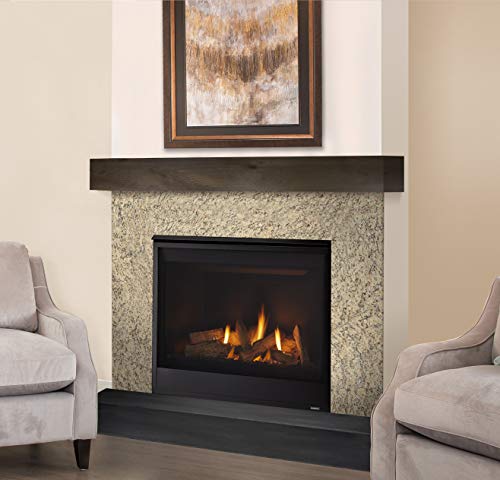
Direct Vent Gas Fireplace Insert: The Ultimate Guide
Discover why a direct vent gas fireplace insert is the smartest upgrade for your existing fireplace. Learn about efficiency, installation, venting options, and how to choose the perfect model for your home.
Start Your ResearchWhat Is a Direct Vent Gas Fireplace Insert?
A direct vent gas fireplace insert is a high-efficiency heating appliance designed to fit into an existing masonry or factory-built fireplace. Unlike traditional open fireplaces that lose most of their heat up the chimney, a direct vent insert is a sealed combustion system. It draws air from outside the home for combustion and vents exhaust gases directly back outside through a dedicated vent pipe, typically installed through the chimney or an exterior wall. This closed-loop system eliminates drafts, improves indoor air quality, and delivers significantly more heat into your living space.
For homeowners who already have a fireplace but want to transform it from an ambiance-only feature into a powerful heating source, a direct vent insert is often the best solution. It combines the aesthetic appeal of a real flame with the convenience and efficiency of modern gas technology. If you are still exploring your options, our guide on which fireplace is right for your home can help you compare all available types.
Key Takeaway: A direct vent gas fireplace insert is a sealed, high-efficiency heating unit that installs into an existing fireplace. It uses outside air for combustion and vents exhaust outdoors, making it safe, efficient, and ideal for supplemental heating.
How Does a Direct Vent System Work?
Understanding the mechanics of a direct vent system helps you appreciate its efficiency and safety. Here is how it operates:
- Sealed Combustion Chamber: The fire burns inside a sealed box, isolated from your home's indoor air.
- Outside Air Intake: A concentric vent pipe pulls fresh air from outside for combustion.
- Exhaust Venting: Combustion byproducts are expelled directly outside through the same vent system.
- Heat Exchange: A heat exchanger captures warmth from the combustion process and circulates it into your room using a blower fan.
- No Indoor Air Loss: Because the system is sealed, it does not consume your home's heated air or contribute to drafts.
This design offers a major advantage over vent-free or B-vent systems. Vent-free units release moisture and combustion byproducts into your living space, while B-vent systems use indoor air for combustion and are less efficient. A direct vent insert, by contrast, is the gold standard for safety and performance. For a deeper comparison, see our article on gas fireplace ventilation requirements.
Modern direct vent inserts often achieve efficiency ratings between 70% and 85%, meaning a large portion of the fuel they consume is converted into usable heat. This is a dramatic improvement over traditional wood-burning fireplaces, which typically operate at around 10% efficiency.
Key Benefits of a Direct Vent Gas Fireplace Insert
Advantages
- High heating efficiency (70–85%)
- No indoor air quality concerns
- No drafts or heat loss from the chimney
- Works during power outages (many models)
- Realistic flame appearance
- Convenient operation with remote or thermostat
- Increases home value and curb appeal
Considerations
- Higher upfront investment than vent-free units
- Requires professional installation
- Needs a direct vent path (chimney or wall)
- Limited to gas fuel (natural gas or propane)
- Annual maintenance recommended
For many homeowners, the benefits far outweigh the drawbacks. The ability to heat a room effectively while enjoying a beautiful, realistic flame is a compelling combination. If you are comparing fuel types, our guide on electric vs gas vs wood fireplaces provides a detailed breakdown.
Direct Vent vs. Other Gas Fireplace Inserts
Not all gas inserts are created equal. The table below compares direct vent inserts with other common types to help you make an informed decision.
| Feature | Direct Vent Insert | Vent-Free Insert | B-Vent Insert |
|---|---|---|---|
| Efficiency | High (70–85%) | Moderate (up to 99% but adds moisture) | Low to Moderate (60–70%) |
| Air Quality | Excellent – sealed system | Poor – releases byproducts indoors | Fair – uses indoor air |
| Venting | Direct vent through wall or chimney | No vent required | Vertical vent through roof |
| Installation Complexity | Moderate to High | Low | Moderate |
| Best For | Supplemental heating, efficiency-focused homes | Ambiance, mild climates, no venting options | Homes with existing B-vent chimneys |
As the table illustrates, direct vent inserts are the superior choice for homeowners who prioritize efficiency, safety, and indoor air quality. They are particularly well-suited for colder climates where supplemental heating is valuable. For more details on venting configurations, see our guide on whether you need a chimney or vent.
Sizing Your Direct Vent Insert: BTU and Room Fit
Choosing the right size for your direct vent gas fireplace insert is critical. An undersized unit will struggle to heat your space, while an oversized unit may cycle on and off frequently, leading to inefficiency and discomfort. The key metric is BTU (British Thermal Units) output.
As a general rule, you need approximately 20 to 30 BTUs per square foot of living space in moderate climates, and 30 to 40 BTUs per square foot in colder regions. However, factors like ceiling height, insulation quality, window area, and climate zone all play a role. Our detailed fireplace heating capacity BTU guide walks you through the calculation step by step.
Most direct vent inserts fall into the following BTU ranges:
- Small (20,000–25,000 BTU): Ideal for bedrooms, small living rooms, and mild climates.
- Medium (25,000–35,000 BTU): Suitable for average-sized living rooms and most homes.
- Large (35,000–45,000+ BTU): Best for large open-concept spaces or cold climates.
Remember that efficiency ratings matter as much as raw BTU output. A high-efficiency insert with a lower BTU rating can often heat a space as effectively as a lower-efficiency unit with a higher rating. If you are unsure about sizing, our how to size a fireplace guide offers practical worksheets and tips.
Installation: What to Expect
Installing a direct vent gas fireplace insert is not a DIY project for most homeowners. It involves working with gas lines, venting systems, and electrical connections, all of which must comply with local building codes. Professional installation is strongly recommended.
The Installation Process
- Inspection: A technician inspects your existing fireplace and chimney to ensure compatibility.
- Venting Setup: A direct vent pipe is routed through the chimney or an exterior wall.
- Gas Line Connection: A licensed plumber connects the insert to your home's gas supply.
- Electrical Connection: The blower fan and control system are wired to a power source.
- Insert Placement: The unit is slid into the firebox and secured.
- Testing and Commissioning: The installer tests the system, checks for leaks, and ensures proper operation.
What Affects Installation Complexity?
- Chimney Condition: A damaged or unlined chimney may require repairs or a new liner.
- Vent Path: Routing the vent through an exterior wall may be easier than a chimney in some cases.
- Gas Availability: If you do not have a gas line, one must be installed.
- Local Codes: Permit requirements and inspections vary by location.
For a comprehensive overview, visit our fireplace installation guide. If you are considering a DIY approach, our article on DIY vs professional installation can help you weigh the risks and benefits.
Maintenance Tips for Longevity
A direct vent gas fireplace insert is a durable appliance, but regular maintenance ensures it operates safely and efficiently for years. Here are essential maintenance tasks:
- Annual Inspection: Have a certified technician inspect the unit, venting, and gas connections annually. See our annual fireplace inspection guide for details.
- Clean the Glass: Soot and dust can accumulate on the glass door. Use a non-abrasive cleaner recommended by the manufacturer. Our guide on how to clean fireplace glass provides step-by-step instructions.
- Clean the Burner: Dust and debris can clog burner ports, affecting flame quality. Learn how in our article on how to clean a gas fireplace burner.
- Check the Blower: If your insert has a blower fan, clean it regularly to prevent dust buildup. See our fireplace blower fan guide for tips.
- Inspect the Venting: Ensure the vent pipe is free of blockages, nests, or damage.
- Replace Batteries: If your unit uses a remote or battery backup, replace batteries annually.
Following a seasonal maintenance schedule is the best way to avoid unexpected breakdowns. Our seasonal fireplace checklist and fall fireplace inspection guide are excellent resources. For a full maintenance routine, see our gas fireplace maintenance guide.
Common Issues and Troubleshooting
Even with proper maintenance, you may encounter occasional issues. Here are some common problems and their solutions:
- Pilot Light Won't Stay Lit: This could be a dirty thermocouple or a draft issue. See our guide on pilot light keeps going out.
- Fireplace Won't Light: Check the gas supply, ignition system, and remote batteries. Our article on gas fireplace won't light covers common fixes.
- Weak Flame: A weak flame may indicate low gas pressure or a clogged burner. Learn more in our gas fireplace weak flame guide.
- Unusual Noises: Buzzing, humming, or popping sounds can have various causes. See our fireplace making noise article.
- Smells Like Gas: This is a safety concern. If you smell gas, turn off the unit and contact a professional immediately. Read our fireplace smells like gas guide for safety protocols.
For a comprehensive troubleshooting resource, visit our fireplace troubleshooting hub. Many issues can be resolved with simple adjustments, but never hesitate to call a qualified technician for safety-related concerns.
Frequently Asked Questions
A direct vent insert is primarily designed for zone heating—heating the room it is installed in and adjacent spaces. While a high-BTU unit in an open-concept home can make a significant contribution to overall heating, it is not a replacement for a central HVAC system. For more information, see our article on can a fireplace heat an entire house.
Not necessarily. While direct vent inserts are commonly installed using an existing chimney, they can also be vented horizontally through an exterior wall. This flexibility makes them suitable for homes without a traditional chimney. Learn more in our guide on do you need a chimney or vent.
Installation costs vary widely based on your home's configuration, venting requirements, and local labor rates. Factors include whether you need a new gas line, chimney liner, or exterior venting. For a detailed breakdown of potential expenses, see our fireplace cost breakdown guide.
While some homeowners with advanced DIY skills may attempt installation, it is generally not recommended. Gas line connections, venting, and electrical work must comply with strict safety codes. Improper installation can lead to carbon monoxide leaks, fires, or voided warranties. We strongly recommend hiring a certified professional. See our DIY vs professional installation comparison for more details.
Most direct vent inserts have efficiency ratings between 70% and 85%. This means that for every unit of gas consumed, 70–85% is converted into usable heat. This is significantly higher than traditional wood-burning fireplaces (around 10%) and B-vent gas inserts (60–70%). For a comparison of efficiency across types, see our most energy-efficient fireplace types guide.
With proper maintenance, a quality direct vent gas fireplace insert can last 15 to 20 years or more. Regular annual inspections and cleaning are key to maximizing lifespan. See our fireplace lifespan article for more information.
Yes, direct vent inserts are among the safest gas heating appliances available. Because they are sealed and use outside air for combustion, they do not release carbon monoxide or other byproducts into your home. However, proper installation and annual maintenance are essential. Learn about carbon monoxide safety in our carbon monoxide signs guide.
Many direct vent inserts are equipped with a battery backup or millivolt ignition system that allows them to operate during a power outage. However, if your unit relies on an electric blower to circulate heat, it may still produce radiant heat but without the fan assistance. Check your model's specifications.
Final Verdict: Is a Direct Vent Gas Fireplace Insert Right for You?
A direct vent gas fireplace insert is an excellent investment for homeowners who want to transform an inefficient, drafty fireplace into a powerful, safe, and convenient heating source. It offers superior efficiency, improved indoor air quality, and the beauty of a real flame—all without the mess and maintenance of a wood-burning fire.
If you are ready to upgrade your existing fireplace, a direct vent insert is likely the best choice. If you are still exploring, consider reading our fireplace buying guide for a broader overview of all options.
See Recommended Models