Best Electric Fireplace for Small Spaces
Discover how to choose the perfect electric fireplace for apartments, condos, bedrooms, and compact living areas. Compare wall-mounted, freestanding, and insert options with expert sizing guidance.
View Top RecommendationsWhy Electric Fireplaces Excel in Small Spaces: Unlike gas or wood-burning alternatives, electric fireplaces require no venting, chimney, or gas line. They plug into a standard outlet, produce zero emissions, and can be installed on virtually any wall. For renters, apartment dwellers, and homeowners with limited square footage, they represent the most practical way to add warmth and ambiance without major renovation.
Why Electric Fireplaces Are Ideal for Compact Living
Small spaces present unique challenges: limited floor area, restricted wall placement, and often rental agreements that prohibit structural modifications. Electric fireplaces address all three concerns. A wall-mounted unit occupies zero floor space, while freestanding models can be positioned wherever a standard outlet exists.
Modern electric fireplaces have evolved significantly. Today's mid-range and premium models feature realistic flame effects with adjustable brightness, crackling sound options, and infrared or fan-forced heating that can warm rooms up to 400 square feet. Many units offer flame-only modes, allowing you to enjoy ambiance during warmer months without generating heat.
For those concerned about energy consumption, electric fireplaces are generally inexpensive to operate when used as supplemental zone heaters rather than primary heat sources. The ability to heat only the room you're using—rather than the entire home—often translates to better energy efficiency in practice.
Types of Electric Fireplaces for Small Spaces
Understanding the three main form factors will help you narrow down the best option for your layout and needs.
Wall-Mounted Electric Fireplaces Most Popular
Wall-mounted electric fireplaces are the gold standard for space-constrained rooms. They hang flush against the wall like a flat-screen television, consuming zero floor area. Most models range from 30 to 60 inches in width, with 36 to 50-inch units being ideal for small living rooms and bedrooms.
Installation is straightforward: most units come with a mounting bracket and require only a few screws into wall studs or heavy-duty anchors. For renters, this means minimal wall damage that can be patched easily upon moving out. Many plug-and-play models simply hang on the wall and plug into the nearest outlet.
- Zero floor space usage
- Modern, sleek appearance
- Easy DIY installation
- Available in linear and traditional styles
- Requires wall space
- Limited to wall placement
- May need outlet nearby
Freestanding Electric Fireplaces Most Flexible
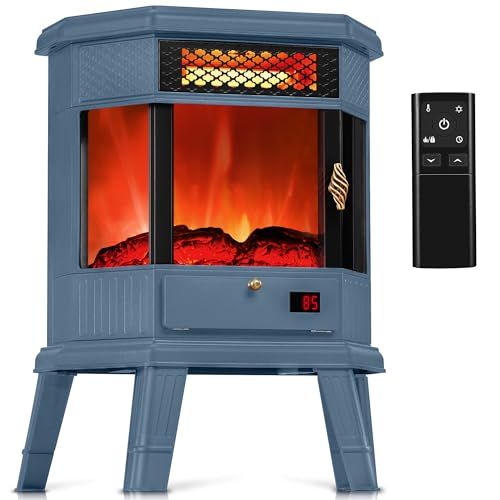
Freestanding electric fireplaces resemble traditional stove or cabinet designs and sit directly on the floor. They offer the greatest flexibility in placement—you can move them between rooms, reposition them seasonally, or take them with you when you move.
For small spaces, compact freestanding models with a footprint under 24 inches wide work well in corners, beside seating areas, or at the end of a bed. Many freestanding units include built-in mantels or shelves, combining heating with display space. However, if floor space is extremely limited, a freestanding unit with a blower may still be too bulky.
- Portable and repositionable
- No installation required
- Often includes mantel or shelf
- Can be moved between rooms
- Occupies floor space
- Less sleek than wall-mounted
- May crowd tight layouts
Electric Fireplace Inserts Best for Existing Fireplaces
If your small space already has a non-functional wood-burning fireplace, an electric insert is an excellent solution. These units fit into the existing firebox, converting an unused or inefficient fireplace into a clean, convenient heat source.
Electric inserts are available in various sizes, with small electric fireplace inserts designed specifically for compact fireboxes. They typically include a surround or trim to cover gaps between the insert and the original opening. For those considering this route, understanding which insert works best for existing fireplaces is essential.
- Reuses existing fireplace opening
- No floor or wall space lost
- Clean, efficient operation
- Preserves traditional look
- Requires existing firebox
- Sizing must match opening
- May need professional fitting
Quick Comparison: Electric Fireplace Types for Small Spaces
| Feature | Wall-Mounted | Freestanding | Insert |
|---|---|---|---|
| Floor Space Required | None | 1–4 sq ft | None (uses existing) |
| Installation Difficulty | Easy (DIY) | None (plug-in) | Moderate |
| Portability | Low | High | Low |
| Best For | Tight rooms, modern decor | Renters, flexible layouts | Existing fireplaces |
| Heating Capacity | Up to 400 sq ft | Up to 400 sq ft | Up to 400 sq ft |
| Style Options | Linear, traditional, mirrored | Stove, cabinet, mantel | Traditional, modern |
How to Choose the Right Size Electric Fireplace
Selecting the correct size involves balancing visual proportion, heating capacity, and available space. A fireplace that's too large will overwhelm a small room; one that's too small may fail to provide adequate warmth.
Viewing Width Guidelines
For small rooms under 150 square feet (bedrooms, offices, reading nooks), a wall-mounted unit with a 30 to 40-inch viewing width is usually ideal. For living rooms between 150 and 300 square feet, 40 to 50 inches provides better visual balance. If you're placing the fireplace below a television, ensure the fireplace width does not exceed the TV width for aesthetic harmony—a consideration discussed in our guide on TV placement above fireplaces.
Heating Capacity (BTU)
Most residential electric fireplaces produce between 4,000 and 5,100 BTU. As a general rule, you need approximately 10 watts of heating power per square foot of room space. A 1,500-watt electric fireplace (the standard maximum for a 15-amp household circuit) can effectively heat a well-insulated room up to 400 square feet. For a deeper understanding of heating calculations, see our BTU and heating capacity guide.
Small Space Sizing Checklist
- Measure available wall width and height before shopping
- Confirm electrical outlet proximity (or plan for an extension cord rated for the amperage)
- Check that the unit's wattage won't trip your circuit breaker when combined with other appliances
- Consider viewing angle—linear fireplaces look best when viewed straight-on
- If placing below a TV, verify the fireplace depth and heat output won't damage the screen
Key Features to Look For
Flame Realism
Entry-level electric fireplaces often use basic LED flame simulations that can look artificial. Mid-range and premium models employ advanced technologies—such as crackling sound effects, adjustable flame colors, and multi-layer flame projections—that create a convincing fire experience. If realism matters to you, prioritize units with these features.
Heating Mechanism
Electric fireplaces typically use either infrared quartz or fan-forced heating. Infrared models tend to provide more immediate, directional warmth, while fan-forced units circulate heated air throughout the room. Both are effective in small spaces; the choice often comes down to personal preference and specific room layout.
Thermostat and Remote Control
A built-in thermostat allows the fireplace to maintain a consistent temperature, cycling the heater on and off as needed. Remote controls add convenience, especially for wall-mounted units that may be difficult to reach. Some premium models offer smart Wi-Fi connectivity, enabling control via smartphone apps or voice assistants.
Safety Features
Look for overheat protection, cool-touch glass, and automatic shut-off. These features are particularly important in small spaces where the fireplace may be closer to furniture or curtains. Our fireplace safety tips guide covers additional precautions for compact rooms.
Installation Considerations for Small Spaces
One of the greatest advantages of electric fireplaces is installation simplicity. Most wall-mounted and freestanding units require no professional installation—just a standard electrical outlet and basic mounting hardware.
For wall-mounted units, ensure you're mounting into wall studs or using appropriate anchors for your wall type (drywall, plaster, brick, etc.). Some models are designed for recessed installation, which creates a flush, built-in appearance but requires cutting into the wall—a more involved process but one that saves even more space. Our electric fireplace installation guide covers step-by-step instructions.
Renters should note that most landlords permit wall-mounted electric fireplaces, as the damage is minimal and easily repaired. Freestanding units require no wall modification at all, making them the safest choice for rental properties.
Maintenance and Care
Electric fireplaces require far less maintenance than gas or wood-burning alternatives. There's no chimney to clean, no ash to remove, and no fuel to store. Regular care involves dusting the exterior, cleaning the glass panel with a soft cloth and mild cleaner, and occasionally vacuuming vents to prevent dust buildup. Our guide to cleaning electric fireplaces provides detailed instructions.
For troubleshooting common issues such as heating problems or remote control malfunctions, most issues can be resolved with simple checks before calling a technician.
Ready to Find Your Perfect Electric Fireplace?
Explore our curated selection of top-rated electric fireplaces designed specifically for small spaces.
Browse Recommendations